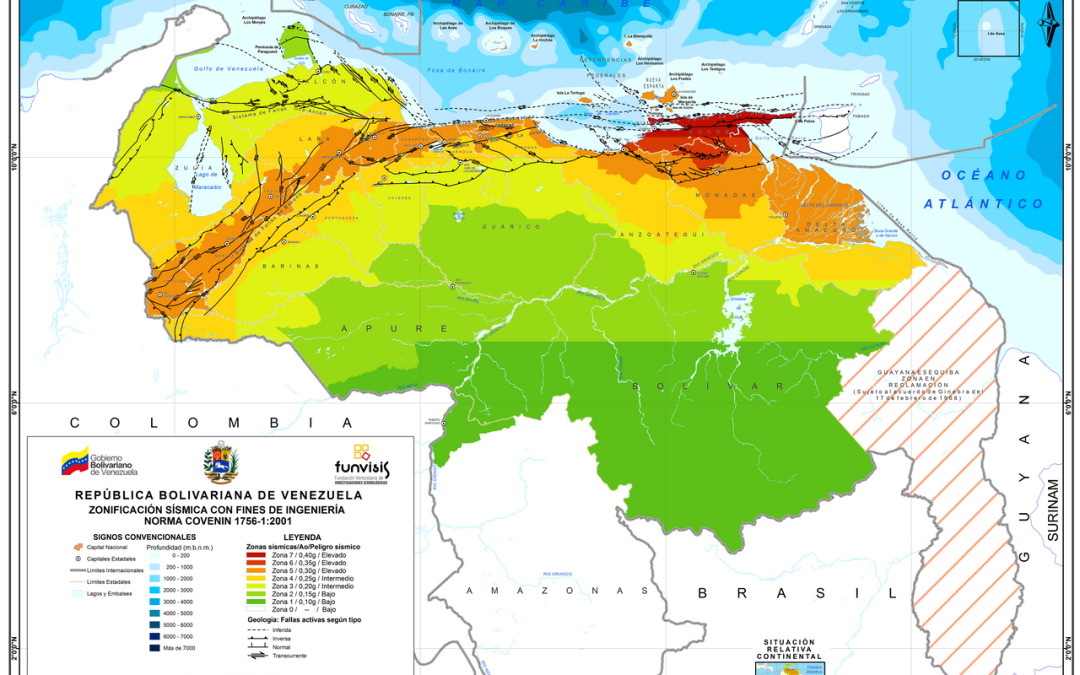

Between Graves and Uncertainty: the Management of the Dead After Venezuela's Quakes
Here's what we know about the graves dug by the regime amid poor capabilities to deal with a rising death toll
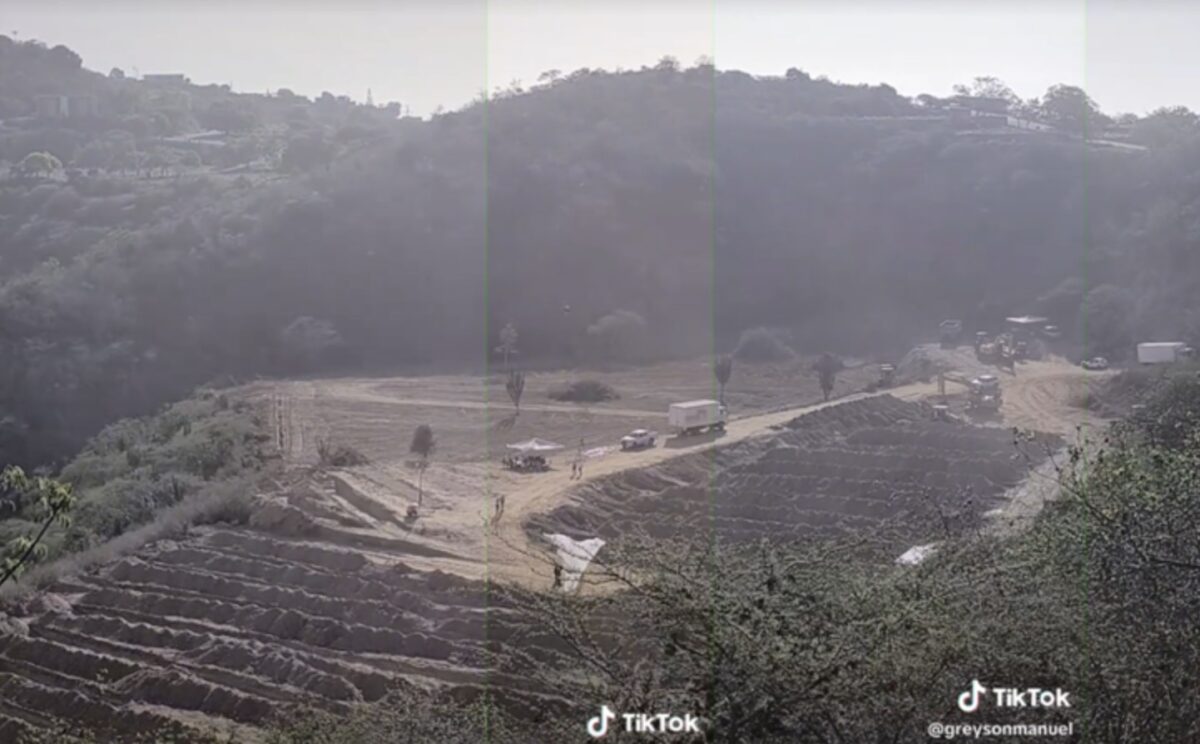
Bellingcat has geolocated footage circulating on social media that appears to show coffins placed in newly dug trenches following the recent deadly earthquakes in Venezuela.
The site identified extends over two hectares beside an existing cemetery in La Esperanza, a town near La Guaira on the country’s northern coast.
It was visited by a representative of our reporting partners—Centro Latinoamericano de Investigación Periodística (CLIP), Efecto Cocuyo and Alianza Rebelde Investiga—who captured pictures of work ongoing at the site. They also report speaking to a resident who said that refrigerated trucks with several bodies had been coming and going.
The location matches a site identified in July 6 reports by AFP and Deutsche Welle (DW), which detailed that 150 unidentified bodies had been buried in a long row of individual graves.
AFP and DW published pictures of individual crosses and stones, quoting a resident of the town who stated that the burials were “numbered by plots and also by the code” so they could be identified at a later date.
It is not known if the coffins visible in the social media footage relate to the 150 unidentified bodies later referred to by AFP and DW, or if they are separate burials at the same general location.
Reuters also published pictures of the site on July 6 and showed video of coffins arriving on the back of flat bed trucks.
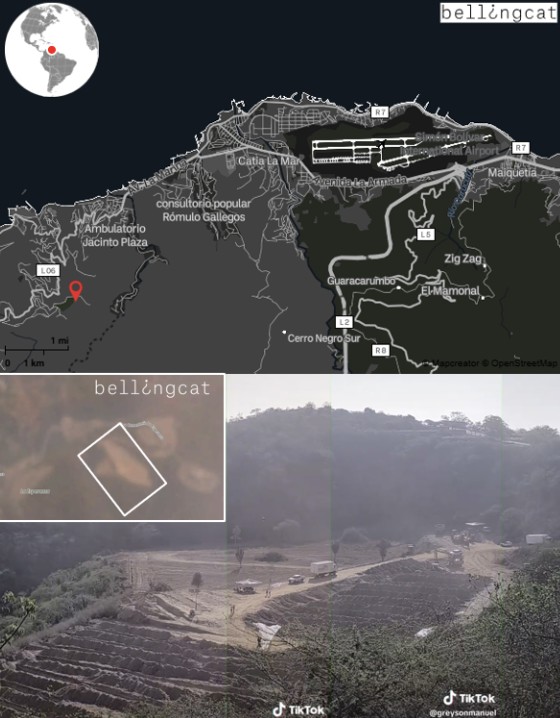
More than 3,500 people are confirmed to have died as a result of the earthquakes so far. But that figure is expected to rise significantly, with the UN reporting that the death toll could reach 10,000.
Oran Finegan, Director of Forensic Action International and former Head of Forensics for the International Committee of the Red Cross (ICRC), told Bellingcat that, while it is best practice for the burial of deceased persons to take place in individual graves, it is not uncommon to see long trenches like those seen in the social media footage when there are high numbers of unidentified deceased and it is not practical to immediately provide individual graves.
He pointed to documentation from the ICRC that details best practices in such circumstances. He also made the important distinction between common graves, where bodies are temporarily kept until identification can take place, and mass graves, where bodies are dumped clandestinely without any care or process. What is seen in the footage appears to be the former, he said. There has been no evidence of the latter.
Finnegan emphasised that it was vital that burials were mapped and recorded properly during any burial process so that identification could take place at a later date. Documenting where bodies were coming from, laying each body with enough distance from each other and ensuring each coffin or body bag had a unique number was key, he said.
While it has not been possible to ascertain the exact processes being followed at or preceding burials at the La Esperanza site, media reports in nearby La Guaira have recorded complications with identification and burial processes.
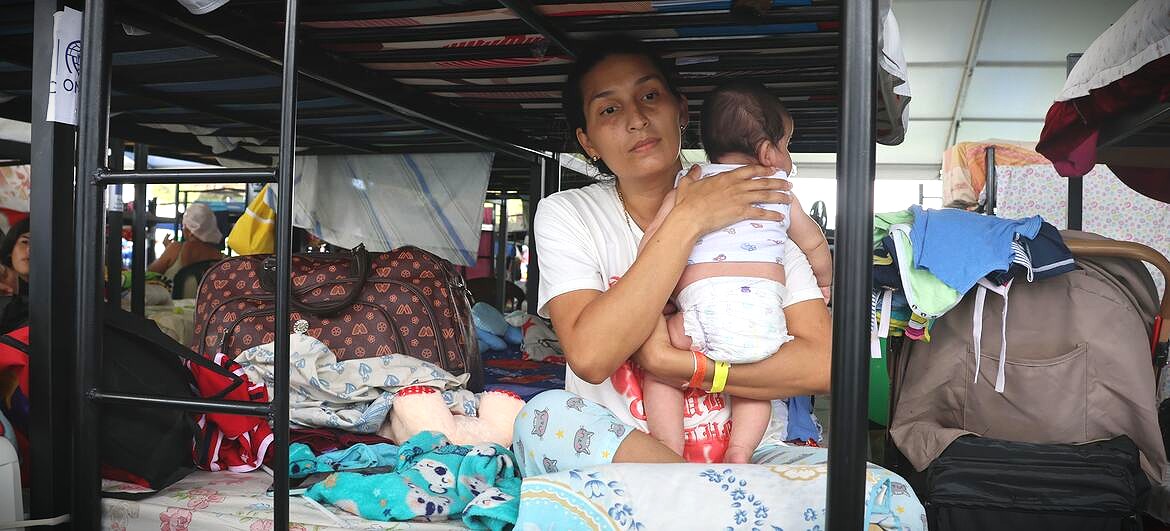
According to the BBC the scale of the disaster has overwhelmed local services, forcing institutions to improvise. Some bodies were being placed outside, exposed to the sun, at a port facility in La Guaira, the BBC reported.
Combined, the visual comparisons allow us to ascertain that the three videos were filmed in the same place (…) This allowed us to confirm the location just outside La Esperanza.
A further complication is that many of the bodies recovered have reportedly been unrecognisable.
One woman told independent Venezuelan publication Runrunes that she was sent a tag and number for a body bag that did not match the bodies of her relatives. She was then told that her relatives’ bodies had been misidentified and sent for burial at a site in the town of Los Teques.
The New York Times reported last week that overwhelmed morgues were filling with unidentified bodies, forcing authorities to consider mass burials.
The Venezuelan Prosecutor General’s Office, the Judicial Police and National Service of Forensic Medicine Sciences did not respond to requests for comment for this article. However, President Delcy Rodriguez has previously stated that all bodies are being processed through a forensic identification system which includes fingerprints records, photographic documentation and forensic odontology.
Rodríguez has also said that “no one will go to a mass grave”.
The President of the Venezuelan Professional Funeral Sector Association (Asoproinfu), Davenio Velásquez, stated that there is a protocol for unidentified bodies to be buried temporarily in “five hundred individual burial niches” in Caracas. He added that they will be exhumed and cremated after six months if not identified.
Finegan added that exhuming and cremating bodies prevents identification and it is not a best practice. However, he said it is important to understand local cultural and religious customs. He also added that the six-month deadline for reclaiming remains is likely unrealistically short for such a major disaster.
Identifying the burial site
Terrain features in the social media videos Bellingcat found are consistent with those seen beside a graveyard on the outskirts of La Esperanza, a town situated on Venezuela’s northwest coast, near the La Guaira region, that was significantly impacted by the earthquakes.
These features allowed us to geolocate the site seen in the footage.
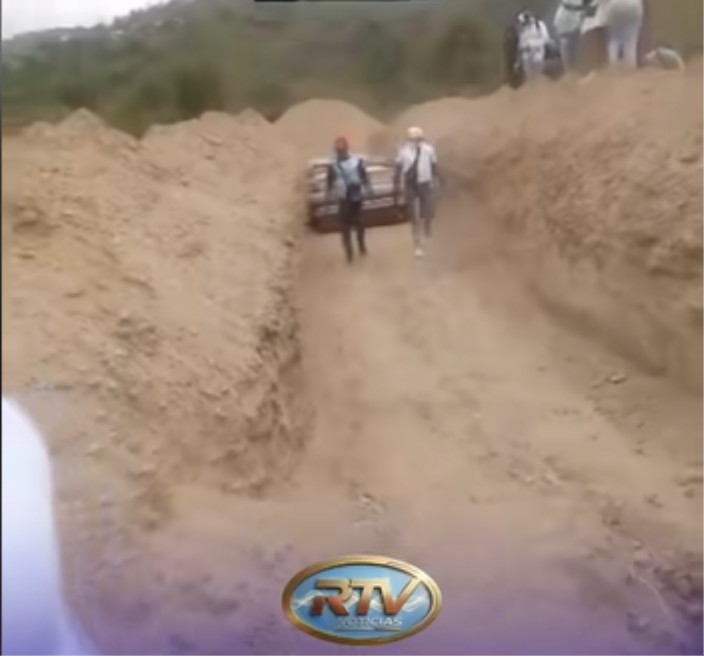
Firstly, a video published on Facebook on July 1 by Colombian digital outlet RTV appears to show a large grave with approximately half a dozen coffins situated within it. The video (which we will refer to as Video 1) further shows a group of people in civilian clothes beside a truck with more coffins on the back. It was not possible to verify the contents of the coffins.
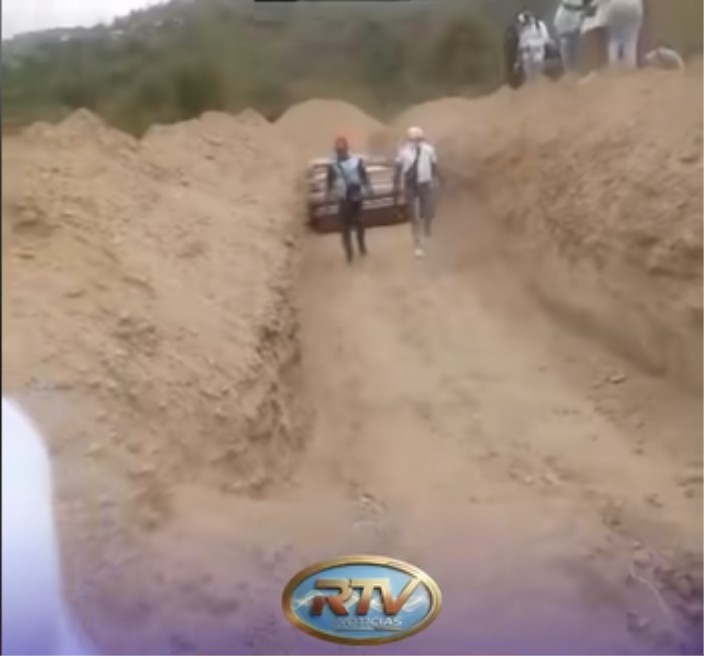
Another video (which we will refer to as Video 2) posted to Instagram by an independent creator who said it was shared by a source on the ground also shows a series of large holes on a plot of land that appears similar to the first video.
Bellingcat sought to identify where these videos were taken by first searching for any other potential reference images and footage we could compare them to.
We found one video posted by a former army Colonel and now Mayor of Vargas Municipality, José Manuel Suárez Maldonado, posing beside heavy machinery as it prepared a plot of land that was due to be given to the local community as a new cemetery plot. The video was first published in June 2024.

By comparing the footage in the mayor’s video with the RTV and independent creator video—as well as matching landmarks visible in the mountaineering app Peakvisor—we were able to verify that all were filmed on the same plot of land.
For example, a distinctive tree formation is visible in Video 1 and Video 2, suggesting they were filmed at the same site.

Mountain features and hillsides seen in the background of Video 2 match those seen in Video 3.

The rocky facade of one hillside visible in Video 2 also matches what can be seen in Video 3.

Combined, the visual comparisons allow us to ascertain that the three videos were filmed in the same place.
We then compared the hills and mountains visible in Video 2 to what can be seen in the mountaineering app, PeakVisor. This allowed us to confirm the location just outside La Esperanza.

Satellite imagery of this site taken on June 25 shows a patch of land that appears green, filled with vegetation. By June 27, a newly scraped area of approximately 1.5 acres—roughly the size of a football pitch—appeared in exactly the same place.

It is important to note that the recently cleared area appears to have been excavated or altered before.
Satellite imagery from 2022 and 2023 shows work being carried out in the same spot before it once again became overgrown.
However, Bellingcat identified a white marquee visible in Video 2, providing a temporal reference to show that at least one of the videos was filmed in 2026.
This marquee was visible in satellite imagery captured on June 27, 2026, at the exact spot visible in Video 2.

In footage posted to TikTok on July 2 (which we are labelling Video 4) the same tent appears to be visible.
The cleared sector of land matches the shape of the work visible in more recent satellite imagery of the site.
Satellite imagery from previous years also shows that the cleared area looks slightly different when viewed from above. This allows us to be confident that the social media footage aligns with the more recent satellite imagery rather than previous years when the area was also cleared.

Bellingcat’s reporting partners contacted the Venezuelan Prosecutor General’s Office, the Judicial Police and National Service of Forensic Medicine Sciences, the President of the Association of Funeral Industry Professionals (Asoproinfu) but did not receive a response before publication.
Finnegan, the forensics expert, said that the current death toll was likely an underestimation and authorities are expecting it to rise.
But he said that even when families are unable to immediately identify their loved ones, it was vital to ensure that the deceased are buried respectfully and in a way that preserves the possibility of future identification. This, he added, can bring families a degree of comfort in the most difficult circumstances.
Caracas Chronicles is 100% reader-supported.
We’ve been able to hang on for 22 years in one of the craziest media landscapes in the world. We’ve seen different media outlets in Venezuela (and abroad) closing shop, something we’re looking to avoid at all costs. Your collaboration goes a long way in helping us weather the storm.
Donate