
Delcy Is Downgrading the Law Against Hate Instead of Just Revoking It
The legal weapon that jailed almost 1,000 people remains a key tool of Venezuela’s repressive apparatus
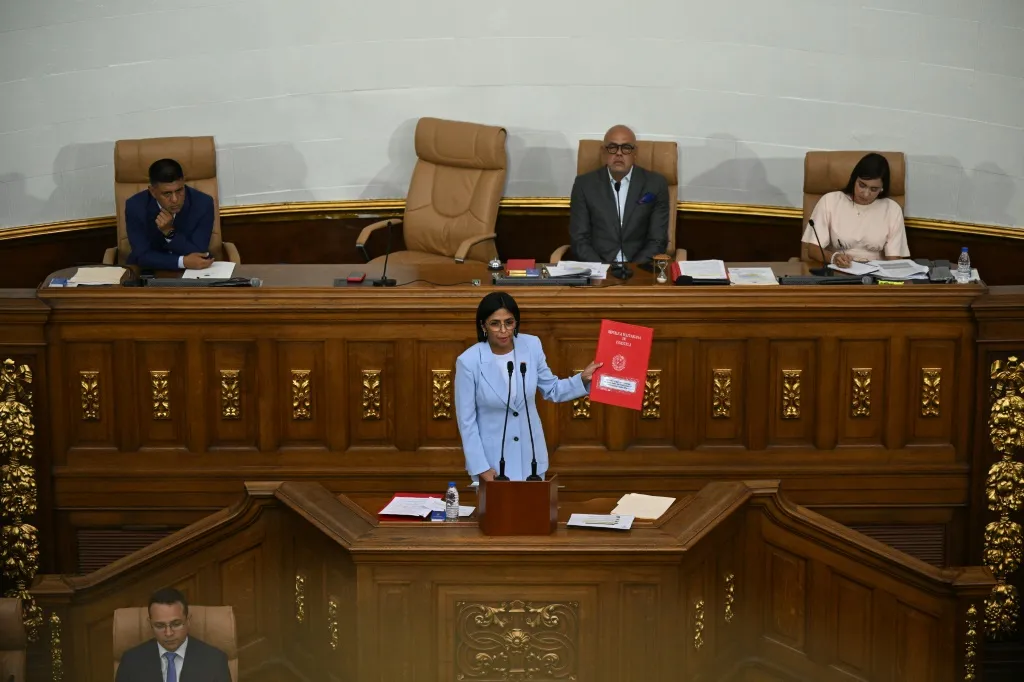
Then-Vice President Rodríguez also introduced the Law Against Fascism in 2024, another punitive law that didn’t go through.
The second round of talks between the 2015 National Assembly and the interim government were supposed to tackle the issues of freedom of speech and press restrictions.
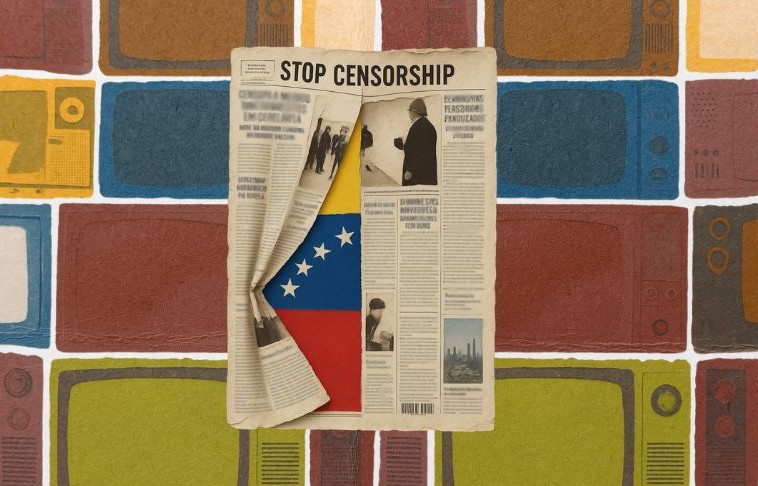
Digital blockings to dozens of news websites were lifted in the past two weeks, though many more remain in place. The matter of the controversial Anti-Hate Law was not addressed at the time, but on September 29, Delcy Rodríguez requested the National Assembly to partially reform such legislation in order to “decriminalize the conducts” contained in it. In her view, this law was “unfortunately badly applied and therefore, used in an abusive way.” The chavista legislature quickly established a special commission on the matter, but beyond that there’s not much urgency.
While the Dinorah Figuera-led opposition delegation recognized the proposed reform as a result of the ongoing dialogue process, most of the initial reactions from political and social groups have loudly rejected this approach instead of what human rights groups and press guilds have demanded: its complete repeal.
Delcy Rodríguez is once again producing headlines that make her look as a true reformer when in reality the openness is just a crack in the toolkit that had helped the chavista regime to persecute dissidents and crack down on dissent. It’s like taking the bullets out of a gun but keeping the weapon in the drawer.
Delcy’s muzzles
Years after its implementation, the Anti-Hate Law is considered as one of the most draconian laws ever passed by chavismo, because of both its very broad definitions of what can be considered as “hate speech” and the harsh penalties it includes, such as punishing anyone “who incite hatred, discrimination or violence against a person or group of persons by any means” to time in prison that can go as high as 20 years.
It also severely punishes any media outlet that carries those kinds of messages by revoking its broadcasting license, closing its website and/or imposing hefty fines.
Another concern with this legal instrument is its dubious origin: it was passed by the National Constituent Assembly that the Maduro regime set up in 2017. Delcy Rodriguez was the ANC’s first speaker but left the post to become Maduro’s vice president the following year.
“When people know that a publication, a complaint, an opinion, or even a message on social media could lead to a criminal investigation and even a 20-year prison sentence, that is a powerful incentive to shut up.”
In April 2024, Delcy Rodríguez introduced a similar bill, the Law Against Fascism, that could have gone even further in coercing any form of political dissent, sharing certain parallels with what Daniel Ortega and Rosario Murillo are doing in Nicaragua. The proposal was quickly approved in its first reading, but its final passing was postponed weeks after the 2024 presidential vote. In the end, the law wasn’t implemented.
NGOs like Espacio Publico and Foro Penal have offered their own data on the Anti-Hate Law’s impact. The Venezuelan Institute for Press and Society, IPYS, has done deep research on the matter. To discuss this, Caracas Chronicles interviewed Daniela Alvarado Mejías, a journalist and IPYS coordinator for freedom of information.
What does the “decriminalization” of the Anti-Hate Law really mean, given the lack of details?
We don’t have the actual text of the proposal, so we don’t know which of its articles will be modified, what behaviors would be decriminalized or what would happen with the remaining restrictions included. And there is an important difference between just decriminalizing some things and repealing the entire law. Eliminating prison sentences would be a relevant change, as well as the obligations and sanctions applicable to media outlets and platforms that affect the exercise of free speech.
This doesn’t mean ignoring that hate speech constitutes a matter that democratic societies must discuss and confront. We believe that after the repeal (of the Law) there should be a wide, plural and technically rigorous definition of what we understand as hate speech, what expressions are protected by freedom of speech and under what circumstances can an expression be legally restricted. And that discussion must be done according to international human rights standards.
Overall consensus among civil society groups is to demand the full repeal of this law. Why?
Because the problem of the Anti-Hate law is not reduced to the severity of its punishments. Since its approval, there have been questions about its origin, scope, and the vagueness of the behaviors that it punishes, the disproportionality of its sentences, and the powers that it establishes to intervene in content, media outlets, and platforms.
One of the main concerns is that the terms “hate” and “intolerance” are not delimited with enough precision. This opens a wide margin for authorities to determine what expressions can be considered illicit. When it comes to freedom of speech, that ambiguity is dangerous.
Not every discourse that is considered disturbing, discomforting, or critical constitutes hate speech, much less an expression that could justify a criminal response. International standards establish high thresholds to determine when an expression constitutes an actual incitement to discrimination, hostility or violence. The Venezuelan experience has proved that this legislation has been used against critical views and complaints that are of public interest.
Why is the Anti-Hate Law harmful for public liberties in Venezuela?
One grave consequence has been the chilling effect on free speech. It’s not necessary that every application of the law ends in a conviction to impact free speech. When people know that a publication, a complaint, an opinion, or even a message on social media could lead to a criminal investigation and even a 20-year prison sentence, that is a powerful incentive to shut up. This is why that law has been used not only against journalists but also activists, human rights defenders, social leaders, citizens, and potential news sources. The result is a public space where people have reasons to question the consequences that talking could have.
It also contributes to blurring the difference between hate speech and critical, offensive, or uncomfortable speech. Freedom of speech protections cover ideas that could be considered unpleasant. State intervention must be reserved for very specific hypotheticals.
Are there any estimates by IPYS Venezuela or other similar organizations about the number of people charged by this legislation or how many judicial processes and criminal sentences related to its enforcement?
Between 2017 and October 2025, IPYS registered 85 cases: 78 individuals and 7 media outlets. In 78 of them, there were concrete legal actions like investigations, warrants or detentions.
“A news outlet can be subject to digital blocking, a radio station depends on CONATEL’s, a journalist can face criminal charges, and sources could abstain from talking because of fear.”
These figures increased in the last few years. Only between 2024 and 2025, there were 26 cases. During that time, 19 journalists, media workers and communications professionals were arrested or charged for hate crimes. Almost half of those cases happened right after the July 2024 election. Also, in 17 of those 19 cases, other charges were added, like terrorism, criminal conspiracy, or treason.
There are no official consolidated numbers of how many people have been convicted. Such a lack of information is part of the problem. The State must inform how many people have been investigated, processed and convicted, and what their current situation is.
How has this Law worked with other legal and administrative instruments to influence the work of the press in Venezuela?
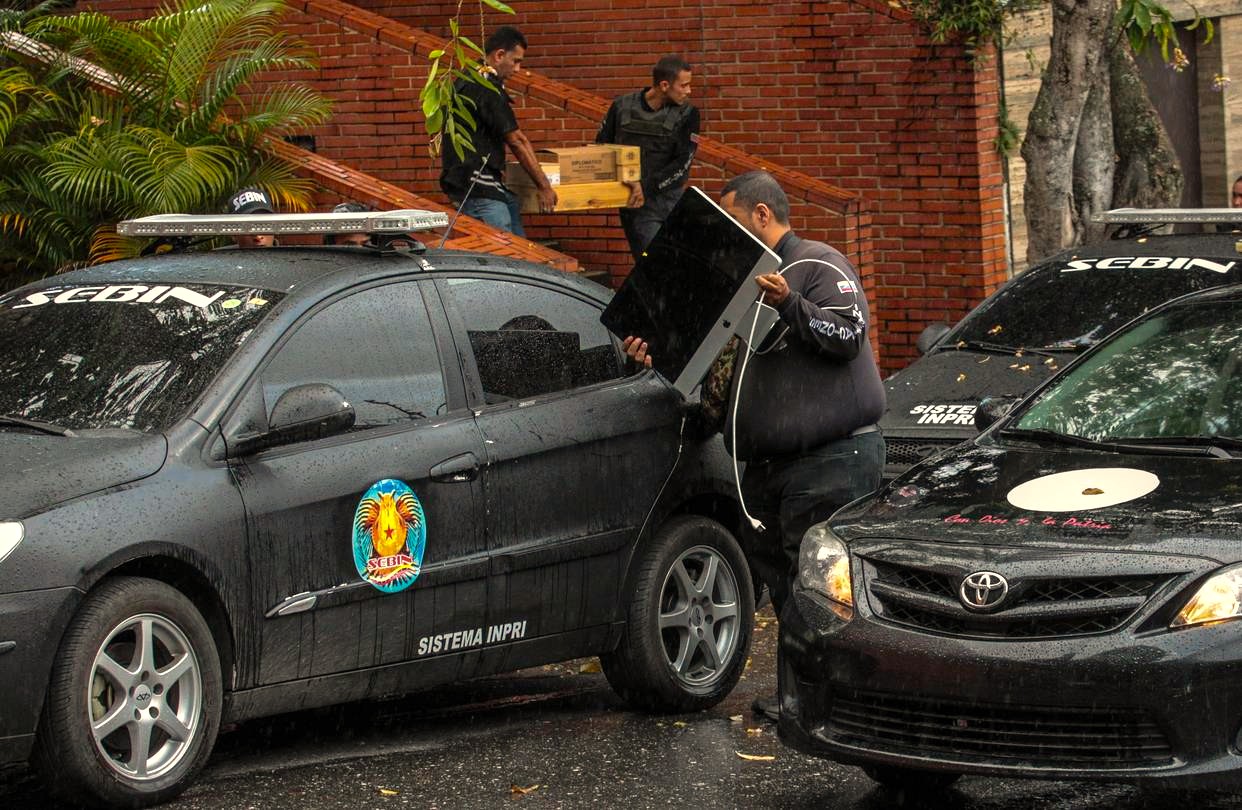
The Anti-Hate Law did not work in isolation. It’s part of a larger framework of legal, administrative and technological restrictions that has progressively reduced the space to do journalism in Venezuela. IPYS Venezuela has documented the use of criminal law against journalists, including judicial processes, arrests, blocking of web pages, closures and restrictions against stations, difficulty obtaining or renewing broadcasting licenses, public stigmatization, and restrictions on access to official sources and public information.
The problem is an accumulative effect: a news outlet can be subject to digital blocking, a radio station depends on the administrative decisions of CONATEL, a journalist can face criminal charges, and sources could abstain from talking because of fear of consequences. All this ends up modifying the conditions in which it is decided what to investigate, what to publish, and how.
How do recent gestures like the partial lifting of digital blocks match with what sectors of Venezuelan society have been asking since January 3rd, the current political state of play?
The reestablishment of access to media outlets that were blocked for years is a positive measure for the right to information and shows that many of those restrictions can be immediately lifted through administrative decisions. After January 3, civil society organizations have asked for guarantees for the freedom of the press. Current discussion of the Anti-Hate Law and the limited unblocking online partially address the demands that civil society and press freedom groups have made for years. Recent gestures can be steps to regain information freedom, but the goal should not be just selective access or the partial reduction of sanctions but to guarantee the freedom of speech and information in a full, permanent and verifiable manner.
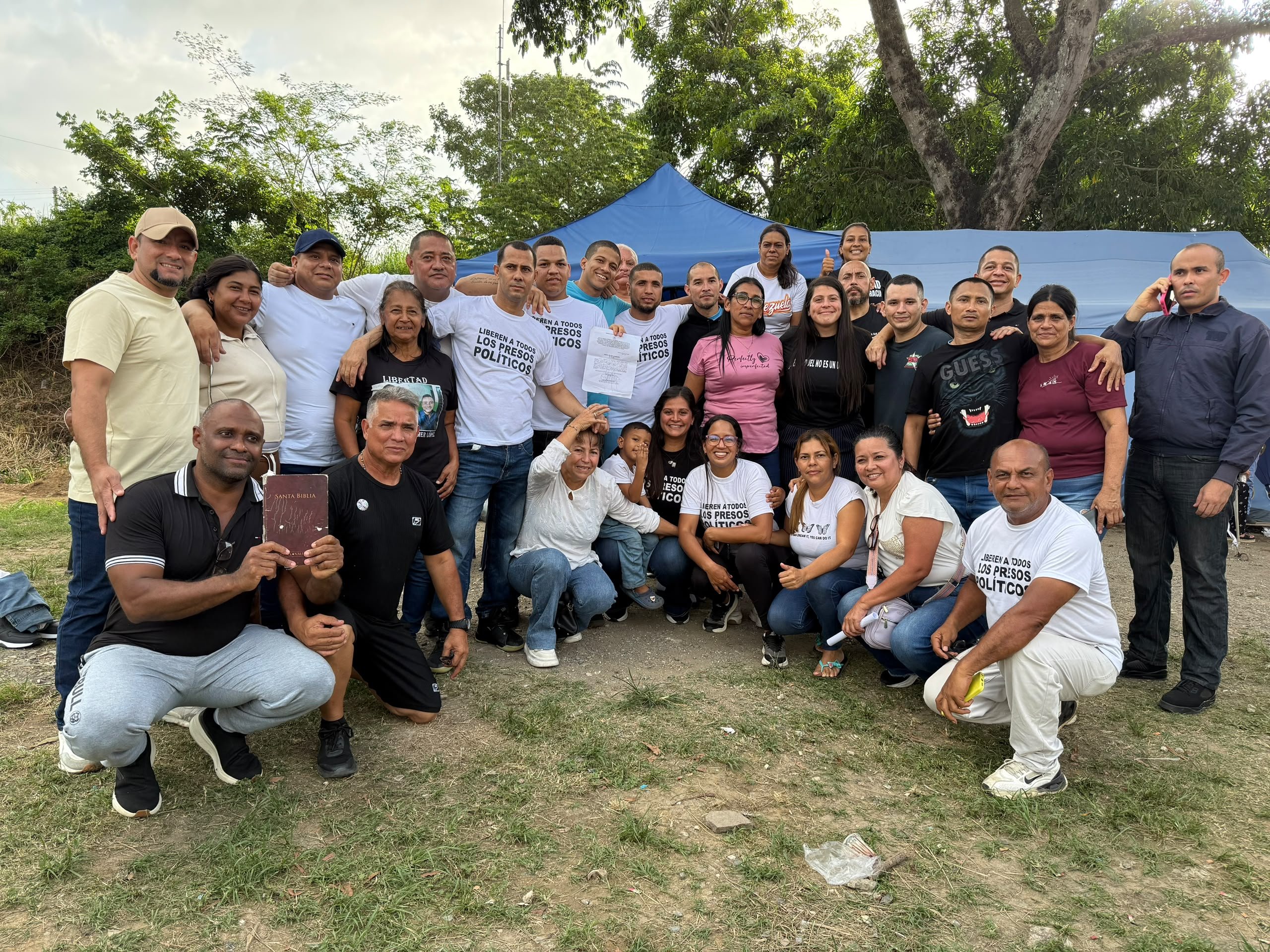
The extent of how the Anti-Hate Law continues to affect people’s lives is still visible: This week, journalists Luis López and Gabriel González saw their two-year long judicial ordeal end after charges against them, including incitement to hatred and criminal association, were dropped. Rory Branker, the editor of digital news outlet La Patilla still faces multiple charges of instigation to hatred, terrorism, criminal association and treason. Despite his release from the Tocorón prison earlier this year after 11 months, he still faces restrictions like showing in court every month and a ban from leaving the country.
Caracas Chronicles is 100% reader-supported.
We’ve been able to hang on for 22 years in one of the craziest media landscapes in the world. We’ve seen different media outlets in Venezuela (and abroad) closing shop, something we’re looking to avoid at all costs. Your collaboration goes a long way in helping us weather the storm.
Donate