What COP31 Should Mean for Venezuelan Oil, Forests and Reefs
Delcy Rodríguez today tried to hide the country's environmental record. Here’s what a credible climate policy should look like
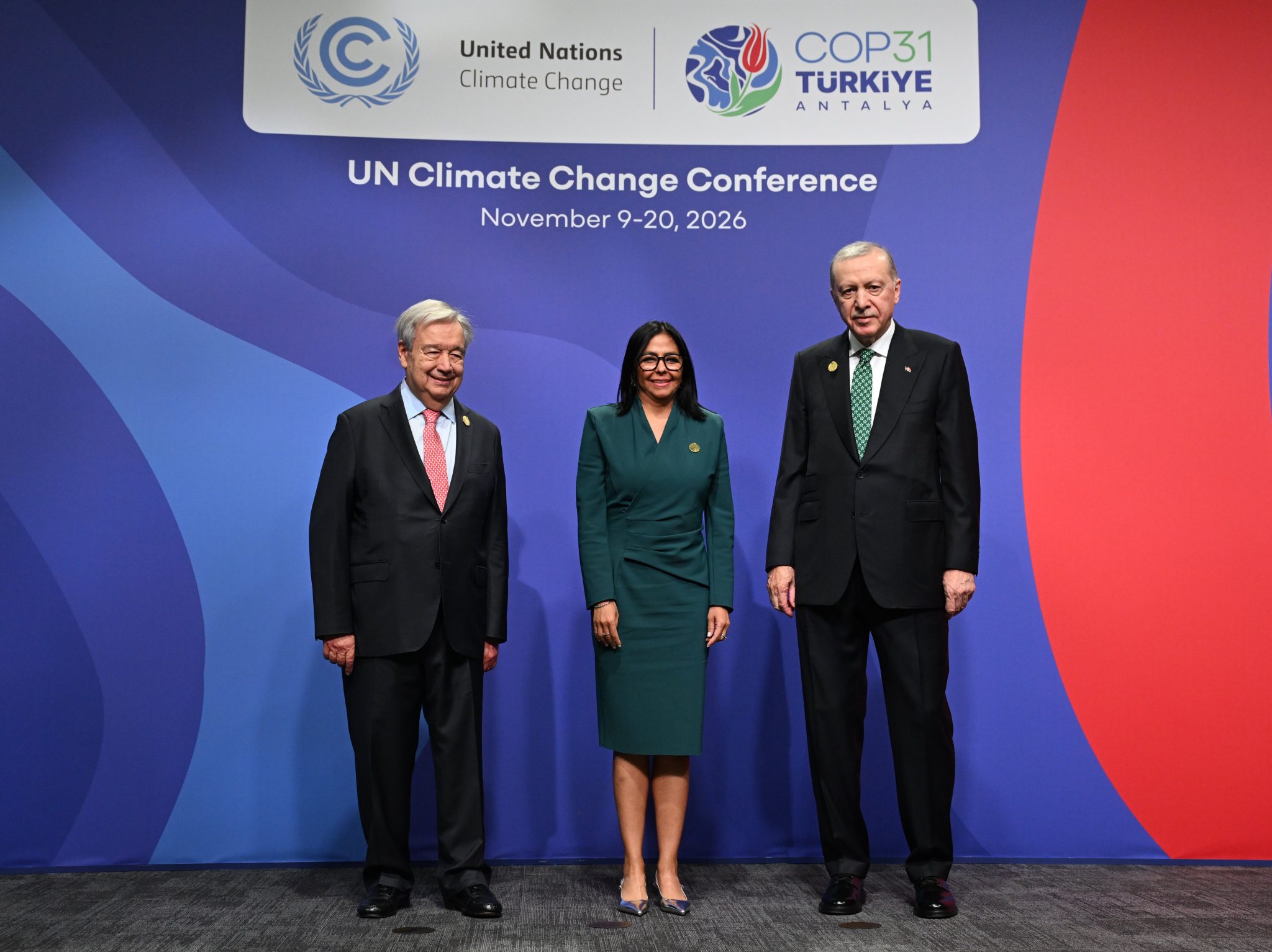
In the oil fields of northern Monagas, gas flares burn day and night, releasing carbon dioxide and unburned methane, two potent greenhouse gases, into the atmosphere and contributing to global warming. On the coast of Falcón, oil spills threaten the fragile mangroves, coral reefs and marine ecosystems of Morrocoy National Park. South of the Orinoco, mining pits creep into the Canaima and Yapacana national parks, stripping forests and putting mercury into the Caroní, the Caura and the Cuyuní rivers. All three are at stake at the UN climate summit, COP31, which runs from November 9 to 20 in Antalya, Türkiye.
COP31 is where countries work on delivering the 2015 Paris Agreement. Under it, 193 countries, including Venezuela, agreed to keep global warming well below 2°C compared with pre-industrial times. Each country must file a national climate plan, called a Nationally Determined Contribution, or NDC, that sets its emissions targets and how it will meet them, and must update it every five years with greater ambition. Venezuela’s NDC, filed in October 2025, aims to cut greenhouse gas emissions 20% by 2030. Meeting this target will take large-scale investment and ambitious policy reforms for energy transition and nature conservation.
Oil and gas are where that question is most immediate. Since January 29, 2026, a reformed Hydrocarbons Law lets private companies operate oil fields under contracts with PDVSA. These companies, and the investors who back them, are likely to want to know how much gas is flared, how much land was cleared and what a project puts into the water, because pollution can shut down an oil project or turn communities against it. COP31 will not write the rules for any investor, but climate finance is high on its agenda, and a country with credible emissions data, clear policies and well-prepared projects is better placed to attract investment. There are three opportunities where Venezuela can meet its climate goals and attract investment.
Venezuela burns some of the most gas in the world for every barrel of oil it produces. Capturing and utilizing this gas would reduce emissions while recovering a valuable energy resource.
Gas flaring is the clearest place to start as it is one of the most visible environmental impacts of Venezuela’s oil industry. Many Venezuelans have witnessed it firsthand: the so-called mechurrios. Satellite observations collected by the US National Oceanic and Atmospheric Administration (NOAA) reveal extensive flaring activity across the country’s main oil-producing regions, particularly Monagas, Anzoátegui and Zulia. Approximately 100 flare sites have been reported across Venezuela’s 303 mapped oil and gas blocks. Crude comes up mixed with natural gas, and today much of that gas is burned (flaring) or released into the air (venting), because the pipes and compressors that could bring it to market are missing or broken.
Venting is worse: methane traps about 30 times more heat than carbon dioxide over a century. The World Bank’s 2026 flaring tracker puts Venezuela among nine countries that account for 83% of the world’s flaring. The country burns some of the most gas in the world for every barrel of oil it produces. Capturing and utilizing this gas would reduce emissions while recovering a valuable energy resource that could help ease Venezuela’s persistent electricity shortages.
The second is the Caroní. Guri is the dam the whole country depends on, but fewer think about the forest upstream that keeps it running. The Caroní system has historically supplied at least 72% of the country’s electricity, and intense mining in the upper basin has been eating into the forest that feeds it. In 2020, SOS Orinoco documented mining in the Icabarú river basin, on land that a 1992 decree had set aside as a hydraulic reserve of 40,000 hectares: forest loss, diverted channels, silted rivers, mercury from gold processing, and Pemón communities saying the water had become too muddy to use. Every hectare of forest lost to mining releases the carbon it stored, so keeping it standing avoids emissions and protects the power supply at once. The NDC already names a forestry master plan. Publishing each year how much forest is lost would show whether it works and let Venezuela ask for funding based on results.
The third is the coast, where climate risk is highest. An estimated 80% of Venezuela’s shoreline is low-lying plains and deltas, exposed to erosion and flooding as the sea rises. The reefs of Los Roques, Morrocoy and Mochima, and the mangroves along the coast, are the first line of defense, and the IPCC warns that losing them directly raises the risk for coastal communities as seas rise. They are also what fishing towns and coastal tourism live from. That puts the coast on both sides of the Paris Agreement.
Venezuela already has environmental laws and land-use rules. What it needs is institutions able to apply them, on the coast, in the forests and in the oil fields, so that investors can trust rules and commitments.
For adaptation, healthy reefs and mangroves shield coastal towns and fishing grounds from rising seas and storms. For mitigation, mangroves store carbon that is released when they are cleared. The NDC already acknowledges what reefs and mangroves do against storms, but they are under pressure from oil spills, like the one that reached Morrocoy, and from coastal development that land-use rules do not contain. A national reef and mangrove map, kept up to date, would show what is being lost, and enforcing land-use rules along the coast would help stop it. The next NDC should make both a priority, with measurable targets.
Here is how Venezuela can seize investment opportunities, in three steps. First, measure. Publish numbers anyone can check on flaring, methane, forest loss and the extent of reefs and mangroves, and let independent experts verify them, many of them already in Venezuela. Investors need that data to judge risk, and the NDC needs it to show progress. Second, secure climate finance. Funders pay for results, and they will ask who runs each project, who is accountable and who gets paid. Gas capture is the easiest to finance, because it recovers fuel and can be written into the new oil contracts. Forest and coastal projects are harder: they need clear rules on who owns the carbon, the consent of the communities involved and verified results before any payment, as in Norway’s results-based payments for forests or in carbon credit markets. Venezuela should start with the project it can deliver fastest and let the results open the door for the others. Third, enforce. Venezuela already has environmental laws and land-use rules. What it needs is institutions able to apply them, on the coast, in the forests and in the oil fields, so that investors can trust the rules and the commitments in its current and next NDC are kept.
Antalya is where Venezuela should announce that it will update its NDC to make it more ambitious and more committed, with firm targets for gas capture, forests and the coast that reflect the changes in the country’s context since January 2026. These commitments are not the government’s alone to keep. PDVSA and its joint-venture partners, private operators under the new contracts, universities, fishing cooperatives, Indigenous communities, environmental groups, governors and mayors all have a part in meeting them. Venezuelans who want a say in what comes out of the summit should engage during it and after it.
Caracas Chronicles is 100% reader-supported.
We’ve been able to hang on for 22 years in one of the craziest media landscapes in the world. We’ve seen different media outlets in Venezuela (and abroad) closing shop, something we’re looking to avoid at all costs. Your collaboration goes a long way in helping us weather the storm.
Donate