
Maduro’s Canonization Party Goes Wrong
Reacting to backlash in Rome and fearing a popular revolt, the Maduro regime arrested more dissidents instead of releasing them, and harassed Cardinal Baltazar Porras
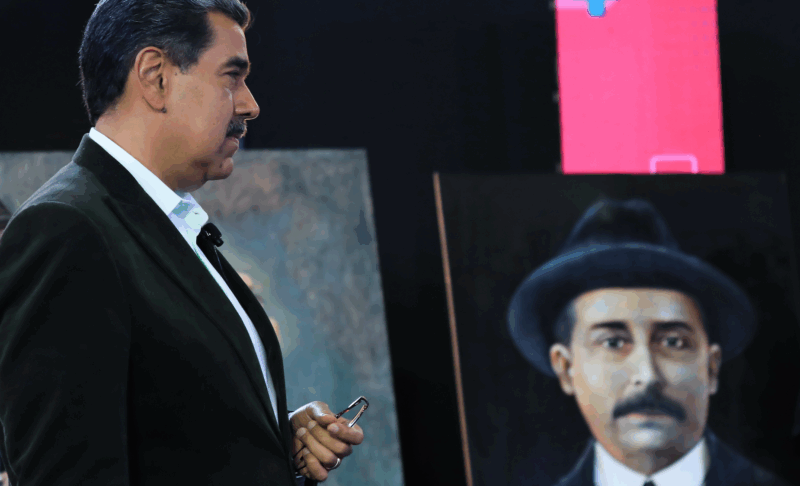
Baltazar Porras picks up the phone at the first ring, like someone who’s been traveling for days with a calendar that can’t fit another mass or meal, let alone another exchange with a journalist trying to go beyond the images of Mother Carmen Rendiles, José Gregorio Hernández, and the virtues that led them to be canonized.
Porras sounds tense when he answers me at noon on Wednesday. Two Venezuelans were just officially declared saints.
“Good afternoon, yes, tell me,” the cardinal says right away.
Five days after the canonization program began in Rome, the milestone was surrounded by what one could expect from a Catholic country under a dictatorship: uncertainty and conflict. Thanks in part to the opposition’s effective political communication, the Maduro regime was somewhat humiliated for five straight days. That started from the moment Venezuelan pilgrims began gathering at the Vatican gates until Wednesday, October 22, when Cardinal Porras arrived in Spain to preside a Mass at La Almudena Cathedral, alongside representatives of the Madrid Archdiocese.
Chavismo couldn’t avoid the escrache in Rome against Roy Chaderton, Maduro’s diplomatic envoy who once described the sound that opposition heads make when shot by snipers, right on state television. Meanwhile, opposition representatives—including Magalli Meda, Pedro Urruchurtu, the son of María Corina Machado and the daughter of president-elect Edmundo González, plus several relatives of political prisoners—could smoothly follow the agenda of those who present themselves as the next democratic government. Representation from human rights activists was also significant. Raúl Baduel Jr., son of a prominent chavista general who died in prison, appeared in front of St. Peter’s Basilica wearing a shirt printed with the face of his brother Josnars Baduel, held and tortured in El Rodeo I. Sairam Rivas, who’s been at the forefront of the struggle of political prisoners in Venezuela, also managed to hand Pope Leo XIV a letter as the pontiff crossed the square in the popemobile.
“The Vatican has long understood that this is a criminal problem for which it lacks the proper tools.”
In a way, Porras had preceded them all. Before Rivas, Baduel, or Comando figures could be accused of “politicizing” the saints’ celebration, the Emeritus Cardinal had made clear what he thinks about power in Venezuela. The Vatican backed him without hesitation in the days that followed, even with the rhetorical nuances of a state that seeks to preserve its integrity in Venezuela. Alongside the papal chief of staff, Maracaibo-born Archbishop Édgar Peña Parra, and Raúl Biord, the current metropolitan archbishop of Caracas, Porras spoke first at a symposium at the Pontifical Lateran University denouncing a “morally unacceptable” situation in Venezuela.
The Cardinal cited the lack of civic freedoms, poverty, militarization as a form of government and the absence of independence among public powers. He also referred to the situation of political prisoners, which “breaks family unity, making everyone suffer with no one to turn to.” Peña Parra—formally known as the Vatican’s Substitute for General Affairs, and formally a nuncio in Mozambique and Pakistan—spoke about a “diplomacy of reunion” that the Church claims to promote in Venezuela, “not as a political strategy” but out of a need to build bridges between opposing sectors. “Peace is handmade, built from patient gestures and daily encounters,” said Monsignor Peña Parra. “True dialogue doesn’t erase differences, but it can generate communion.”
The least politically-tinged speech came from Monsignor Biord, who, from his position in the Venezuelan capital, has had to deal face-to-face with the Maduro-Flores family in a year when the ruling elite has silenced critical voices on an unprecedented scale. In his address, the Archbishop of Caracas justified the new project Santos para Todos (Saints for All), presented to Pope Leo XIV earlier this month, which includes new initiatives in health, education, and promotion of the Catholic faith in Venezuela. The event closed with applause for Porras for his work in advancing José Gregorio’s sainthood, as pointed out by the official postulator for the saint’s beatification and canonization cause.
Days later, we learned that a member of Maduro’s delegation assaulted Édgar Beltrán, Rome correspondent for The Pillar, for asking Peña Parra about Maduro’s politicization of the canonizations.
A state against a cardinal
None of that went unnoticed at Miraflores. On Saturday October 25th in the afternoon, two days after returning to Venezuela, Cardinal Porras denounced the government’s efforts to block his arrival to Isnotú, José Gregorio’s hometown, where he was supposed to officiate a ceremony.
“I won’t give statements right now, because of all the things Maduro has said,” the 81-year-old Cardinal told me on Wednesday before hanging up. “Many people are telling me not to go to Venezuela, to stay away, but I haven’t committed any crime. The homily I’ll deliver tonight is already written.”
By that time, Maduro had already been insulting Porras, even while the cardinal was still in Europe. At La Almudena, those present gave a standing ovation to Edmundo González Urrutia and his family, seated in the first row next to exiled former mayor Antonio Ledezma. From the pulpit, the Cardinal spoke about the rot caused by corruption and about the gossip spread by those who only criticize and destroy. He echoed a striking homily from the Vatican’s Secretary of State, Cardinal Pietro Parolin, who had served as Apostolic Nuncio in Caracas:
The hashtag #BaltazarPorrasConspirador quickly spread on social media, filled with messages calling the cardinal a wolf in a sheep’s clothing, a devil in a cassock, even a coup plotter.
“Only then, dear Venezuela, will you pass from death to life,” said the Vatican’s top diplomat. “Only then, dear Venezuela, will your light shine in the darkness. Only then will your darkness turn to midday, if you listen to the words of the Lord, who calls you to open unjust prisons, to break the chains of the oppressed, to set the oppressed free, to shatter every yoke.”
A day after Rendiles and Hernández were declared saints, Maduro launched a media campaign against Cardinal Porras. He accused him of conspiring against the “doctor of the poor,” boasting that he himself had promoted the then-blessed doctor during his first meeting with Pope Francis in Rome, back in 2013. It happened when his first presidential term had just begun. The Vatican had not been called to mediate in negotiations between the Maduro government and the old opposition that held a majority in the National Assembly.
“José Gregorio is a saint today despite you and your clique, your brotherhood. We’ll say much more later,” Maduro said on television Monday. The hashtag #BaltazarPorrasConspirador quickly spread on social media, filled with messages calling the cardinal a wolf in a sheep’s clothing, a devil in a cassock, even a coup plotter.
But the worst came on Saturday the 25th, the most important day in Venezuela’s ecclesiastical calendar because of the double canonization. Porras explained in a video that quickly spread all over social media platforms that the government had called him to say it was “inconvenient” for him to go to Isnotú because of “the risk of disturbances.” Officials told him that Conviasa’s flight to Valera was canceled, which wasn’t true. When he boarded a private plane instead, they diverted him to Barquisimeto under the pretext that the Trujillo airfield was closed. Finally, roadblocks stopped him on his way to Isnotú, and he had to return to Caracas. María Corina Machado, of course, called out the entire sabotage operation as a violation of Venezuelan believers’ right to celebrate.
Misunderstood diplomacy?
After years of confrontation with the Venezuelan Episcopal Conference (CEV)—when Chávez attacked critical priests like Diego Padrón, Roberto Luckert, and Luis Ugalde while avoiding direct insults to the popes—Maduro’s rhetoric follows a similar script, now trying to divide Venezuelan clergy between “friends” and “plotters.” In public, the Church’s tone in Venezuela had softened as authoritarianism intensified, perhaps to avoid suffering what clergymen have endured in today’s Nicaragua or in Fidel Castro’s Cuba. This attitude also aligns, for example, with the Vatican’s current rapprochements and concrete agreements with China, where the Holy See tolerates Communist Party abuses to preserve limited influence.
In Venezuela, that relationship reached a breaking point at the end of 2016, when the Vatican was called to mediate in the first negotiation process between the government and the parliamentary opposition. Amid an emerging humanitarian crisis, the opposition coalition sought to activate a recall referendum against an already unpopular president. But the process didn’t go beyond the first round of talks, when Pope Francis’s special envoy, Archbishop Claudio María Celli, was already present.
In a decisive moment of chavismo’s authoritarian drift, the CNE soon blocked the referendum, and Jorge Rodríguez (then building his reputation as Maduro’s top negotiator) alleged a supposed fraud in the opposition’s signature-collection process.
The Vatican responded by making its position public. On December 1, 2016, Cardinal Parolin published a letter outlining the Church’s conditions to continue acting as mediator in Venezuela: a humanitarian aid package, the restoration of the National Assembly’s powers, the publication of an electoral calendar, and the release of political prisoners.
Monsignor Padrón—then president of the CEV—and a newly appointed Cardinal Baltazar Porras blamed chavismo for the dialogue’s failure. Diosdado Cabello, Maduro’s top cop and enforcer, responded to Parolin’s letter by saying that the chavista regime didn’t meddle in the Vatican’s internal affairs, nor with priests accused of pedophilia.
Beyond repression, Maduro responded to a three-month protest cycle in 2017 by setting up the National Constituent Assembly. Some in the Venezuelan public criticized Pope Francis for not condemning the state’s violent crackdown. In August, the Pope signed a letter that went ignored, asking Maduro not to convene the parallel parliament. The Vatican later decided to distance itself from the subsequent negotiation processes, which continued until 2023 and also failed to meet Parolin’s conditions.
The Maduro regime continued using the same tactics on the eve of the canonizations—even in the homeland of José Gregorio Hernández.
“The Vatican has long understood that this is a criminal problem for which it lacks the proper tools,” said one of the sources interviewed. “There was never any real difference between the CEV’s hard stance and the position of Francis, but people were demanding from the Pope an activism he was never going to exercise.”
“Today, this is a relationship between two states that goes back many years,” said Juan Salvador Pérez, editor of Revista SIC, a magazine owned by the Jesuit Order. “It’s currently a respectful relationship, and without a doubt, both sides are aware of the circumstances each is living through. For the Vatican, diplomacy is the art of reunion: of building bridges, opening doors, and closing wounds. Like any art, it means doing things well, and sometimes that takes time.”
An official party that wasn’t
Cordial treatment between the Venezuelan state and the Church managed to stay in place over the past year, even after the 2024 electoral fraud and the climate of persecution that still prevails. At the beginning of August, chavista propaganda promoted a meeting between Maduro and Cilia Flores with Monsignor Biord, Vale TV President María Eugenia Mosquera, and Arturo Peraza, rector of the Andrés Bello Catholic University (UCAB). The press release said that they discussed preparations for the double canonization celebration. Later it became known that, in coordination with the Archdiocese of Caracas, the state would sponsor the Fiesta de la Santidad (the Feast of Holiness,) at the Monumental Stadium of Caracas.
A venue meant for baseball games and grand entertainment events—for many, a symbol of Maduro’s “normalization” campaign—was imposed as the site for celebration in Caracas. Sources close to religious leaders in Rome and Caracas argue this was a proposal the archdiocese couldn’t refuse. There was displeasure within the Curia about the decision, even if expressed sottovoce.
“It’s a circus in a country without bread. So they’ve tried to put José Gregorio in the circus, to see if people get distracted despite their anger,” said a source who preferred to remain anonymous.
Meanwhile, María Corina’s communications have drawn explicit connections between the joy over the supposedly imminent fall of Maduro and widespread enthusiasm surrounding the canonizations.
But the circus never happened. WIth three days to go, the Archdiocese of Caracas announced that the event at the Monumental was canceled. The excuse was the capacity limit—the number of faithful registered exceeded what logistics could handle—though it’s unclear what the real problem was. For three months, there has been an online link for pre-registration to the events in Rome, Isnotú, and Caracas, which supposedly allowed the Central Canonization Commission to keep track of attendance.
“The Maduro regime has used the canonization to expand its monopoly over every pocket of life in Venezuela,” said a parish priest before the cancellation. He also preferred to remain anonymous. “Now we have a ‘Catholic Maduro’ before people that today rejoice but radically oppose him . Maduro may offer platforms and spaces to celebrate the saints, but only by fencing people in, by shaping events to his convenience.”
Faith slogans in conflict
“A canonization is also a call to peace. And in that sense, it can become an opportunity that opens a framework for negotiation and dialogue, which I consider essential,” said Father Arturo Peraza. “It is a kairos, as Cardinal Parolin has noted, a moment of grace, an opportunity for us to meet again in justice, truth, and reconciliation, which can form the foundation of a path toward peace.”
In September, as tensions climbed between Washington and Caracas, the UCAB rector called Maduro to recognize María Corina Machado as a legitimate counterpart. Considering U.S. operations in the Caribbean and Venezuela’s growing militarization, Peraza seems to insist on an event that seems too far away: The opposition leader in hiding, who lobbies Trump to remove Maduro from power, sitting down to talk with a group that has hunted her team and allies for over a year. The repression that followed July 28, 2024, reached very high levels before the U.S. threatened with military intervention.
“The parties exist, and they must sit down to find points of convergence, mutual concessions, and compromises,” said Juan Salvador Pérez. “For example, the release of prisoners and detainees, as Pope Leo XIV has said, or the necessary and firm call for peace in the face of any internal or external act that may pose a threat.”
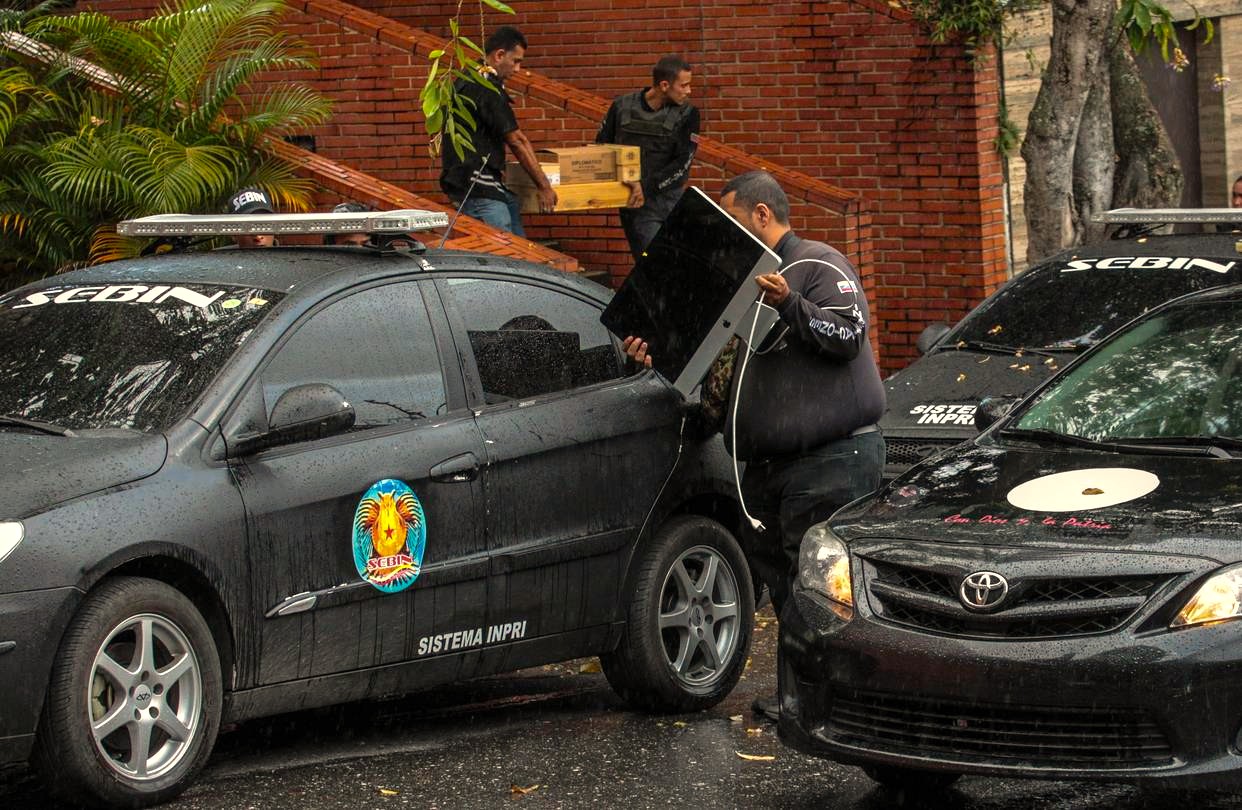
The Maduro regime continued using the same tactics on the eve of the canonizations—even in the homeland of José Gregorio Hernández. Seven residents of Trujillo are in prison for raising a banner defending the results of the 2024 election. Another eleven people face arrest warrants for the same act, according to Clippve, the Committee for the Liberation of Political Prisoners in Venezuela. In Mérida, SEBIN agents kidnapped Dr. Pedro Fernández, member of NGO Médicos por Venezuela in that state. Foro Penal reported 21 new political prisoners few days after the canonizations. The watchdog organization also called Pope Leo XIV to intercede for those unjustly imprisoned.
María Corina Machado’s communications have drawn explicit connections between joy over the supposedly imminent fall of Maduro and widespread enthusiasm surrounding the canonizations. Since 2024, her discourse has partly relied on references to faith. More specifically, to a “spiritual struggle against evil.”
Machado aides acknowledge how many Venezuelans cling to God to cope with ongoing uncertainty. They believe this helps Machado supporters interpret some events as part of a series of providential signs favoring change in Venezuela. “There’s a set of symbols that seem to be shaping the idea that we’re already in the final push,” said Pedro Urruchurtu, head of international relations for the Comando Con Venezuela. For him, milestones like the Nobel Peace Prize or the canonization create a “contained energy” among the population that sustains their “desire for change and sense of purpose in the struggle.”
“These are signs that invite people to organize themselves and be ready. It’s something rooted in faith, religion, and what we must do ourselves. But also in what we must ask of God: To give us the strength to keep moving forward.”
“What matters now isn’t the political dimension of these few hours, nor the manipulation the dictatorship carries out,” said Julio Borges, Secretary General of Primero Justicia, who claims that a miracle from the saintly doctor saved his life when he was a newborn. “What matters is that the figure of José Gregorio transcends this moment and becomes a guide, a model, someone who walks with us on the road to the future.”
Caracas Chronicles is 100% reader-supported.
We’ve been able to hang on for 22 years in one of the craziest media landscapes in the world. We’ve seen different media outlets in Venezuela (and abroad) closing shop, something we’re looking to avoid at all costs. Your collaboration goes a long way in helping us weather the storm.
Donate