
That Unexpected Window to Venezuela's Past: Historical Cinema
Some of the best films made in Venezuela, such as Alidha Ávila's "Sucre," reconstruct and question patriotic religion or identity myths
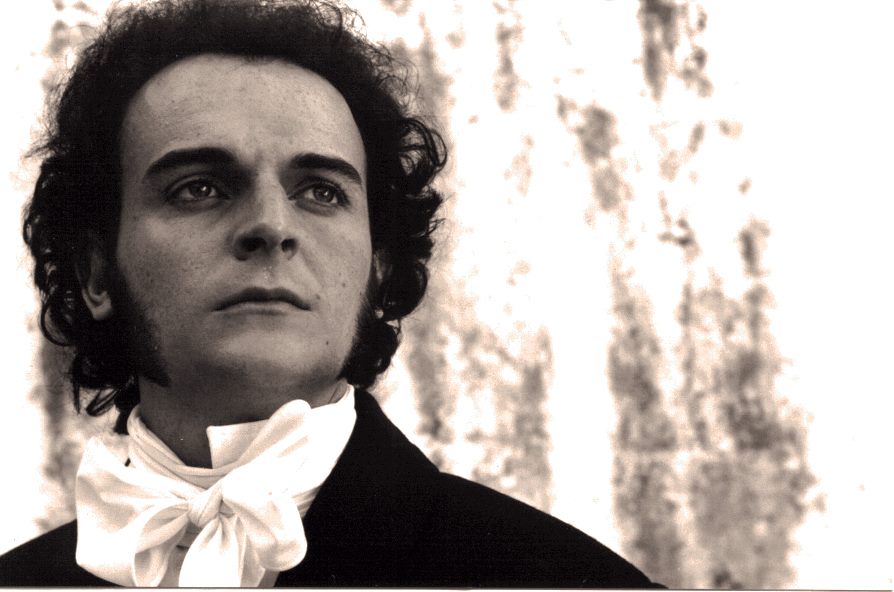
Photograph by Rosa Virginia Urdaneta. “SUCRE.”
Thirty years ago, a Venezuelan historical film premiered simultaneously on RCTV and the official state channel Venezolana de Televisión. It was largely financed by the State, but it wasn’t propaganda. It was the bicentennial of the birth of the Grand Marshal of Ayacucho, and the film, Sucre, told his story as it had never been told before: as that of a person, not a character; sensitive, empathetic, more concerned with duty than appearances or pleasure, and grounded. Much more than just the Liberator’s right-hand man. A workaholic who neglected his appearance and was plagued, despite all his efforts, by bad luck.
Directed by Alidha Ávila, Sucre is a discreet—and in my opinion, underrated—gem of Venezuelan cinema. It is not dominated by Bolívar, who here is a leader, not the only one, and the film makes visible the questions surrounding his tendency to consider himself indispensable, superior to everyone else. He is portrayed by Guillermo Díaz, who is not a heartthrob and is much more like the Bolívar depicted by the painters who knew him. The same is true for many other characters such as Mariño, Soublette, Bermúdez, and even soldiers or civilians: they are people with families, with needs, who wonder if the losses were worth it, who suffer grief, exile, and frustration.
“Since I was a child, I’ve tried to achieve something that always eludes me, and now I feel I’ve given it my all, and all I want is a little peace,” says Antonio José de Sucre, unforgettably portrayed by Luigi Sciamanna as a melancholic hero—as seen in Rosa Virginia Urdaneta’s photograph featured in this article—burdened by every misfortune, who achieves many things but can never truly enjoy anything.
When the State funded culture, not propaganda
This project came into Sciamanna’s path, much like heroic and tragic destiny had with Sucre. In September 1994, he met actress Mimí Lazo at the Teatro Nacional in Caracas, who told him, “I’ve been thinking about you for two days, come with me.” The actress immediately sent him to see Mireya Guanipa, the casting director for a film he knew nothing about. Sciamanna agreed to record a self-introduction and have his picture taken, even though he was completely unprepared. In fact, he had just come from the gym. “Mireya pulled a folder from one of the desk drawers and, while showing me three photocopies of illustrations of Marshal Sucre, said, ‘You just auditioned for the lead role in a film about Antonio José de Sucre.’” The next day, he met with the rest of the team and the director, Alidha Ávila. Finally, when Sciamanna, script in hand, asked which scene he should audition for, Ávila informed him that the role was his.
That’s how the man who is now one of the greatest actors in Venezuelan theater and film, the man who, among other roles, portrayed none other than Armando Reverón in Diego Rísquez’s biopic, began making his first feature film. “There was a month left before filming was set to begin, and the production had lost its lead actor, who had left to star in a telenovela. What did I know about Sucre? Nothing. That he was the hero assassinated in Berruecos, a great friend of Bolívar, and born in Cumaná. Since childhood, I had been fascinated by Arturo Michelena’s painting. I was about to embark on one of the most intense adventures of my life.”
Sciamanna threw himself headlong into memorizing the script and developing his character, thinking of the poet Giacomo Leopardi, Jesus Christ, and T. E. Lawrence, that is, Lawrence of Arabia. He reread Leopardi and Lawrence, as well as the biographies of Mariscal Sucre, Alfonso Rumazo González and Ángel Grisanti, all of Shakespeare, Unamuno, Coleridge, and Sucre’s letters compiled by the Biblioteca Ayacucho. He carried these books with him while they filmed in Coro, Puerto Cabello, Maracay, Colonia Tovar, Caracas, and Quito, where he visited the hero’s tomb. “Filming Sucre was a psychic, emotional, and spiritual journey through space and time. Many, many years would have to pass before I experienced something similar.”
“A recent book by critic Alejandro Izquierdo, Transformaciones del cine venezolano 1973-2015, exposes the paradox of an audience that always complained that Venezuelan cinema was “all about cops, prostitutes, and thugs” but clearly preferred crime films and social dramas.”
“The team was made up of the best in each of their respective fields, and they gave their all,” recalls director Alida Ávila. “The entire production lasted five months, allowing me to shoot the film I had dreamed of. They were perhaps some of the happiest months of my creative life.” Ávila had been interested in the Mariscal for years, a figure always overshadowed by the brilliance of Bolívar, even though Sucre was the one who executed many of the political and military projects conceived by the Liberator. As the bicentennial of Sucre’s birth approached, Ávila and executive producer María Helena Herrera created the Prosucre Foundation to gather support and developed the film project, which was approved and financed by the National Council of Culture, CONAC.
From the beginning, they knew they couldn’t aspire to a massive budget. “The film only shows the beginning or the end of each battle, depending on how each one influenced Sucre’s life. We focused on his human, ethical, and political conflicts, which contributed to that intimate tone, so rare to find in historical films.” Ávila was also drawn to the tragic nature of the character. “After reading Sucre’s biographies and letters, I understood that his nature made him better suited to a civilian, private, intimate life, by candlelight, but his profound sense of loyalty to Bolívar and his astonishing military prowess led him to live permanently in the spotlight of history.”
The main shareholder, the Venezuelan State, allowed them to work in peace. CONAC approved the script without reservations, and there was no pressure during filming regarding how the story should be told. “There was only one scene that Caldera (Venezuela’s president at the time) didn’t like, and he asked me to remove it because it diminished the historical figure of Bolívar, whom, by the way, we also tried to remove from the statue that official Bolivarianism has placed him on. The scene showed Bolívar’s reaction when he learned of the victory at Ayacucho and jumped onto a table, leaping about like a madman. Although it’s historical, neither the actor nor I could find a way to make it believable, so I understood that the best thing was to cut it.”
Many statues, few films
Few mediums like film can be as beneficial in allowing us to glimpse the past, understand it, and discuss it. But history has by no means been the favorite subject of national cinema. A recent book by critic Alejandro Izquierdo, Transformaciones del cine venezolano 1973-2015, exposes the paradox of an audience that always complained that Venezuelan cinema was “all about cops, prostitutes, and thugs” but clearly preferred the crime films of Clemente de la Cerda or César Bolívar and the social dramas of Román Chalbaud to other genres. Before the baseball comedy Papita, Maní y Tostón, now the highest-grossing Venezuelan film of all time, dramas about violence like Secuestro exprés, Homicidio culposo, and Manu, la mujer del policía dominated the national film charts for decades. Only one historical film managed to break into the box office: El Libertador, by Alberto Arvelo, which Izquierdo says is the most expensive film in Latin American cinema, with a budget of 50 million dollars and a cast dominated by Édgar Ramírez. A film that had the full support of the chavista regime and that reinforces the tenets of its Bolivarian dogma.
“Aside from the official films of the 2010s, there hasn’t been an increase in public support for this film genre,” Izquierdo points out. “What we have is the use of chavismo to rewrite history. It’s also important to consider that producing period films is more expensive.” This genre isn’t the most popular worldwide either, although it has gained importance in television series, as evidenced by many shows on Netflix, including one about Bolívar. Interestingly, there was a lot of interest in the past in bookstores, or at least there was about fifteen years ago. Several of the most successful Venezuelan novels of the 21st century, such as Francisco Suniaga’s El pasajero de Truman and Federico Vegas’s Falke, are historical novels.
However, two great directors, both deceased, continued to explore the genre: Diego Rísquez and Luis Alberto Lamata. The first was an aesthete who approached the genre experimentally, with works closer to video art such as Bolívar, Sinfonía Tropikal, and Amérika Terra Inkognita. Later he tried a much more commercial approach in Manuela Sáenz and Francisco de Miranda. The second was a historian as well as a filmmaker and, being close to chavismo, managed to produce his last works under the umbrella of the propaganda machine. His Bolívar, el hombre de las dificultades (in which the hero is not Edgar Ramírez but Roque Valero) is the second film about the same figure financed by the chavista state. But before that, and before Taita Boves and Miranda, which he made with La Villa del Cine (the little Cinecittà of Hugo Chávez), Lamata directed the extraordinary Jericó, from 1990, a sophisticated film about the Conquest, much more realistic than Ridley Scott’s 1492 Conquest of Paradise or Mel Gibson’s Apocalypto, and clearly superior to Werner Herzog’s Aguirre, the Wrath of God. And shortly after, he drew on a Robert Louis Stevenson story to approach the Federal War with a love story amidst the horror: Desnudo con naranjas.
“The film Sucre, on the other hand, directs its gaze toward the internal differences and tensions. Of course, much information is missing, and historians will never tire of pointing it out, but the film holds up because it doesn’t conclude. It doesn’t answer. It poses questions. It exposes.”
Both Lamata and Rísquez took into account the same thing Alidha Ávila considered: those who appear in history books and those who don’t, like the humble protagonists of Jericó and Desnudo con naranjas, were people. That was precisely what attracted Leonardo Padrón, who wrote the screenplays for Manuela Sáenz and Francisco de Miranda de Rísquez. With Rísquez, who had always wanted to try his hand at films with plots and actors, there was a confluence of interests, because Padrón had tried to make that story of Manuela on RCTV and had a first script. “I wanted to distance myself from Denzil Romero’s book—the erotic novel La esposa del Dr. Thorne—but also from marble, as I did with Miranda, and I read many books.” This is how he discovered a little-known story: that Manuela met Herman Melville, the author of Moby Dick, at the end of her life, which gave him the angle for his treatment. “I didn’t want to idealize Manuela, but rather ask myself questions about her motives, her grief, what it meant for her to have such a relationship while married, and with that man, in those circumstances that magnified jealousy and distance.”
In that film, the superb Manuela, played by the Cuban-Venezuelan actress Beatriz Valdés, is the center of the story, not Bolívar, portrayed by Mariano Álvarez. But Padrón naturally wanted to focus on the Liberator, and he tried to get Venevisión to produce the first telenovela about Bolívar, a project that died at birth due to the 2002 oil strike, despite the enormous research the writer had already undertaken.
The lacking mirrors
“When Alidha Ávila realized she couldn’t make an epic film, but rather an intimate one,” says Sciamanna, “she found an interesting dramatic vision because the history of our independence is taught to us as a string of victorious battles, unforgettable dates, and a final betrayal. The film, on the other hand, directs its gaze toward the internal differences and tensions. Of course, much information is missing, and historians will never tire of pointing it out, but the film holds up because it doesn’t conclude. It doesn’t answer. It poses questions. It exposes. It makes, so to speak, a virtue of its gaps in information.”
For Sciamanna, Sucre marked a turning point, not only in his career. “As a Venezuelan, it instilled in me, first and foremost, an immense love for the person of Antonio José de Sucre. Then, and no less importantly, it placed me on the threshold of a long and wonderful emotional and intellectual journey: to investigate and continue studying how to understand our independence process. I would dare say that this is one of the film’s most beautiful contributions.” This is already established in Ana Teresa Torres’s narrative and dramatic structure, and I think the ending we filmed accentuates it.” That ending is very easy to connect with today: the Mariscal’s last word is the name of his hometown: “Cumaná.”
Alidha Ávila is very pleased with the reception Sucre received. “In the Havana Ibero American Film Festival it won the Special Jury Prize, the second Venezuelan film to be awarded at that festival, one of the seven most important in the world. In Venezuela, it won every award a film can win, a total of fourteen. VTV continues to broadcast it every year; there must be a reason for that, I imagine.” Likewise, the sheer number of views it has garnered on YouTube is impressive, even today, 30 years after its premiere.” She also believes we owe a debt to the historical genre in our cinema, but she isn’t giving up: she’s planning to write a screenplay with Rafael Arráiz Lucca based on his biography José Antonio Páez: Del mito al hecho. Another task for the transition.
“We need mirrors of our past to see ourselves better,” says Padrón, “and we have many stories to tell from our own history.”
Caracas Chronicles is 100% reader-supported.
We’ve been able to hang on for 22 years in one of the craziest media landscapes in the world. We’ve seen different media outlets in Venezuela (and abroad) closing shop, something we’re looking to avoid at all costs. Your collaboration goes a long way in helping us weather the storm.
Donate