
Venevisión’s Newscast Gamble
The largest private TV network in Venezuela relaunched its primetime news program as part of a larger reset. What is the reason behind it? Will people actually tune in?
TV newscasts are meant to report stories, not be the subject of them, except when they are revealing a major scoop with public implications. And during a relaunch, the goal is to avoid a complete disaster.
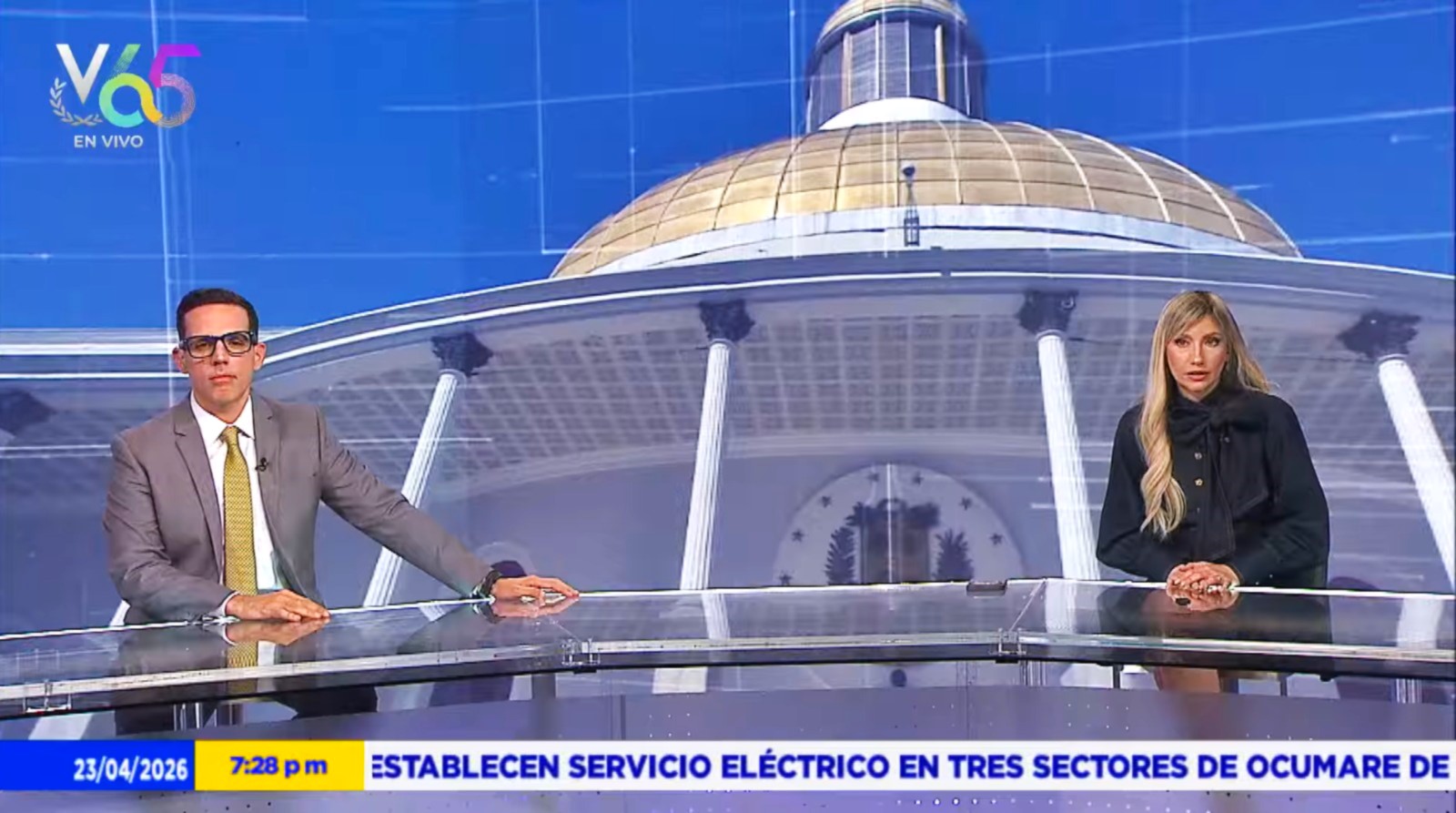
But sometimes, a news bulletin having a format switch or even a cosmetic makeover is also part of a broader trend of changes in the larger media landscape of a country. This could be said about Venezuela’s main TV commercial channel Venevisión, when earlier this month it announced a brand new prime time evening edition of Noticias Venevisión.
If anyone wonders why it is called like that and not El Informador, it’s because that’s the name used since 2023 and the newscast has changed it several times. However, its breaking news theme remains, which has turned into a Venezuelan cultural signifier.
On April 13th, at 7 pm, its first-ever broadcast was aired, hosted by journalists Shirley Varnagy and Luis Olavarrieta, both returning to TV after years of absence.
Varnagy began with an opening statement: “Today begins a space in which every night the country can see itself whole… to meet again with the responsibility to speak to a country that needs all voices and not just one, that deserves to contrast, to question, to understand.”
Olavarrieta added: “We start with the truth, the facts, the objectivity. With determination that no part of reality is left out, with conviction that things can be said as they are.”
This isn’t happening in a vacuum. The aftermath of January 3rd opened a small gap for Venezuelan media, and Venevision took advantage by adjusting its editorial line: covering opposition figures like Maria Corina Machado or addressing issues that were highly unlikely to be aired at all during the Maduro era.
Adriana Cisneros has been promoting the return of private investment into the country while seeking to establish a new billion-dollar fund.
Venevision’s Chairman Andrés Badra confirmed it during an interview with El Nacional, published one week after the newscast’s debut: “The TV situation is very similar to all the media in Venezuela… It’s a situation mixing complexities and opportunities”.
He also said that Venevision wants to be above the political fray: “We understand that our institutional role is to give absolute plurality to all existing voices, giving chance to those voices to have a meeting point.”
As Venevision celebrates its 65th anniversary, it announced a very ambitious plan of reinvention, in which they’re now embracing social media and having its own streaming service: We no longer make TV shows… We design 360° content experiences.
Quite a difference to what Badra was saying back in 2023, seven months after taking the job, in which the channel’s plans were tied to the economical reality of that moment.
At the same time, there has been plenty of attention to Venevision’s parent company, Cisneros Group and its CEO Adriana Cisneros (who took over after the passing of her father Gustavo in late 2023). In recent weeks, she has been promoting the return of private investment into the country while seeking to establish a new billion-dollar fund, focused in diverse sectors (but not into oil and mining-related ventures).
But the shadow of the 2004 meeting between Gustavo Cisneros and Húgo Chavez in Miraflores, set up by former US President and Nobel Peace Prize laureate Jimmy Carter still lingers. Barda admitted the existence of distrust from parts of the public but he strongly defended the role Venevisión took in recent years while looking onwards.
Almost 20 years after Venevisión’s main rival RCTV was taken off the air, the Venezuelan TV ecosystem is in dire need of renovation and improvement.
As for the newscast itself, its format is like TVE’s Telediario: divided into four broad segments that add to one hour (with ads). The first part is political and economic news, then international news, later more national news covering other regions of the country and/or human interest stories, and the final segment is focused exclusively on sports.
That leaves the question of “who is this for?”. Leaving aside the more specific political context, people and especially younger generations are getting their news differently these days. Venevisión is aware of by simulcasting live all news programs on its YouTube channel.
Of course, there are parts of our population that for geographical and/or socio-economic factors still cling to the old-fashioned way of reading the paper at breakfast or watching the TV news right after dinner. That could be the likely target audience VV is aiming at.
This gamble by Venevision’s leadership still faces many challenges: almost 20 years after its main rival RCTV was taken off the air, the Venezuelan TV ecosystem is in dire need of renovation and improvement. But the biggest challenge any commercial media outlet in Venezuela has at this moment isn’t one they can solve just by themselves.
It all comes down to our citizenry having all the necessary conditions to exercise free speech, in which any TV newscast not only can be made and shown but also be freely engaged and discussed by viewers. Taking in consideration, for example, the latest report by Provea on the criminalization of speech, we are still a very long way from getting there.
Caracas Chronicles is 100% reader-supported.
We’ve been able to hang on for 22 years in one of the craziest media landscapes in the world. We’ve seen different media outlets in Venezuela (and abroad) closing shop, something we’re looking to avoid at all costs. Your collaboration goes a long way in helping us weather the storm.
Donate