
How the Rodríguez Regime Denies Medical Care to Political Prisoners
Another health crisis the State hides: dozens suffer from severe conditions, including cancer and diabetes, without any specialized care
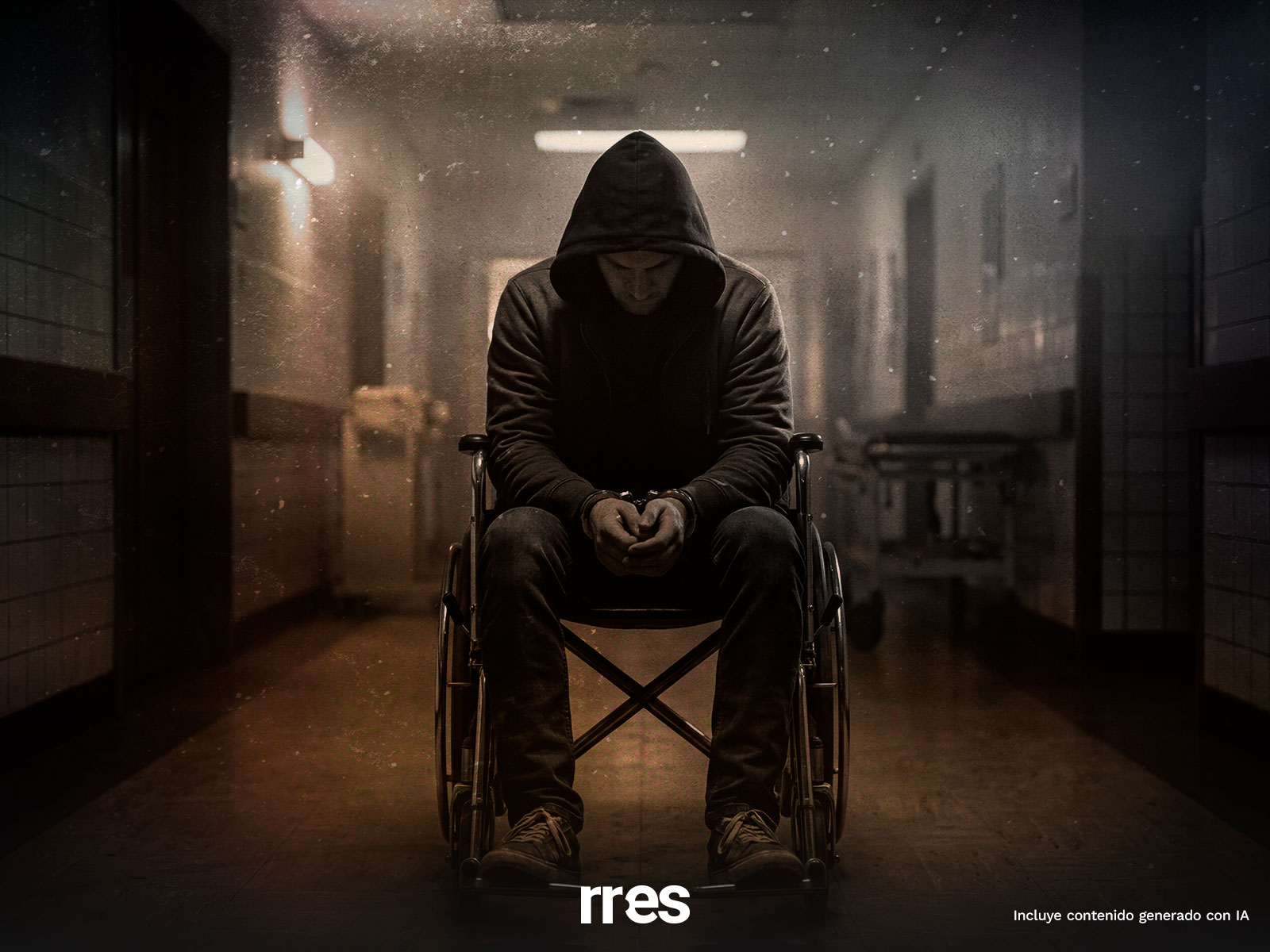
On the night of May 26, 2026, General Ramón Antonio Lozada Saavedra was released after spending nine years in arbitrary detention. He could walk when he was arrested in 2017. Today, he leaves in a wheelchair with clear signs of severely reduced mobility. According to his family, he received no timely medical attention until 2023, after suffering his second stroke behind bars.
Hours before the general’s release near El Helicoide, Jean Carlos Cariel pleaded for urgent medical care for his brother, Ricardo. He based his plea on a pre-existing medical condition: Ricardo had suffered a skull fracture in 2009. Now, under forced confinement, he had spent over eight days experiencing severe headaches, dizziness, and loss of balance.
“He has received basic, general first aid, but nothing specialized. This case requires specialized medical care,” Jean Carlos said.
Other relatives of political prisoners, such as Gloria Morales—mother of Rosmel Méndez—cannot even accurately report on their loved ones’ health. During one of her last visits in February 2026, she noticed her son’s skin looked yellow, but she could not tell what he was suffering from or if a doctor had examined him.
At least seven political prisoners are at extreme risk, suffering from untreated forms of cancer.
For the more than 401 political prisoners still held in Venezuela according to the NGO Foro Penal—or over 600, according to NGO Justicia, Encuentro y Perdón (JEP)—opacity shrouds both their legal and medical files.
At least 39 people, representing nearly 10% of the cases reported by Foro Penal as of May 27, 2026, are in critical health conditions confirmed by their families and Venezuelan civil society organizations.
An opacity that sickens
“We only know about these cases through the information provided by the mothers and relatives of political prisoners, because the State obviously does not publish any public information. They have no statistics, they have nothing,” denounced Diago Casanova, representative of the Committee for the Freedom of Political Prisoners (CLIPPVE).
Of the 39 political prisoners in critical health, 29 are civilians and 10 are military personnel (FANB).
El Rodeo I prison in Miranda State holds the highest concentration, with 10 political prisoners suffering from chronic illnesses inside the facility.
At least eight political prisoners are in serious medical condition due to physical trauma, a direct consequence of torture endured during detention. At least seven political prisoners are at extreme risk, suffering from untreated forms of cancer.
“… directors and guards beat inmates with a bat or a wooden board labeled ‘acetaminophen’ or other painkillers whenever they complain of body aches.”
At least six of the political prisoners facing severe health crises are women.
Eleven individuals facing critical health issues were charged in connection with the 2020 Operation Gedeón plot (the failed Macuto maritime incursion), while another seven are linked to the 2018 drone case involving the alleged assassination attempt against Nicolás Maduro.
Repeated reports gathered by the UN’s Fact-Finding Mission on Venezuela have highlighted the unsanitary conditions of detention centers, exposing both political and common prisoners to undiagnosed illnesses.
Such is the case of Rodolfo José Berrio Rojas, who has been arbitrarily detained since October 2025. He has suffered from various skin infections while held in the Tocorón prison. According to a complaint filed by Rodolfo’s relatives before the Inter-American Commission on Human Rights (IACHR) on May 18, 2026, they have provided medication to treat what they can visibly see, but they have no certainty that authorities actually hand the drugs over to him.
Tarazona had to pay for his own medical exams to detect a pulmonary fibrosis he developed during his imprisonment.
Furthermore, CLIPPVE warns that the list of risks is even higher when considering political prisoners suffering from physical and psychological trauma that neither families nor civil society have been able to detect during their forced isolation.
“Confinement conditions have not changed at all, despite recent releases. They aren’t even guaranteed access to water,” Casanova denounced. “Even when political prisoners get sick, prison staff tell them they are lying or putting on a show. In some detention centers, like the San Francisco de Yare prison, directors and guards beat inmates with a bat or a wooden board labeled ‘acetaminophen’ or other painkillers whenever they complain of body aches.”
Released and abandoned
According to Martha Tineo, lawyer and director of JEP, the lack of medical care for political prisoners persists even after they are released.
One of the most striking examples of state abandonment regarding released political prisoners was Javier Tarazona. After spending four years and seven months in arbitrary detention, Tarazona had to pay for his own medical exams to detect a pulmonary fibrosis he developed during his imprisonment.
“After these individuals leave these highly vulnerable conditions that destroy their physical and mental health, they must face a virtually non-existent healthcare system, just like every other Venezuelan,” Tineo pointed out.
Everyone who has been arbitrarily detained requires urgent psychological and psychiatric care due to the cruel and inhuman treatment.
In a country facing a severe shortage of healthcare professionals, where medications are scarce and expensive (deepening the vulnerability of local communities) and where facilities have lacked maintenance for years, released political prisoners find themselves trapped in a cycle of re-victimization even after leaving prison.
The number of political prisoners with severe illnesses dropped from a minimum of 60 cases in December 2025 to a minimum of 39 in May 2026, according to JEP’s data. However, the 22 individuals who were released must monitor their physical health on their own, relying solely on the support of their families.
The NGO emphasizes that everyone who has been arbitrarily detained requires urgent psychological and psychiatric care due to the cruel and inhuman treatment they suffered, yet the State provides no such assistance.
Tineo affirms that many political prisoners and their families request the psychological support provided by human rights organizations, “but we know it is not enough. We lack the financial capacity to provide comprehensive care. Nor can we replace a State that is legally obligated to safeguard the human rights of its population.”
Caracas Chronicles is 100% reader-supported.
We’ve been able to hang on for 22 years in one of the craziest media landscapes in the world. We’ve seen different media outlets in Venezuela (and abroad) closing shop, something we’re looking to avoid at all costs. Your collaboration goes a long way in helping us weather the storm.
Donate