
Who Fills the Seats at Venezuela's August 1 Negotiations
A US-brokered table opens two years after the 28J stolen vote. Here is who represents each side
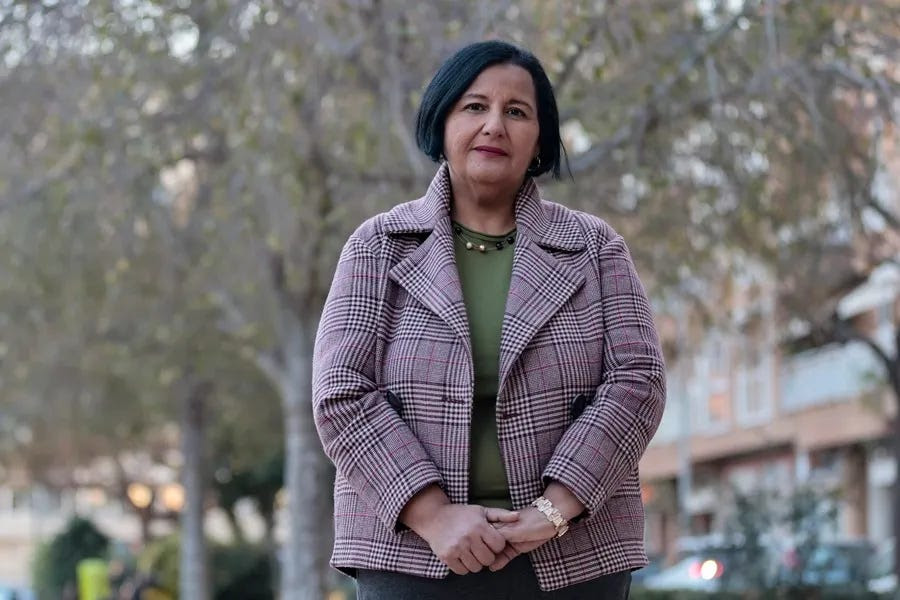
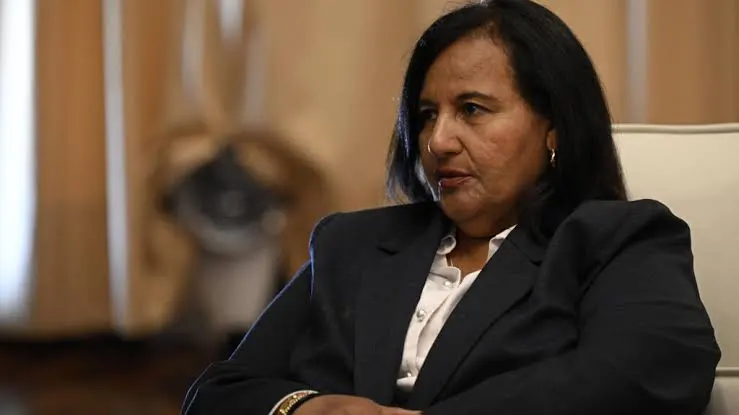
Dinorah Figuera was allowed to return from exile thanks to her participation in this initiative. The same happens with some members of the opposition delegation
On August 1, representatives of Venezuela’s two rival legislatures sit down together under Washington’s supervision in the most concrete attempt to negotiate again since the Barbados talks of 2023.
The talks, framed by Washington as the start of a transition, are driven by the Department of State and pair two delegations of ten. On one side sits the current National Assembly controlled by chavismo, led by its president Jorge Rodríguez. On the other is the Comisión Delegada of the National Assembly elected in 2015 — the last legislature the US and many other countries recognized as democratically legitimate.
According to Dinorah Figuera, president of the Delegate Commission, the primary objective is laying out the institutional groundwork for a political transition: renovating Venezuela’s key state bodies, establishing a new National Electoral Council (CNE) capable of holding elections with credible guarantees, and extending to the Supreme Tribunal’s electoral and constitutional chambers. Figuera has said she hopes to deliver a transition proposal by December 2026, conveniently timed for the Trump administration to show a foreign-policy success just after the US midterm legislative election in November.
Figuera and Jorge Rodríguez first met on June 18, along with U.S. Chargé d’Affaires John Barrett, hours after Figuera returned to Caracas after years in exile. Those contacts were interrupted by the June 24 earthquakes, seeming as though the political track would freeze indefinitely behind the humanitarian emergency, especially as Delcy Rodríguez said on July 13 that the government had “no head” to think about elections while managing the disaster.
At the head of the table
The roots of Dinorah Figuera, the opposition’s co-chair, lie on the left. She belonged to the labor party La Causa R in the 1990s (then an important force in the rising Venezuelan Left) and served as deputy secretary of the Libertador municipality in Caracas under Aristóbulo Istúriz, who later jumped onto the chavista wagon. She eventually joined Primero Justicia and was re-elected as a lawmaker in 2015 before being forced into exile in 2018. Shortly after she led protests denouncing the death of party colleague Fernando Albán under SEBIN custody —a PJ councilman, key aide to Julio Borges and the godfather of Figuera’s daughter— she was threatened by the intelligence services and took shelter in the French Embassy of Caracas for 10 days before fleeing to Spain and receiving political asylum.
Sources close to Primero Justicia describe Figuera as a principled politician willing to serve without seeking personal or financial gain from her sacrifices. She maintained a very low profile in this role until the State Department elevated her visibility several weeks ago.
While exiled in Spain, and following the collapse of the interinato, Figuera succeeded Juan Guaidó as the figure managing Venezuela’s overseas assets in the US via the 2015 National Assembly’s Comisión Delegada (recognized by Washington as Venezuela’s sole democratically elected institution until this year). Sources close to Primero Justicia describe Figuera as a principled politician willing to serve without seeking personal or financial gain from her sacrifices. She maintained a very low profile in this role until the State Department elevated her visibility several weeks ago. Figuera and US representatives have been undertaking preparatory meetings in Madrid for over two weeks, coordinated by Mauricio Claver-Carone, Secretary of State Marco Rubio’s principal interlocutor on Venezuela.
Figuera has called herself “an instrument” of the reinstitutionalization process. She acknowledges Edmundo González Urrutia as president-elect and María Corina Machado as the opposition’s leader, yet notes she holds “a different vision.” She is, in the role the State Department has cast for her, what Edmundo González was to Machado in 2024: a figure admitted by chavista institutions because she isn’t a threat, and little enough ambition to follow guidelines from influential people in the opposition alliance.
Jorge Rodríguez, her counterpart, is chavismo’s veteran negotiator and the brother of acting president Delcy Rodríguez. He led the government’s delegation in the Mexico talks of 2021–2022 and signed the 2023 Barbados Agreement on Maduro’s behalf. Before that, he was Chávez’s vice president, communications minister, and president of the CNE in 2005–2006.
Whose VP?
Up until yesterday, the opposition’s full roster was not yet public. The opposition’s ten were revealed in stages and through extraofficial communications. In June, El Pitazo confirmed six names: Dinorah Figuera, Juan Miguel Matheus, Ramón López, Jorge Millán, Marco Aurelio Quiñones and Sergio Vergara. The remaining four were disclosed on July 29th: Elimar Díaz, Julio César Moreno, Macario González and Desiré Barboza.
Six are from Primero Justicia: Figuera, constitutional lawyer Juan Miguel Matheus, engineer Ramón López, Caracas legislator Jorge Millán, and recent additions Elimar Díaz and Julio César Moreno.
Four are from Voluntad Popular, Leopoldo López’s party: Marco Aurelio Quiñones; Táchira legislator Sergio Vergara; and late additions Macario González and Desiré Barboza. Nearly all have spent recent years in exile, or in González’ case, in detention. Several are returning only now, under the process’s complicit US security guarantee.
For most of the last two years, Primero Justicia has effectively been two parties. After Henrique Capriles chose to participate in the 2025 regional and legislative elections, the party’s official leadership, aligned with Machado’s abstentionist line, expelled him, Tomás Guanipa, and others for legitimizing what it called a fraud. Both Tomás Guanipa and Capriles were elected members of the NA that Rodríguez presides over. What remained of Primero Justicia, keeping the party’s name and recognition, was the abstentionist wing, led by Juan Pablo Guanipa, with Julio Borges as coordinator and María Beatriz Martínez as president.
The delegation Washington seated is drawn substantially from the faction of Primero Justicia most doctrinally opposed to negotiating an electoral path with chavismo. The party has tried to hold both positions: in its July 27 statement it backed the dialogue as a route toward free elections while, in the same breath, ratifying its support for Machado.
Who’s Who?
Juan Miguel Matheus (PJ, Carabobo) is a lawyer with a PhD in constitutional and parliamentary law behind the Estatuto que rige la Transición a la Democracia, the legal framework that underpinned Guaidó’s 2019 interim presidency. Elected for Carabobo in 2015, he was among the sharpest critics of the 2017 Constituent Assembly, calling it fraudulent. He is in exile in Austin and coordinates PJ’s board of directors.
Ramón López (PJ, Distrito Capital) is an engineer and the former vice president of Venezuela’s Colegio de Ingenieros. López sat in the 2015 Assembly and the Parlasur, Mercosur’s parliament. Exiled in Spain after being threatened by Diosdado & Co., he became PJ’s international spokesperson. He flew back to Caracas alongside Figuera on June 18 for the meetings that launched the process..
Jorge Millán (PJ, Distrito Capital) is an industrial engineer and administrator. Millán is PJ’s Caracas coordinator and one of the opposition’s longtime specialists on the collapse of the national electric system. In 2019, the Constituent Assembly ordered his prosecution on charges including treason and instigation to insurrection. When Maduro issued him a pardon in 2020, Millán rejected it, arguing he had committed no crime and that Maduro had no legitimacy to pardon anyone.
Elimar Díaz (PJ, Zulia) is the delegation’s youngest member. Díaz began in Manuel Rosales’s Un Nuevo Tiempo before moving to Primero Justicia, where she is now national political coordinator and PJ’s political vice-president in Zulia.
Julio César Moreno (PJ, Falcón) has the thinnest public record of the ten. Moreno was elected to the 2015 Assembly for Falcón and is counted among Primero Justicia’s delegates.
Marco Aurelio Quiñones (VP, Anzoátegui) was elected for Anzoátegui in 2015. In his early career, he was close to Capriles and Borges in Primero Justicia and then crossed to Voluntad Popular in late 2016, becoming a close ally of Guaidó. In December 2024 the exiled Assembly swore him in as second vice president, filling the seat left by Auristela Vásquez’s resignation and making him the highest-ranking officer of the 2015 legislature at the table after Figuera.
Sergio Vergara (VP, Táchira) is a founding member of Voluntad Popular alongside Leopoldo López and Daniel Ceballos. He was elected for Táchira in 2015 with nearly 76% of his circuit’s vote. He served as acting mayor of San Cristóbal after Ceballos was jailed in 2014, and has been in exile since 2019, when the SEBIN raided his home in connection with the Roberto Marrero case. He is also among the signatories of the document tied to the failed Jordan Goudreau incursion, asking for a military foreign intervention.
Macario González (VP, Lara) is a veteran Lara politician and former mayor of Barquisimeto’s Iribarren municipality. González was detained by the SEBIN in September 2025 as he left a university in Barquisimeto, held incommunicado, in what Voluntad Popular denounced as a forced disappearance for what he says was 68 days without charge, judicial hearing, or explanation. He was released near midnight on November 19, 2025, hours after the Inter-American Commission on Human Rights granted him precautionary measures. He has publicly held Interior Minister Diosdado Cabello politically responsible for his detention.
Capriles, now sitting in the Rodríguez-controlled national assembly, cautioned that a negotiation excluding Machado “will be condemned to fail.”
Desiré Barboza (VP, Zulia) was an alternate deputy for Zulia in the 2015 Assembly and is Voluntad Popular’s regional coordinator there. Like most of the delegation, she has built her recent political life in exile and within the structures of the 2015 legislature.
On the ‘chavista’ side, only Jorge Rodríguez has been named to the time of writing. While the opposition’s ten were leaked or rumored until confirmed, the radio silence from those representing the current national assembly clashes awkwardly with Diosdado Cabello’s boasts of chavista unity. Francisco Arias Cárdenas, 1992 coup veteran and former Zulia governor, urged Rodríguez’s delegation to consult the PSUV’s base and submit any agreement to the Venezuelan public, warning that dialogue must not become a matter of simply following Washington’s instructions.
The positions around the table
Primero Justicia and Un Nuevo Tiempo have called August 1 a “historic opportunity,” with PJ setting conditions: free, fair elections and the restoration of popular sovereignty. Voluntad Popular was the first to back the US initiative outright. But Acción Democrática’s Henry Ramos Allup has warned against any process that sidelines the coalition and Machado. Capriles, now sitting in the Rodríguez-controlled national assembly, cautioned that a negotiation excluding Machado “will be condemned to fail.”
Machado and González stated their own position on July 26, claiming they will neither participate in nor obstruct the process, having taken no part in its “design, construction and functioning,” and will judge it by concrete, verifiable results: institutional recovery, the release of political prisoners, guarantees without exclusions, a presidential electoral calendar, and respect for popular sovereignty.
Caracas Chronicles is 100% reader-supported.
We’ve been able to hang on for 22 years in one of the craziest media landscapes in the world. We’ve seen different media outlets in Venezuela (and abroad) closing shop, something we’re looking to avoid at all costs. Your collaboration goes a long way in helping us weather the storm.
Donate