
The Earthquakes’ Aftermath: No Government, All Chaos
Here are the voices of some of the individuals who survived, those who search for their loved ones, and the civilians trying to help
Aglaia Berlutti after surviving the June 24 earthquakes in Caracas (obtained from Substack):
“On June 24, 2026, at 5:58 p.m., I was about to take the elevator to buy some bread at my favorite bakery when I heard an alarm on my phone. One I’d never heard before. I looked at the screen and saw a Google notification bubble: “There may be an earthquake in your area,” it read. The elevator doors opened, and I stood there, stunned. The rest is a blur of images. The worst earthquake in Venezuelan history began moments later, and before I could understand what was really happening, I found myself running, with everything around me shaking in a way I think I’ll remember in every nightmare for the rest of my life. The earth’s roar echoed up the stairwell of my building’s hallway, a violent rumble that made me cry from sheer fear. The neighbors were screaming, and at some point, I fell to the floor and thought I was going to die. A simple, uncomplicated thought, gripped by dread and horror. But one specific moment I remember more clearly than anything else. I was going to die. That was it.
“What I’ve described above happened in less than a minute. A minute that lasted my entire life, my entire future. The earthquake seemed endless, and I just ran, screaming, terrified, until I bumped into my cousin and my neighbors. We all huddled together in pure terror, waiting for whatever would happen next. The ground seemed to never stop shaking; fear was everywhere. Fear was everything, fear was the world.
I don’t know how to better describe what is probably the worst experience of my life. I’m alive, unharmed, nothing happened to me, but the country is happening to me.
The 50,000 disappeared in La Guaira are happening to me, the disappearance of Daniel Licón, brother of my beloved Azalia, is happening to me, the death of Deborah, my adored student in my self-portrait classes, is happening to me. Every person I haven’t heard from is happening to me. Every time someone passes by, I don’t know if they’re alright: the tears of my neighbors, the horror of those sleeping in the square across from my house, the fear everywhere, and the suffering.
I’m alive, I’m unharmed, but wounded forever.”
Douglas, survivor, La Guaira:
“I live in La Guaira, and after the earthquake, thank God, my wife and I managed to get out of the building, which, being made of reinforced concrete and earthquake-resistant, didn’t suffer structural damage. On Thursday morning, I went to the Caribe area to look for my sister since I hadn’t heard from her.
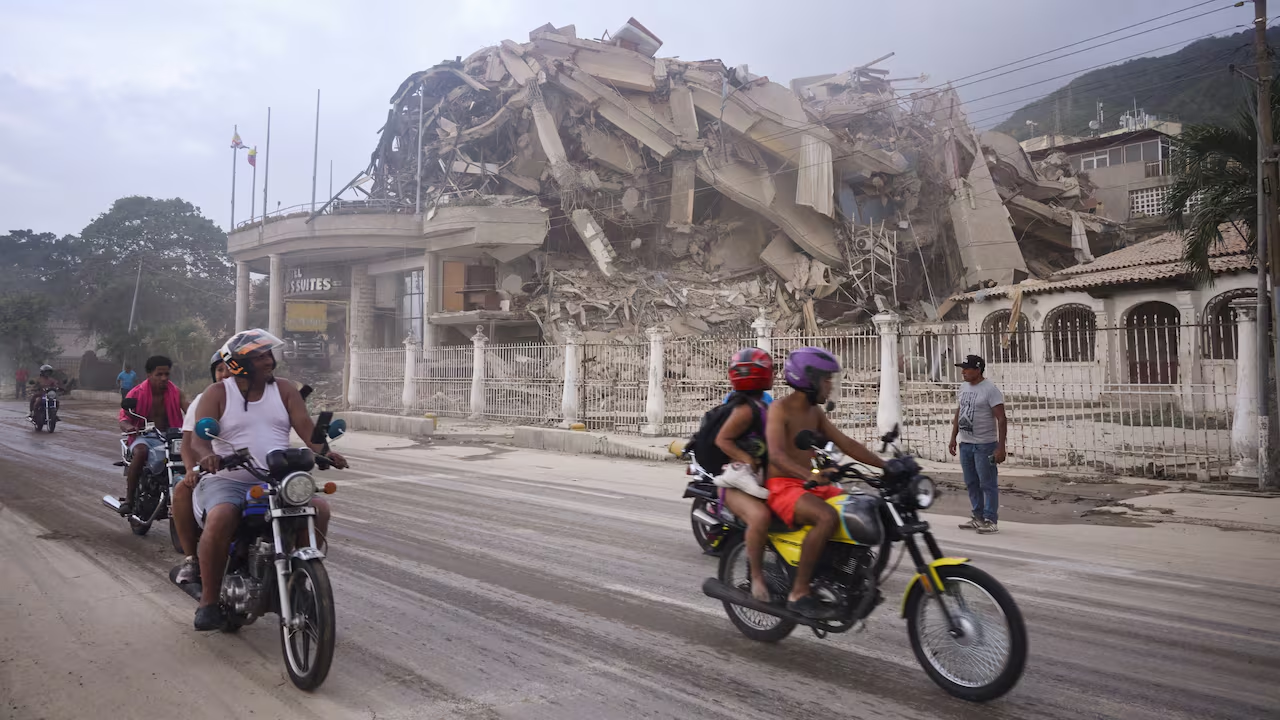
It looked like a bomb had been dropped on all the buildings. Police, civil protection, and firefighters were overwhelmed. For a moment, I thought my sister was dead, since no building taller than six stories was standing. On the way to Caribe, I saw three people being rescued alive, then I saw two more dead. The rescuers were crying a lot at the sight of such a horrific scene.
“It took me two hours to get there because of the cracks in the road. Only a few motorcycles were passing by. When I arrived, I thanked God: my sister’s building was the only one still standing, and she was waiting for us. As soon as we got home, she burst into tears and told me everything she had experienced from 6:00 pm on the 24th until 3:00 pm on Thursday the 25th. The two buildings that remained at either end of the city collapsed, and all she could hear were cries for help.
“The situation here is one of uncertainty: ambulances passing by every hour with the few survivors, the two main hospitals overwhelmed, both in the trauma shock area and in the waiting rooms. In some areas, they have removed the deceased and placed them side by side to be taken to the SENAMECF (forensic service).”
Freddy Salazar on June 28, a civilian looking for his brother’s corpse in Playa Grande:
“My brother was living in this building right in front of us. At the moment of the earthquake, he was in his apartment, and since then, I have been here looking for support, cooperation, and trying to find my brother’s whereabouts, or his body. I have come across the bodies of other people, the bodies of his neighbors. We found a six-year-old girl alive, but I still haven’t found him. Until I find him, I am not moving from this spot. He has three little girls who are at my house right now. They lost their mother three years ago. Our mother is completely devastated now and is paralyzed from the waist down. I do feel that a lot of support is needed, a lot. We need the solidarity of as many people as possible to solve the situation of others who have missing loved ones, not just mine.”
Ricardo Picón on June 27, volunteer in Playa Grande:
“When the government announced that volunteers had to sign up at the Poliedro de Caracas, two of my friends signed up but weren’t given any paperwork. It’s more of a control mechanism. You sign up, but that doesn’t mean they’ll let you through when you go down to La Guaira. And there are too many, too many people on their own over there; there wasn’t enough help. The good thing is that there were gringos, Dutch and Chilean rescuers; we heard some helicopters nearby. There are plenty of search-and-rescue teams with dogs. But there are many sub-communities on their own, trying to get their people out, begging for help. The rescue crews go, they assess the situation of a site, the dogs go in, some have sensors, they evaluate… Some people want to pull out their dead. We brought a generator to some people who wanted to rescue some dogs that were trapped on a high floor, in a building that was completely fucked up but didn’t collapse. The doors were jammed, so we gave them the generators. When we had to leave because other people had called us asking for help, a lady came up to us crying because we were taking the generator away, which was what could be used to power the tools to get the dead out of the collapsed building.
“I think there are a lot of people helping in Caracas, but many problems are piling up. The volunteer movement has been strong, but not necessarily everyone is being taken care of. And there are no megaphones, something they are asking us for to organize people. I feel there needs to be a collective coordination, with clear instructions, to be able to reach all communities with information on where food is being provided, where they can sleep, and where the medical centers are. That doesn’t exist right now. There are no organized groups over there to tell those affected in Playa Grande where they need to go. We need a strategic plan to help these people in the long term. The coordination hasn’t been good. At least in Playa Grande. I don’t know if further east the organization is somewhat better.
This looks like a refugee crisis. It looks like a war zone, I can’t explain the magnitude to you. Everywhere you look, there are destroyed buildings.
Funds are coming in. There is enough money. I feel it’s not a money issue. I feel that donations to all organizations are through the roof, but it complicates things that they are limiting access, and there is only one way to get to La Guaira.
In Playa Grande, there are so many collapsed buildings that you are in a spot and people tell you: “bro, do you have this?”, “bro, what do you have there?” They see you have a generator and all those people start asking. As soon as you step in where there is more devastation, people come out and ask for help. We spoke to some guys when we arrived who told us: go towards the Marriott Hotel where there is a square. You stand in the middle of that plaza and everything around it is destroyed. Everything.
You see some Venezuelan soldiers. Some are helping, others are just there armed with their rifles. But there isn’t a massive Venezuelan military deployment. There isn’t. We had an interaction with an American soldier whom we asked something and thanked him for being there. He replied in Spanish with a thick accent, ‘de nada.’”
Tulio Cano, member of a volunteers group in La Guaira, on June 26:
“I don’t understand this nonsense that the government said civilians should not pass (to La Guaira), because there is no one there. First of all, there are too many people carrying stuff, so I understand that part. But there is no one around the destroyed buildings as such. We went to the one where there were more people, and there were like 30 or 40 people, all civilians looking for their loved ones. They can’t do anything with the debris because there is too much. Then, further into Playa Grande, a man came on a bike to tell us ‘there’s no one there, if you can please come…’ But the bridge collapsed, so to Caraballeda, to Caribe, all those places can’t be reached. The situation is just so hard: people on the ground, people who were left homeless in the streets, people crying.”
A Civil Protection official working in La Guaira on June 28:
“We have been here for three days now, getting into those ruins and pulling out the dead. People can support us with gloves, flashlights, drilling and hammering equipment, and first-aid kits, because we truly need them for our own protection. We ask for the support of anyone who can provide drilling tools such as drills, pickaxes, and crowbars, anything that can be used here to extract any victims who might still be trapped. We have been sleeping practically wherever night falls. We don’t have sleeping mats, we don’t have anything to rest on. Nonetheless, we came with every intention to help the people of La Guaira. We are members of a government organization and we came here from another state.”
Olga Colmenares, searching for a missing cousin from Montreal:
“Opposite to what some people are saying, the clinics are charging the same, except for medical fees and primary care, because they don’t have supplies, and it’s the same hell of looking for everything. My aunt, who was in the Playa T building in Playa Grande, survived, but the clinics are charging full in an emergency situation and we still have to do a Gofundme. Thousands of people were left alone and can’t do this. The people who went down to La Guaira and who yesterday took out the bodies of their families now can’t go back down because they don’t have the damn paper those sons of a bitches of the government are demanding.
“In La Guaira people say that the soldiers are only taking photos and that they steal the corpses and ask you for money to give them back to their relatives and bury or cremate them. The soldiers do not allow the relatives to take photos of the bodies, which of course are decomposing at a high speed in that heat on the third day. It is a shame to have a society coordinating through messy WhatsApp groups, where they send you photos of corpses, they tell you that your relative died and then they deny it… In the area where we are still looking for my cousin, the Oasis Beach building in Playa Grande, there is no signal.”
Gaizka Urízar, a civil engineer who took part in technical inspections in La Guaira:
“The destruction was worse than we imagined and the anarchy was total on Friday. Many people are crowding the streets in front of the destroyed buildings, doing nothing but making noise and taking pictures. Rescuers are begging people to turn off the bikes and the cars in order to hear the weak voices of any survivor. The stench of rotting bodies is coming out of the ruins. Rescuers are leaving the sites when they evaluate that there is nothing else to do because no one could have survived to this point. Supplies and machinery that are urgently needed are stuck in the jammed streets and cannot reach the sites when rescuers are waiting for them. There’s also a lot of donated food that no one ate and it’s rotting on the sidewalks, while there’s also people in need of water and food. And I saw people stealing donated supplies. There’s no kind of organization at all. Civilians removed the debris they could, but there are buildings that had 15 stores, piled one upon another, that need to be dismantled piece by piece. Now the military appeared to impose order, but they are stopping everyone in the road to La Guaira, including the machinery that could clear the rubble.”
Maikel Hernández, delivering supplies in La Guaira amid chaos and disorganization:
“We left almost at noon and arrived in La Guaira at six in the evening; we had to take the old highway. Along the way, there were many motorcyclists heading down with shovels to help. We didn’t manage to reach the hardest-hit areas; there was a lot of chaos due to the number of landslides and the crowd of people arriving on motorbikes. There is a lot of disorganization, and we were turned away with our donations at several centers. In some places, there is plenty of food and water, but they don’t have sheets or mattresses—they are sleeping on the grass. They wouldn’t accept our supplies at the Vargas Hospital either, because large food donations had already arrived and could spoil. The La Guaira Polideportivo is operating as a shelter, and that’s where we were able to drop off most of our things. We need to emphasize that this is not just a tragedy of the moment, a single-day event; we have to get organized for the days to come.”
An anonymous witness describes National Guards taking pictures next to a donation center in Plaza la Candelaria, Caracas:
“Basically, (the soldiers) came, posed for a photo while watching all of us here helping out, and that was it. They didn’t do anything. They took the photo, stood there—I guess trying to look intimidating, I don’t know—and then they left. That’s how they’ve acted at Bellas Artes; that’s how they’ve acted everywhere around here. They do absolutely nothing. They don’t help, they don’t contribute, and they even eat better than many of the refugees, yet they’re not doing anything.”
Gisela Lattanzi on delivering supplies in Tucacas, an affected beach city:
“Yesterday we went to make a donation, but they wouldn’t accept it. They sent us to the parish house, to the resort area, where La Mar is. Unfortunately, they sent back everything we brought. So, you can go to the hospital and all that, but the hospitals in Barquisimeto and Valencia are also sending quite a lot of medicine, so where should they send people? It’s El Junquito and La Guaira, that’s where they should send them.
“They were sending things back, but that was because they couldn’t handle it—they couldn’t keep up with receiving so many items, because people really came out in droves. There were trucks that would open up the back and there were boxes filled with hot drinks, cachapas, arepas, some amazing things, and people just came out in droves to donate. But of course, it’s a very small space, it was just a building.
I think there was a lot of information being disseminated, and as the days went by, they kept repeating the same things. So I think people were noticing that they couldn’t see the date the report was aired—because there’s so much of it, you know, they exaggerate and make things up… So it wasn’t because they were rejecting the donations, but because they just couldn’t handle any more. That was the reason we went to the parish house to drop off the clothes, shoes, and other items we brought.”
Felipe Lamantia, a pediatrician aiding in rescue efforts in La Guaira:
“After the earthquake, I got in touch with some neighbors in my building to help, collaborate, and bring us to La Guaira with the purpose of helping people, because the state is, in theory, the most affected. Well, we collected medical supplies, food, clothes for children and for adults.
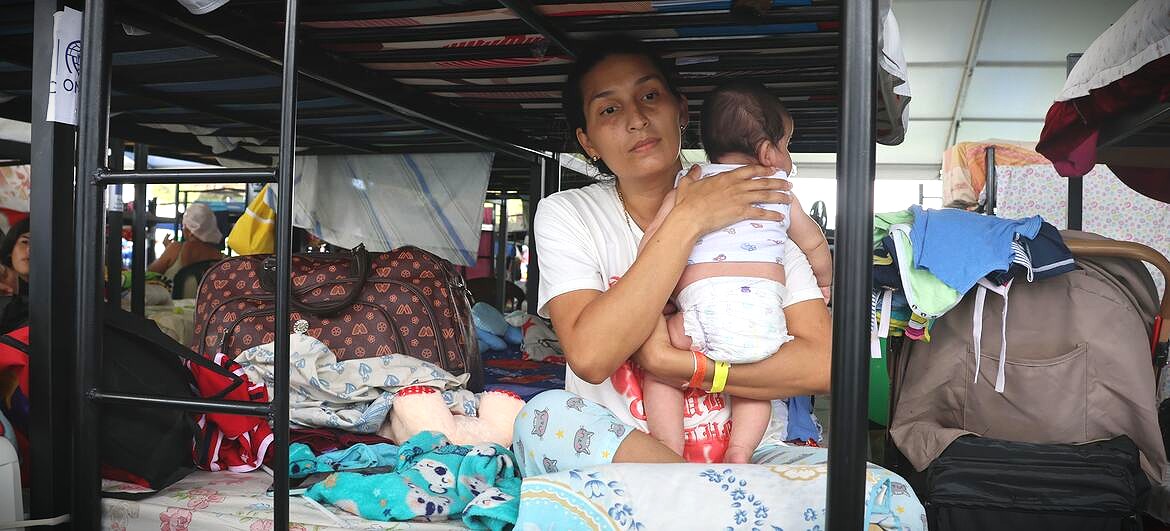
Yesterday we went down to La Guaira with a group of four neighbors in a truck, with the purpose of providing all the support. We even have tools to help with the structures and everything else. Look, what I was able to observe from the beginning, despite the fact that we were lucky to be able to pass across many obstacles, it’s impressive. The structure of buildings all cracked, all broken, bent. We saw a lot of people on the street, many on the sidewalks with their mattresses.
We got to the end (of the populated strip by the sea), to Naiguatá, even, and we went down into some relatively small buildings that were destroyed because we saw two or three people there. In all the buildings, there was the smell of decomposing bodies. We even managed to see dead, but relatives told us that they had not been authorized to remove them at that time, because, well, the priority was in other buildings where the damage was greater and there were a greater number of inhabitants.
There are a lot of civilians collaborating, but in the end it doesn’t work because a lot of machinery is needed —crane-type— to remove the slabs of great size and also of great weight. No matter how much will ten people have to lift that, it’s impossible because those slabs are glued to the beams and then it’s of another magnitude.
Personally, I consider that, as it’s been more than four days, the possibilities —as the international rescuers have told us— are very low to get people alive at this point. After so many days, of course, there is the issue of crush syndrome that make survivors’ renal system collapse. And these are people who most likely will suffer from a polytraumatic disorder. It may be that there are people between two buildings, between two floors, and there is some air and they are still alive but they can collapse because they don’t drink anything, they don’t have any food. However, well, we have to keep looking.”
Caracas Chronicles is 100% reader-supported.
We’ve been able to hang on for 22 years in one of the craziest media landscapes in the world. We’ve seen different media outlets in Venezuela (and abroad) closing shop, something we’re looking to avoid at all costs. Your collaboration goes a long way in helping us weather the storm.
Donate