
The Invisible Infrastructure Beneath the Rubble
Venezuela’s disaster also revealed the sociotechnical systems that quietly keep the country functioning, and the limits of these when solidarity cannot become coordination

Every earthquake destroys two kinds of infrastructure. The visible one is made of concrete, steel, and asphalt. The invisible one is made of relationships, trust, information and coordination.
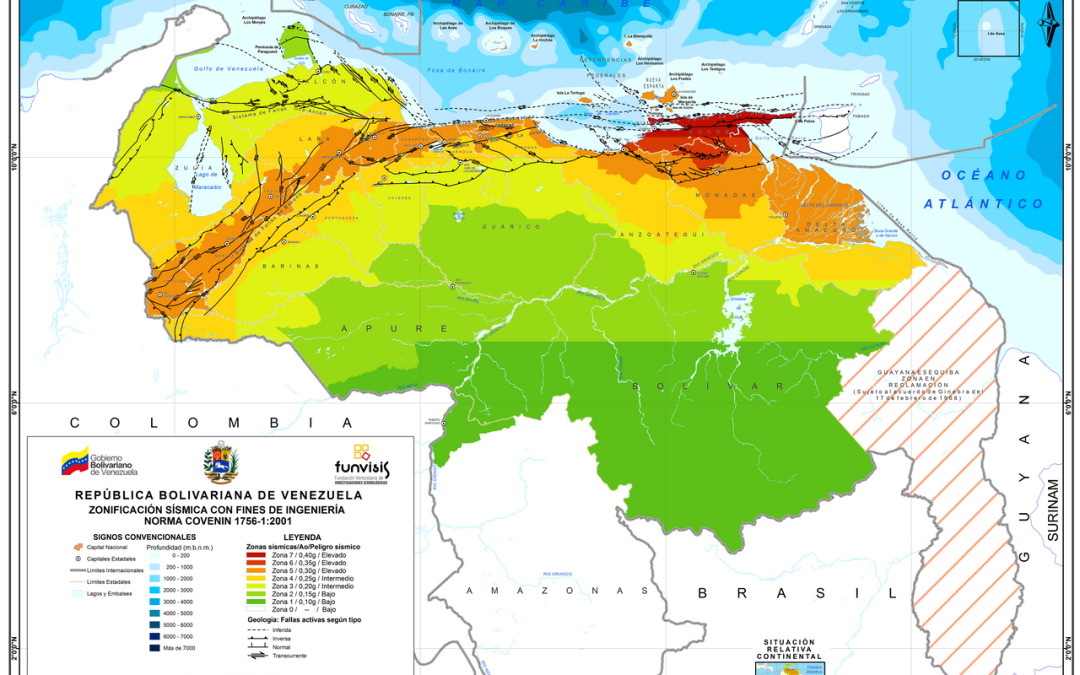
Venezuela’s earthquakes damaged both. Buildings collapsed across Caracas and La Guaira, roads became congested, hospitals were overwhelmed, and rescue teams faced an enormous operational challenge. Yet another infrastructure appeared almost immediately: families, neighbours, volunteers, universities, local businesses, international rescuers, missing-person registries, WhatsApp chains and improvised collection centres.
The disaster did not expose an absence of solidarity. Quite the opposite. It exposed the absence of a trusted coordination architecture capable of converting that solidarity into effective collective action.
When families become rescue teams
The first people searching many collapsed buildings were not foreign specialists or government agencies. They were relatives and neighbours carrying hammers, pickaxes, crowbars and whatever tools they could find.
In a BBC News Mundo report, Ronnie Navarro had travelled roughly 350 kilometres from Puerto La Cruz to La Guaira to help recover his uncle from the ruins. Exhausted relatives and volunteers were still removing concrete as professional rescuers paused drills and machinery to listen for possible voices beneath the debris. Navarro’s judgement was blunt: “We’re pitching in because the government won’t help.”
His was not an isolated account. Efecto Cocuyo reported that Edgar Rojas spent more than 48 hours using only a pick and hammer to search for his eight-year-old nephew. Reuters found residents digging with their hands and pleading for backhoes, cranes and military assistance. A later Reuters report described communities continuing to remove rubble by hand amid shortages of heavy equipment and uneven official presence.
These stories reveal extraordinary adaptability. They also reveal a system under severe strain.
Information gathered by citizens became emergency infrastructure. Yet making information available is not the same as making it useful.
People can act rationally and heroically at the local level while the wider response remains fragmented. The real question is not whether Venezuelans are willing to help. It is whether their efforts form part of a system capable of identifying priorities, assigning roles and moving scarce resources where they can save the most lives.
Venezuela has lived under turbulent conditions for years. As formal institutions became less dependable, adaptability migrated into families, neighbourhoods, businesses, churches, diaspora networks and personal technologies.
The earthquake did not create this distributed capacity. It made it visible.
Information without orchestration
The same pattern emerged in the search for missing people. Formal channels were rapidly supplemented (and sometimes overtaken) by social media posts, photographs, telephone numbers, neighbourhood groups, and citizen-led registries.
Information had become emergency infrastructure.
Yet making information available is not the same as making it useful.
A family searching for one missing person needs precise local information. A rescue coordinator needs a regional picture of damaged buildings, personnel, machinery and access routes. A doctor needs something different from an engineer, while a crane operator needs something different from a volunteer distributing food.
The problem is therefore not only too little information. It is also too much fragmented information moving through too many channels, with limited capacity to verify, prioritise and direct it.
In an emergency, the important question is not how many messages are circulating, but which pieces of information change what someone should do next. Is a building already covered by a rescue team? Is a request duplicated? Does a site need water, medical staff, fuel or heavy machinery? Must a road remain clear?
The motorcycles were not the problem. They were part of the solution. But without orchestration, one life-supporting activity could interfere with another.
Everyone may know something while no one possesses a shared operational picture.
Digital platforms are exceptionally good at mobilizing attention. But, as Zeynep Tufekci has shown in her work on networked movements, rapid mobilization is not the same as organizational capacity. A network can put thousands of people into motion without establishing who should go where, carrying what, and under whose direction.
The consequences were sometimes painfully concrete. Reuters reported that authorities restricted civilian access to La Guaira after traffic began slowing emergency vehicles and rescue machinery. People were travelling because they wanted to help, but individually generous decisions were producing collective congestion.
In another revealing episode, Efecto Cocuyo described motorcycles carrying water, medicine and food through damaged areas while their engines made it harder to hear survivors and distracted search dogs. The motorcycles were not the problem. They were part of the solution. But without orchestration, one life-supporting activity could interfere with another.
Coordination or control?
This is where the government’s role becomes more difficult to interpret.
Some controls were clearly justified. Disaster zones must be managed. Roads must remain open for ambulances and cranes. Responders must be accredited. Crowds can endanger themselves, duplicate work and obstruct professional rescue teams. Restricting access to La Guaira could therefore be understood as a genuine attempt to prevent chaos.
But in Venezuela, coordination cannot be separated so easily from political control.
The same State that eventually restricted access had, according to residents and reporters, been slow to deploy machinery and specialized teams in several of the worst-affected areas. Reuters reported that engineers and universities were frustrated by the slow incorporation of their expertise into structural assessments. Another Reuters account recorded official insistence that public anger was being fuelled by misinformation and that only official information contained the truth. A BBC report captured Venezuelans accusing the government of negligence and apathy.
This raises an uncomfortable question. Were restrictions designed primarily to improve rescue operations, or also to preserve the government’s control over access, information and public credit?
The earthquake revealed that Venezuela’s greatest reconstruction challenge is not only rebuilding buildings, but rebuilding the capacity to act collectively.
The most convincing answer is that they may have done both.
Governments manage disasters, but they also manage appearances. They decide who enters affected areas, which information becomes official, whose competence is recognized and who receives credit for successful rescues.
For a government whose legitimacy depends partly on demonstrating that it remains capable of governing, admitting that families, volunteers, universities and foreign teams are performing essential State functions carries a political cost.
Bureaucratic control can therefore become a face-saving exercise even when it begins from a legitimate operational concern. The State seeks to appear at the centre of coordination while much of the actual work is occurring elsewhere.
This creates a vicious circle. Citizens bypass official channels because they expect delay, opacity or political interference. Their independent action then generates congestion, duplication and unverified information. Officials use that disorder to justify tighter control. Measures intended to create order are interpreted as obstruction because the institutions imposing them are not trusted.
Venezuela does not lack courage, social energy or technological tools. It lacks a trusted mechanism through which thousands of actors can share a coherent view of the situation and know what they need to know, without being paralyzed by what they do not.
Buildings can eventually be rebuilt with concrete, steel and money. Rebuilding the invisible infrastructure of trust, coordination and collective action is far more difficult.
The earthquake revealed that Venezuela’s greatest reconstruction challenge is not only rebuilding buildings, but rebuilding the capacity to act collectively.
Caracas Chronicles is 100% reader-supported.
We’ve been able to hang on for 22 years in one of the craziest media landscapes in the world. We’ve seen different media outlets in Venezuela (and abroad) closing shop, something we’re looking to avoid at all costs. Your collaboration goes a long way in helping us weather the storm.
Donate