
Why the US Dollar Won’t Fix the Venezuelan Economy
Full dollarization fails to address the root causes of mismanagement and risks crippling long-term capacities
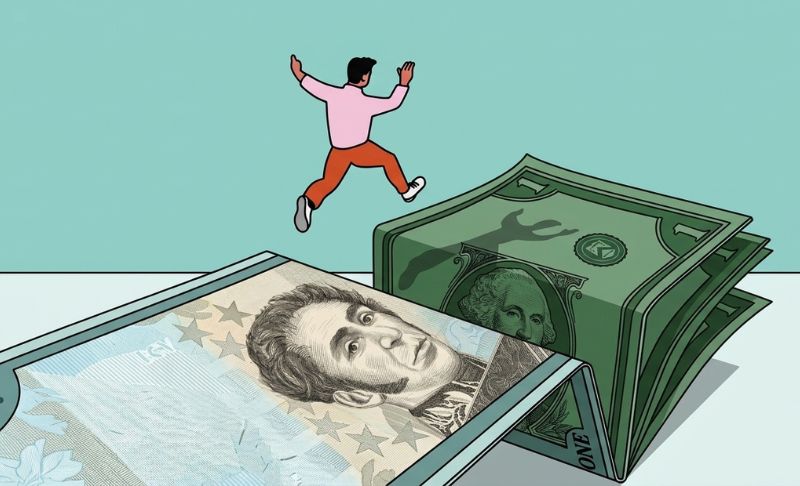
A few weeks ago, non-chavista politician Antonio Ecarri and American economist Steve Hanke managed to unearth one of Venezuela’s longstanding and unsettling debates: whether the country’s economy should be formally dollarized. After decades of economic hardship brought by repeated devaluations, hyperinflation and scarcity, the country’s monetary regime is heavily fragmented.
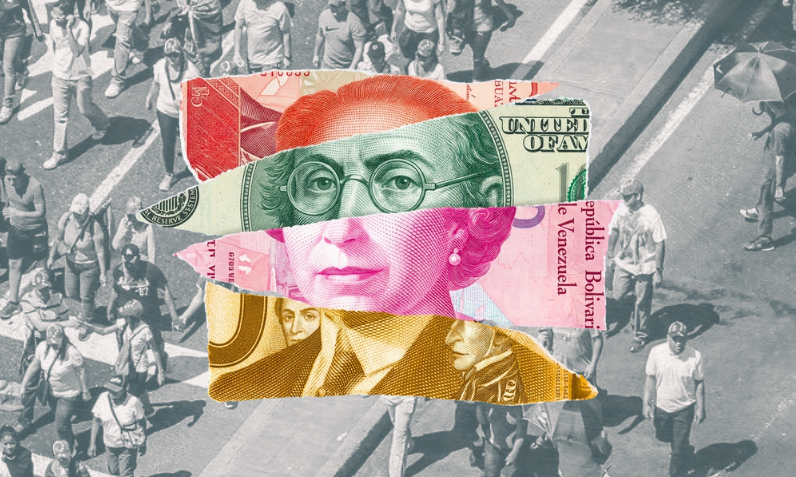
De facto dollarization rules most of the transactions, while the bolívar, crypto stablecoins, euros and the currencies of neighboring countries split the rest of the monetary market share used to maneuver through Venezuela’s complex economy. With the US pushing for the country’s economic stabilization to increase trust in foreign investors, the fragmented monetary ecosystem can be detrimental to the process made so far.
Venezuela’s economic outlook has improved after Maduro’s capture and since the US took control over Delcy’s decisions. Mainly because of a sharp recovery of oil exports to the US; by April, these were up 192% from their 2025 average. The energy sector is spearheading the recovery while attempting to partially compensate for the devastation caused by the twin earthquakes. GDP growth projections for Venezuela are forecasted at 5.8%, almost four times the country’s 2025 growth (1.5%). Yet the threat of inflation and instability compounds investors’ worries about entering the country. After repeated announcements by the interim regime promising to close the exchange gap and tackle inflation, their actions show otherwise.
Delcy continues to erode the bolívar by stimulating the money printer needed to feed chavismo’s patronage system. Exchange rate controls, which have long incentivized corruption and inflation, are still there. On the dollar side, credit loans and transactions remain “officially” forbidden, creating an artificial tax on USD transactions and fear amongst businesses who can be punished for their use.
Eliminating inflation would require abolishing all existing exchange rates and creating a new one based on an agreed technocratic approach.
The result of this unaddressed monetary disaster has been a persistent rise in inflation, which increased by 6.1% in July, bringing year-on-year inflation to 576% and 2026 cumulative inflation to 175.5%.
This is not the first time the call for dollarization has been in the spotlight in Venezuela. Nonetheless, US control over the country’s economy may increase the possibility of it becoming a reality. While dollarizing might be an effective measure to rapidly generate trust and reduce inflation, it raises important questions about its implementation under the interim regime and the future of Venezuela’s monetary sovereignty. Similar to Trump’s oil deal or the post-earthquake reconstruction, all discussions and actions are taking place behind the scenes, sidelining the very population that will have to deal with its consequences.
The US dollar is not the solution
Discussions regarding dollarization have primarily focused on three benefits: eliminating inflation, forcing fiscal discipline, and eradicating corruption. However, as long as those managing the dollarization process are the same ones who have guided Venezuela to the worst economic crisis in the region’s history, the result might be equally as bad but with a different set of consequences.
Hanke asserts that no preexisting institutional, fiscal or political conditions are necessary for dollarization to be successful. However, this process requires the willingness of all three areas to move forward. Eliminating inflation would require abolishing all existing exchange rates and creating a new one based on an agreed technocratic approach. Currently, there is no incentive for anyone in the interim regime’s leadership to converge the exchange rates.
A struggling or failed dollarization plan could further erode trust while leaving the country even more vulnerable to external shocks.
The exchange rate differentials have not been an economic policy mistake overlooked by chavismo. These have been an integral part of chavismo’s strategy to undermine and replace old political elites with select, loyal ones. Long ago, they became crucial to maintain the status quo. There are no signs in favour of change in this area, as economist Juan Comella argued in May. Doing so would compromise the structure that keeps her in power.
A struggling or failed dollarization plan—which forces the government to take on further debt, experience severe cash shortages and fundamentally depend on its commodity exports—could further erode trust while leaving the country even more vulnerable to external shocks, such as a sudden plunge in oil prices. The neoliberal constraints posed by dollarization, like an extremely limited Central Bank to aid the government, will not fix decades of institutional erosion, but only try to avoid it while possibly unleashing a fresh round of obstacles that menace an already fragile economic recovery.
The bolívar is not the problem
Decades of monetary policy failures made the population skeptical of the bolívar. For long enough, the system and institutions have incentivised and even rewarded the wrong people to take advantage of its vulnerabilities at the expense of the population and evading any personal consequences.
It is certainly not the paper where the bolívar is printed the element that corrupts people or destroys the economy: it is the system behind it. It is not far-fetched to think of a plan that grants the Venezuelan Central Bank complete independence, empowering the correct people to safeguard the economy from the risks of inflation while maintaining government spending in line and preparing for external shocks.
Relinquishing our monetary sovereignty would be a mistake in a world where governments actively participate and spend to tackle modern challenges, including AI and natural disaster relief. China’s rise as a global power has been, in part, a consequence of decades of industrial policy under intense government intervention. The US and EU have started to catch up in recent years. The US has done so with the CHIPS and Inflation Reduction Act under Biden and, most recently, with the Trump administration imposing protectionist tariffs and taking equity stakes in major companies with the aim of safeguarding US interests in key sectors. The EU aims to increase competitiveness under the Clean Industrial Deal and the Industrial Accelerator Act. If Venezuelan leaders seek to move past the country’s commodity dependence, climb up in the global value chain, become competitive and diversify the economy, industrial policy will be crucial. Dollarization would compromise those goals.
Starting a dollarization process under chavista rule is similar to entrusting the reconstruction of Venezuela’s oil sector to a businessman who contributed to the destruction of the country’s electricity grid.
Foreign investment will be the driver of short- and medium-term recovery and growth for Venezuela. However, industrial policy will be crucial to guide the long-term objectives of the country. For this, Venezuela needs the bolívar, even if it’s in an open and competitive currency market where the people decide which currency earns their trust.
The Ecarri-Hanke duo surprised public opinion not only because of their proposal but also because of the odd pairing. Ecarri represents the efforts of Venezuelan politicians with limited legitimacy to enter the spheres of influence in Washington, and also chavismo’s ability to neutralize them. Hanke only views Venezuela as part of a larger plan to promote and deepen the use of the dollar internationally, in a global context that increasingly mistrusts the US currency and is hedging against it.
Ecarri is the result of a system that empowers the wrong people. Hanke represents the oversight of the reality on the ground and the impact Venezuelans will have to absorb. Both display the same shortcomings of Venezuela’s monetary institutions over the past decades. Their proposal simply tries to hide the sun with one finger instead of addressing the historical root causes of Venezuela’s monetary instability.
Starting a dollarization process under chavista rule is similar to entrusting the reconstruction of Venezuela’s oil sector to a businessman who contributed to the destruction of the country’s electricity grid. Policy should depart from both trauma-instilled calls for complete dollarization and a patriotic defense of the bolívar. Instead, it should focus on economic stability and our capacity to meet the challenges of tomorrow.
Caracas Chronicles is 100% reader-supported.
We’ve been able to hang on for 22 years in one of the craziest media landscapes in the world. We’ve seen different media outlets in Venezuela (and abroad) closing shop, something we’re looking to avoid at all costs. Your collaboration goes a long way in helping us weather the storm.
Donate