
Venezuela Needs to Finally Unlearn Extraction
Over generations, the State was hollowed out into something to loot. National rebuilding requires radical institutional transformation
We tend to treat constitutions as if they were social contracts, as if rewriting the rules were enough to fix the relationship they are meant to govern. But constitutions do something more limited. They organize power, define authority, and set boundaries. The social contract itself lives elsewhere, in the expectations that citizens and the State have of one another.
That relationship is what collapsed in Venezuela.
For years, the country operated under an implicit bargain shaped by oil. The State distributed resources, unevenly but broadly, and in exchange it expected loyalty, patience, and a degree of political acquiescence. That system eroded long before it disappeared. What replaced it was not a new contract, but a different way of relating to the State altogether.
The State stopped being something to build or even to rely on. It became something to access.
What took hold was not simply corruption, but a change in what counted as rational behavior. In a system where rules are unevenly enforced, those who follow them are placed at a disadvantage. Over time, compliance stops being a virtue and becomes a liability. As more people adapt, the expectation shifts. Not only is everyone assumed to be taking advantage of the system, but failing to do so begins to look naive.
This logic extends beyond high politics into everyday life. Access, not entitlement, becomes the organizing principle. The question is no longer what the rules allow, but what the system tolerates. What emerges is not just a corrupt system, but a stable equilibrium built on mutual distrust, where individuals act defensively because they assume others are doing the same.
Citizens learned that if they did not take advantage of the system, others would. Those in power learned that failing to extract from it made them fools.
The result is a society that adapts to the State not by trusting it, but by navigating it. A society of accomplices.
What Venezuela faces is not simply institutional reconstruction, but something more difficult: the need to unlearn extraction. For decades, the State has been experienced not as a framework to sustain, but as a resource to be accessed.
That logic cannot be legislated away. It has to be reversed.
The legacy of the personal State
This did not begin with Hugo Chávez. The idea that the State exists to be used by those who control it has deeper roots. Long before oil, Venezuelan political life was shaped by a narrow elite, often described as los amos del valle, for whom power was both authority and access. The State was not something broadly shared, but something held.
As Rafael Ángel Rondón Márquez suggested in his portrayal of Antonio Guzmán Blanco as a “civilizing autocrat,” Venezuela has often been built through figures who concentrated power in order to impose order. This model was not simply authoritarian, it was functional in a country marked by fragmentation and instability. Authority was justified as a prerequisite for progress, and control as a condition for modernization.
From Simón Bolívar to Juan Vicente Gómez to Marcos Pérez Jiménez, the pattern repeats: power with no need for authority. The State emerges not as an impersonal framework, but as something shaped and held by those who govern it.
Because the moment that follows will not simply be a political transition. It will be the first real opportunity in decades to rethink the relationship between citizens and the State.
The democratic period of the late twentieth century interrupted that cycle, but it did not fully transform it. It expanded participation and introduced constraints, but it did not entirely displace the underlying expectation that the State could be used by those who controlled it. When the system began to fail, that logic resurfaced with little resistance.
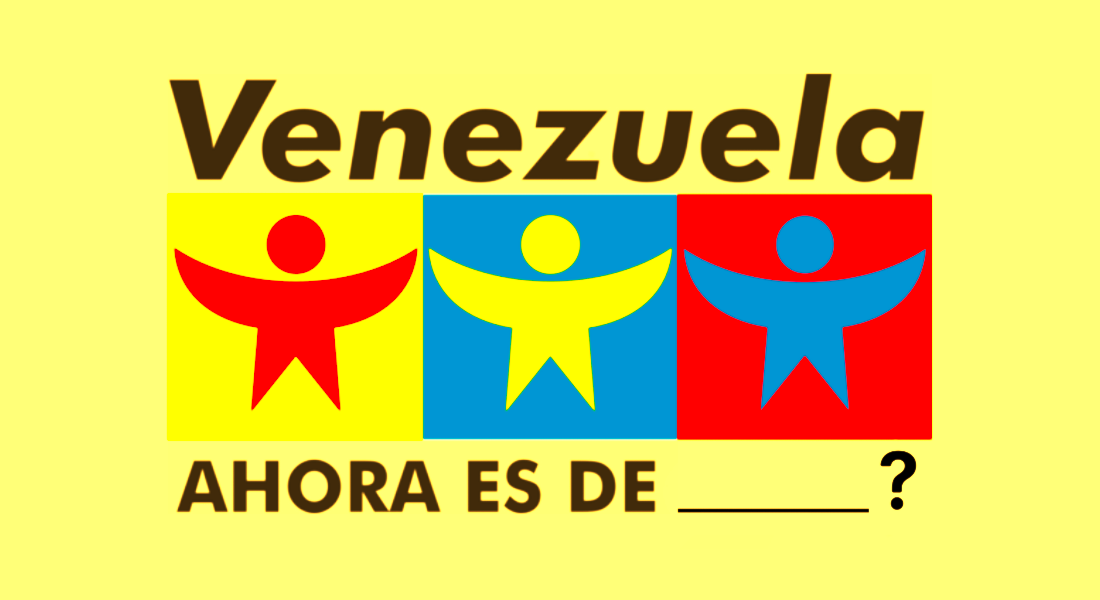
What changed under Chávez was not that logic, but its scale and its reach. Oil expanded the resources available. Chavismo expanded who could claim access to them. The slogan Venezuela ahora es de todos captured something real, but not in the way it intended. It did not signal the emergence of a shared sense of ownership over the State. It signaled the expansion of access to it.
What had once been restricted to a narrow elite was now framed as a collective right. But the underlying relationship did not change. The State was still something to be used, only now by more people.
In that sense, chavismo did not break with the past as much as it completed it.
The piñata syndrome
This helps explain why rebuilding institutions has proven so difficult. A functioning political system requires more than rules. It requires reciprocity. Citizens must believe that contributing to the system will not leave them at a disadvantage. Those in power must believe that restraint will not be punished. In Venezuela, both assumptions collapsed.
Citizens learned that if they did not take advantage of the system, others would. Those in power learned that failing to extract from it made them fools. Over time, these expectations reinforced each other. Trust did not simply decline, it became irrational. What emerged was not simply corruption, but a coordination trap, a system in which distrust became the only stable response.
In that context, the appeal to democratic legitimacy can become misleading. The idea that the will of the people carries an inherent moral authority, often summarized in the phrase “vox populi, vox Dei,” turns political outcomes into something closer to moral verdicts. But democratic legitimacy is not the same as infallibility. Elections produce majorities, not truth. And a majority, even when real, cannot justify the erosion of the very system that makes collective life possible.
A majority has the right to govern. It does not have the right to dismantle the conditions that make governing possible.
The current phase of Venezuelan politics reflects this exhaustion. The system is no longer expanding access or redefining its social base. It is managing decline, stabilizing what remains, and postponing a deeper reckoning. Figures like Delcy Rodríguez are less architects of a new order than administrators of one that is running out of room to adapt.
Rebuilding Venezuelan institutions will require way more than political change.
The question, then, is not how the current system stabilizes itself, but what comes after it no longer can. Because the moment that follows will not simply be a political transition. It will be the first real opportunity in decades to rethink the relationship between citizens and the State.
This is where the language of citizenship becomes unavoidable. To be a citizen is not simply to hold a passport or to claim a set of rights. It is to be part of a political community that extends beyond any single generation. The country is not something to be distributed or consumed. It is something to be sustained.
For a generation of Venezuelans, however, the State has been something to work around, to leave behind, or to endure. Millions built their lives outside of it, through migration, remittances, and informal systems that operate independently of public institutions. Exit replaced participation. Survival replaced belonging.
In that sense, Venezuela is not trying to renegotiate an old social contract. It is trying to build one for people who never meaningfully experienced the last one.
Venezuela did not just lose its institutions. It lost the expectation that they mattered. Rebuilding them will require way more than political change. Any future Venezuelan State will fail if it is built on the expectation that it exists to be taken advantage of. It will require a society willing to believe that not taking advantage of the system is no longer a mistake. The difficulty of rebuilding Venezuela lies not only in changing those in power, but in undoing a system that many learned to survive, and at times benefit from.
Caracas Chronicles is 100% reader-supported.
We’ve been able to hang on for 22 years in one of the craziest media landscapes in the world. We’ve seen different media outlets in Venezuela (and abroad) closing shop, something we’re looking to avoid at all costs. Your collaboration goes a long way in helping us weather the storm.
Donate