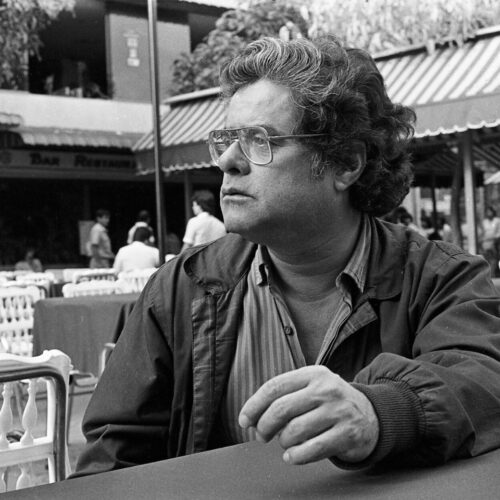

Returning to Los Amos del Valle in 2026
Francisco Herrera Luque’s sprawling novel about the Venezuelan elite was not only a bestseller: it helped shape a vision of the past that persists in our time
One of the best-selling historical novels in Venezuelan literature opens with a mantuano who can’t stop talking as he travels through 18th-century Caracas in a sedan chair, stumbling through the arms of a group of slaves who are equally incessant. It’s a good scene, comical, like something out of a well-made 1980s television show. It immediately establishes that Los amos del valle (published in two volumes in 1979, with several re-editions) is a novel about the caste of Simón Bolívar, the Creole descendants of the conquistadors. The story of these characters—some real, others fictional, but with surnames that still linger, even in the news of present-day Venezuela—stretches from the 18th century to the founding of the city in 1567, encompassing the wars against the indigenous people and later the pirates, and touching upon the years of independence. Through dreams, terrors, or the novelist’s will, we are transported to different years across three centuries of tension, massacres, intrigue, and orgies.
I found Los amos del valle entertaining until it became confusing. I didn’t understand the criteria used to trigger the time jumps. The second half of volume 1 feels as if the author had lost control of his story, or as if neither he nor his editors had bothered to maintain the quality at which the novel began. I felt it was much longer than it should be, with many moments deserving more detail, large sections that seemed rushed, characters that never quite gelled, and ultimately, a jumble of anecdotes that blur together.
Reading this novel was like visiting someone and meeting an uncle or grandfather who knows a great deal about history, spending hours listening to him talk nonstop while he shares his bottle of Royal Salute, which he’d been saving for the moment when someone would listen attentively and praise him for the wealth of information he possesses.
More than a historical novel, this is what Herrera Luque called “fabulated history,” history in narrative form.
Because yes, it’s obvious, Herrera Luque did his research. In that sense, both in 1979 and today, this book offered a good way to approach the chroniclers of the colonial period, whom we see so little of behind the dazzling mythical cycle of the War of Independence. There is a wealth of fascinating information here, coming from José Oviedo y Baños and many other sources, about that long period without which neither independence nor the founding of Venezuela as a separate nation can be understood. The novel helps us see how the wealthy landowners built and accumulated power, how their class consciousness helped them survive the subjugated majority as much as arquebuses and religion, and how that caste society, that racial cocktail, was created.
This is a technical discussion that I feel is of greater interest to historians and writers: more than a historical novel, this is what Herrera Luque called “fabulated history,” history in narrative form. The opposite of what people like Milan Kundera said a novel should be: something that provides a service only that genre can offer, that sees and says what other genres cannot see or say.
But neither Kundera’s opinion nor my experience reading Los amos del valle today truly accounts for what makes this book so significant: after Boves el urogallo, it solidified Francisco Herrera Luque’s voice as the most successful interpreter of Venezuela’s past in the late 20th century. An author who used the novel to go further than Oscar Yanes’s books of anecdotes and to resonate more with ordinary people than Arturo Uslar Pietri did with his books or his TV program Valores humanos.
The pilot of a collective sensibility
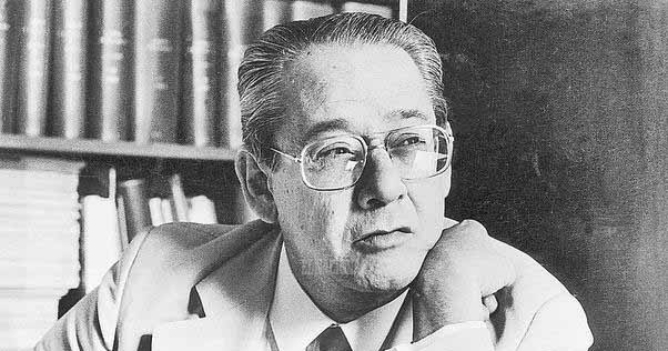
The importance of Francisco Herrera Luque in shaping how many Venezuelans understand the country’s history cannot be underestimated. He enjoyed enormous commercial success, selling hundreds of thousands of copies, and I don’t believe this was solely due to the way he seasoned his stories with sex, violence, and gossip.
Herrera Luque remains in the memory of his readers, people of my generation, those of us born in the 70s, and the two generations before. Undoubtedly, he connected with people, and his books had an impact that would be unthinkable today, in a country that bought far more books and at a time when the novel played a much more influential and visible role in culture and the market. Various films and series were inspired by his works, but his influence is felt above all in how people of different ages and political affiliations repeat as facts or dogmas what they read in historical fiction like La casa del pez que escupe el agua. He enjoyed a success that many authors never had, and that those who criticized him couldn’t aspire to it. Because his books—some more than others, of course—have many technical flaws, and rather than well-rounded novels, they’re like models full of characters.
People wanted to better understand their country, to see the past beyond statues with sabers and horses, to see historical figures behave like human beings, and he offered answers to their questions.
Seen from 2026, Francisco Herrera Luque appears as a writer who believed more in quantity than quality, like so many others who sell thousands and even millions of books in the United States or Spain, and who sold scenes from the past that, even if superficial or sensationalist, lodged in people’s imaginations because they had life and color, because they connected with real Venezuelans much more than the demigods of the patriotic pantheon or even idealized archetypes like Gallegos’s Santos Luzardo. Because few intellectuals had as much reach as he did, even in the era when Arturo Uslar Pietri, Guillermo Morón, or Adriano González León had a presence in audiovisual media.
Those weren’t the times when a historian like Inés Quintero sold as many books as she did with La criolla principal. At the end of the 20th century, curious people were discovering colonial and revolutionary Venezuela through Herrera Luque. Historical films were scarce, and television barely addressed the genre. The field was wide open for a writer like him, with a keen instinct for adding spice to the story.
A sensationalist theory of Venezuelan identity
Herrera Luque, who was born in 1919 and died in 1991, was a prominent psychiatrist. In fact, it was his thesis on an anthropological interpretation of Venezuela that gave rise to his essays Los viajeros de Indias, Las personalidades psicopáticas and La huella perenne. With his volumes of chronicles, which he called La historia fabulada, and his novels such as Los reyes de la baraja, in which he argued that the country is marked by the work of the caudillos, he worked hard to develop a set of theories about why we are the way we are. In that sense, he was like Gallegos and Uslar Pietri, though he lacked their literary finesse: he used the novel to propose, or dictate, his explanation for our ills.
And that explanation was bitter. Herrera Luque said that inbreeding made the Spanish nobles depressive, violent, and indecisive people, incapable of governing an empire with true discipline. Therefore, all sorts of ill-intentioned adventurers set about transplanting Hispanic culture, barely out of the Middle Ages, to these foreign lands, where a fierce race for resources, social promiscuity, and chronic corruption would be unleashed, explaining why we are the way we are today.
These theories may sound reductionist to us now, but many people embraced them as true and incorporated them into their fatalistic view of Venezuelans. What was sold as a fabricated history was bought by thousands as true and definitive history. And it was because Herrera Luque was providing a service that the rest of the cultural establishment didn’t know how to offer as he did, or at least it wasn’t received as readily as the psychiatrist’s juicy novels.
Herrera Luque deserves recognition for his many virtues and the place he earned, through sheer hard work, in our collective consciousness.
People wanted to better understand their country, to see the past beyond statues with sabers and horses, to see historical figures behave like human beings, and he offered answers to their questions, answers that worked even if they were hypotheses that professional historians had no reason to support or disseminate. He offered images, emotion, adrenaline. Sometimes he did it very well, as in La luna de Fausto, his other novel about the Conquest. And achieving both commercial and artistic success is rare. In any case, Herrera Luque deserves recognition for his many virtues and the place he earned, through sheer hard work, in our collective consciousness.
Since I myself was writing a historical novel, I decided to read or reread classics of the genre in our literature. I went through Doña Bárbara, Las lanzas coloradas, País portátil, and Doña Inés contra el olvido. I finished with my least favorite of the group, Los amos del valle. There are several more to revisit, to discover. Gallegos’s work, at the very least, is a must-read: Canaima, my favorite of his books that I’ve read. Uslar Pietri’s Oficio de difuntos and La visita en el tiempo, although I prefer Uslar Pietri the essayist and chronicler. Adriano González León’s brief published work is worth rescuing: his short stories and his last novel, Viejo. Ana Teresa Torres’ as much as possible: her essays, her diaries, and her fiction in various subgenres such as detective fiction, historical fiction, erotica, and dystopia. There are many more great works of Venezuelan narrative that allow us to have a glimpse at our past, such as the audacious Cubagua by Enrique Bernardo Núñez; Fiebre, Casas muertas, and Lope de Aguirre, príncipe de la libertad by Miguel Otero Silva; and one of my personal favorites, El osario de Dios by Alfredo Armas Alfonzo.
We all have our own tastes and our pursuits: the important thing is to remember that we can always turn to our rich culture, our heritage, which is there for us to explore, know and love.
Caracas Chronicles is 100% reader-supported.
We’ve been able to hang on for 22 years in one of the craziest media landscapes in the world. We’ve seen different media outlets in Venezuela (and abroad) closing shop, something we’re looking to avoid at all costs. Your collaboration goes a long way in helping us weather the storm.
Donate