
The Bloodstained Fingerprint of a Nation
El Helicoide, a symbol of chavista violence, was designed as the triumph of progress and prosperity. A metaphor in concrete
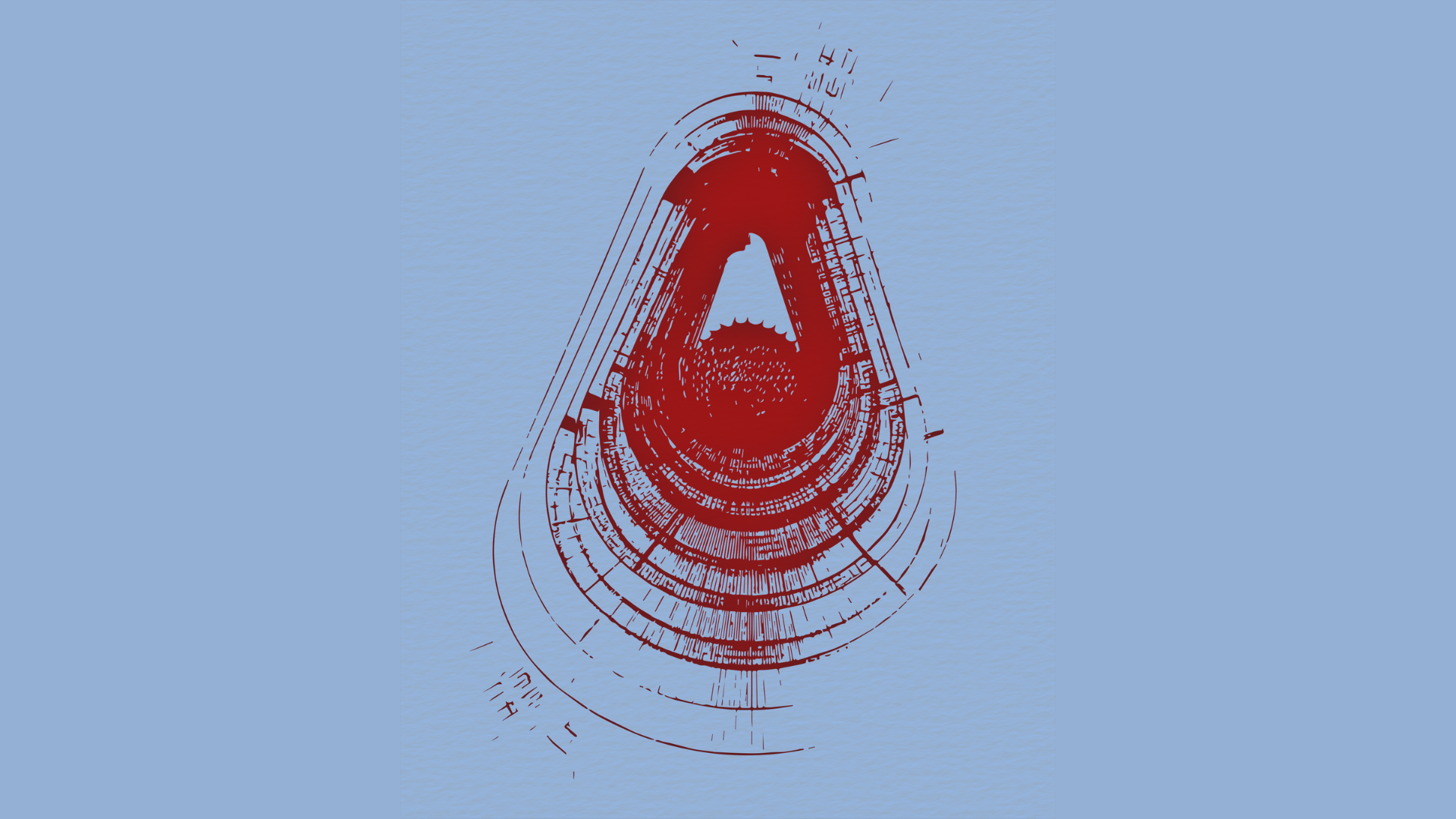
Illustration by Cori de Veer Bermúdez
When seen from above, El Helicoide looks like a large fingerprint pressed against Caracas. A singular design which, perhaps, accidentally, makes us think that this mark over the Roca Tarpeya was meant to identify us. And maybe, in a way, it does. This building tells the painful story of Venezuelan democracy and modernity.

A few years ago I had a conversation with Celeste Olalquiaga, a cultural historian who grew up in Caracas, to discuss her research on the already infamous building.
“There was nothing.” When I asked Olalquiaga about any literature on El Helicoide, that’s what she said: nothing. “A glitch from modernity, perhaps, which is always looking at the future and doesn’t like to look into the past—especially when the past bears such failures.”
To fill this void, Olalquiaga worked with researcher Lisa Blackmore to edit and publish Downward Spiral: El Helicoide’s Descent from Mall to Prison. The book is rich with essays, architectural documents, marketing materials, photographs, and testimonies. After diving into Downward Spiral, it’s impossible not to emerge with a cocktail of mixed feelings. You don’t know whether to feel repulsion, pride, or sadness.


It was a completely innovative idea: the topographical integration of a shopping center meant to be visited by car. Great minds in marketing conceived its design as something that would identify Venezuelans. And without a doubt, that word,“identity,”was at the very center of the design of that reinforced-concrete colossus. A spiral building that was supposed to be as recognizable as the Sidney Opera House or the Epcot Center ball in Orlando.
But the project was never completed and never found a real purpose. El Helicoide has led a series of very different lives: originally designed in the 1950s as a drive-through, futuristic shopping mall with hundreds of stores, a hotel, and other amenities, it was never completed and spent years half-built and abandoned before being intermittently occupied by informal settlers in the 1970s. Later, in the 1980s it was used for government offices and security agency headquarters.
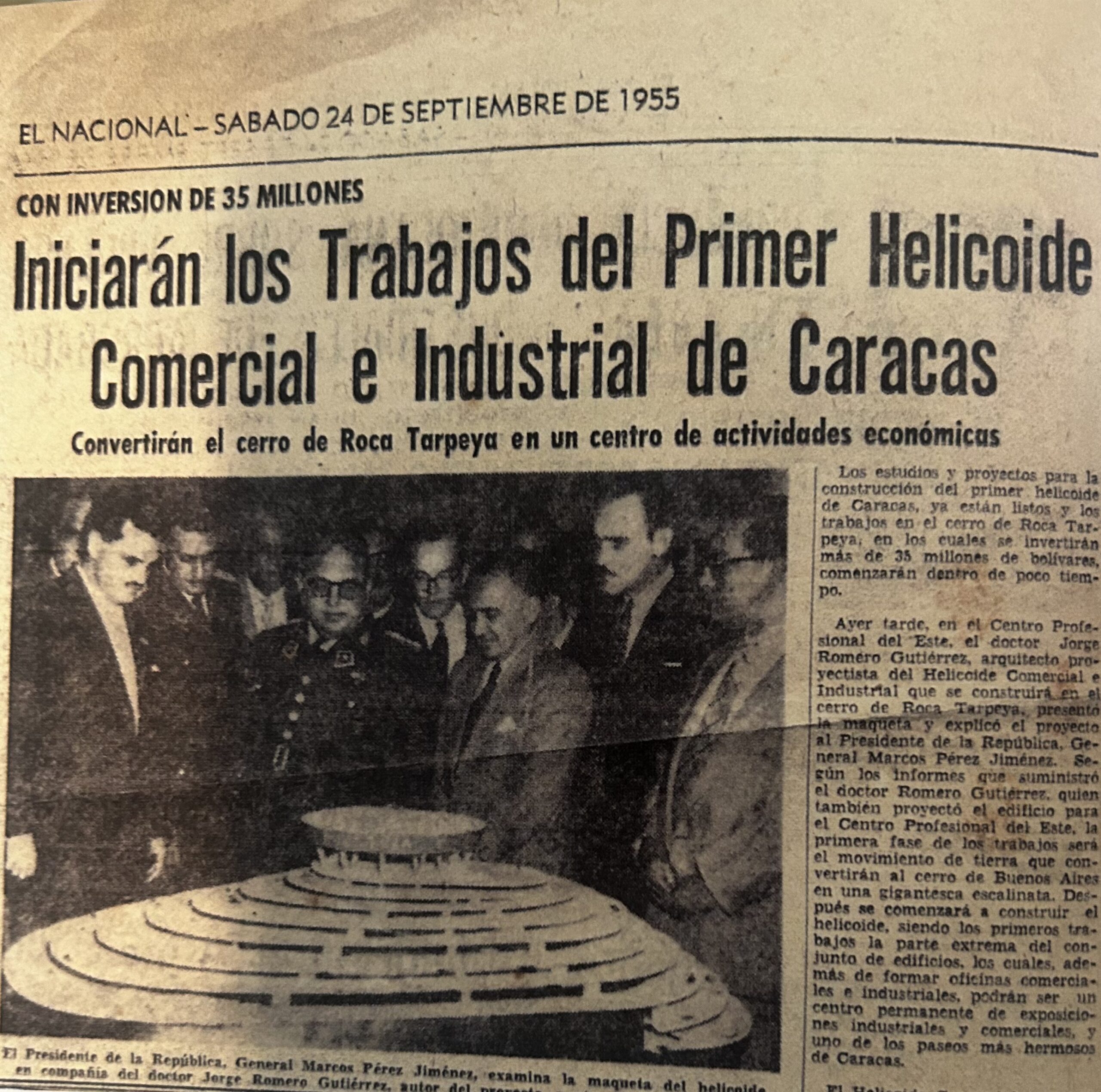
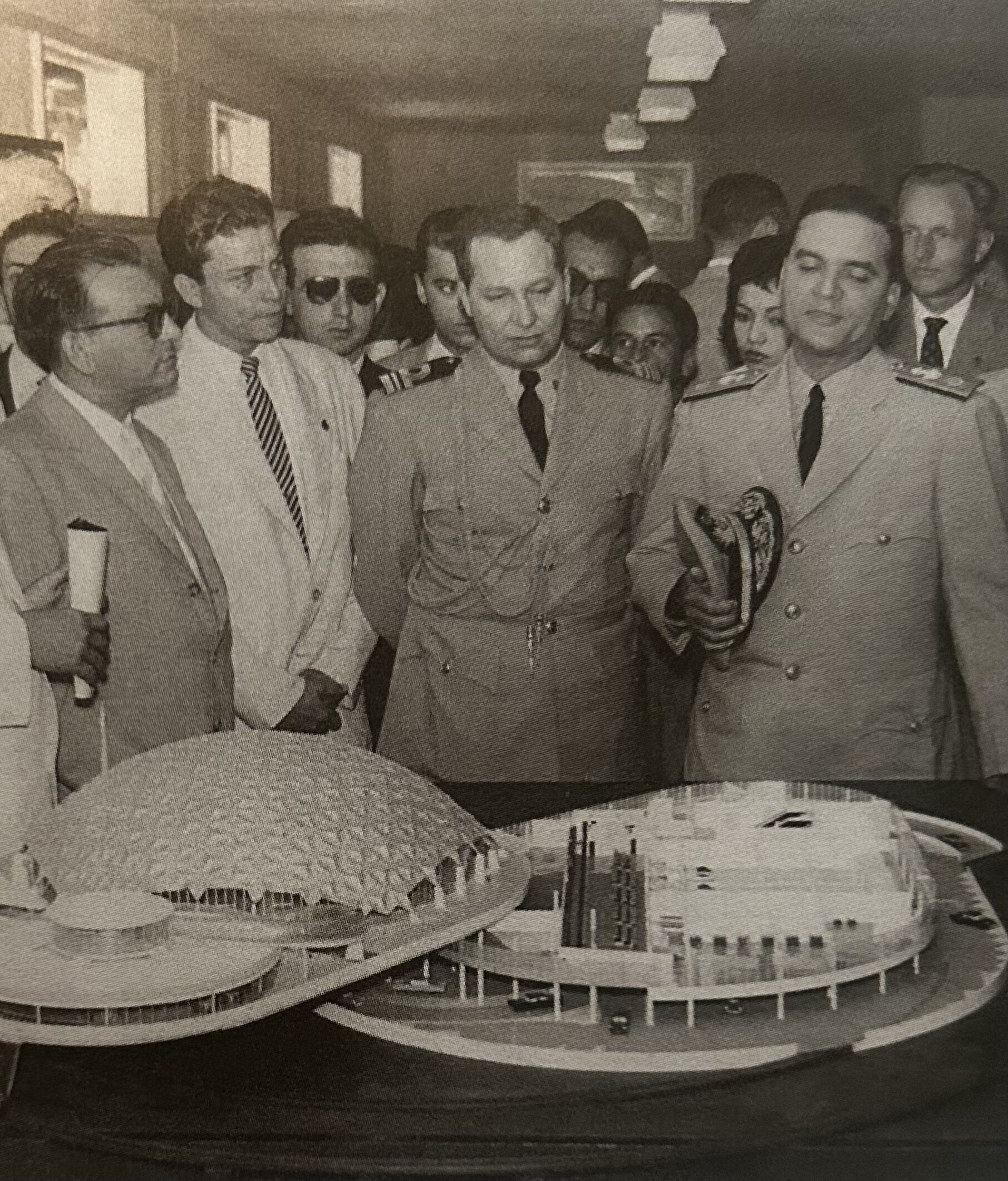
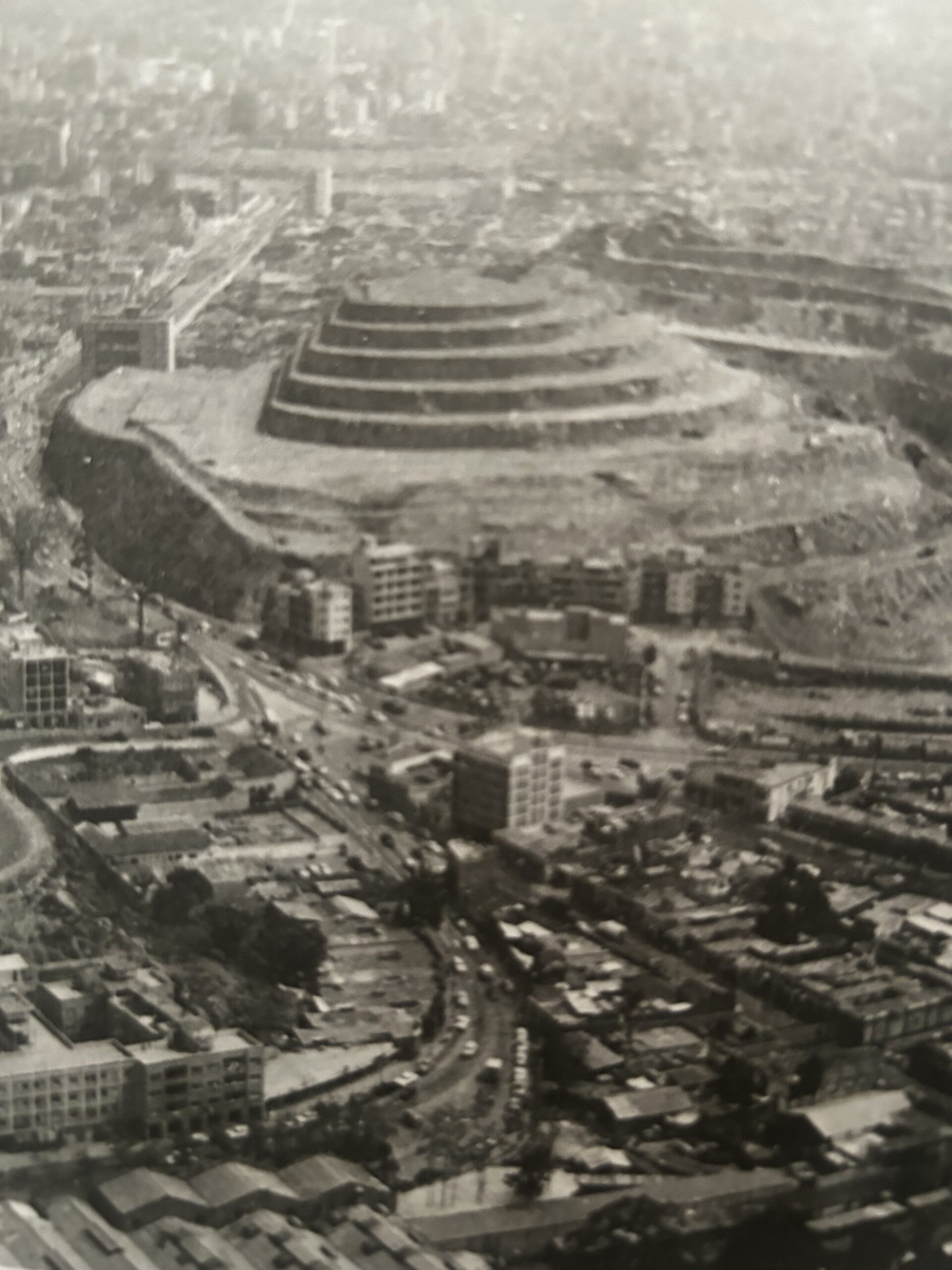
For years, the behemoth went largely unnoticed by most people in Caracas. That is, of course it was there, but over time it blended into the landscape of the communities and barrios that sprouted around it and that remain separated by El Helicoide’s ominous presence. It disappeared through irrelevance, we simply stopped seeing it. But over the past 20 years, during the governments of Hugo Chávez and especially Nicolás Maduro, it has taken on a meaning that, unfortunately, has brought it back into the light.
Today, for most Venezuelans, its meaning is associated with our historical references of political violence, like Juan Vicente Gómez’s La Rotunda and the National Security police under Marcos Pérez Jiménez. It’s become one of the great symbols of the horrors of homegrown authoritarianism—very far removed from the image of progress Venezuela exuded in the 1970s.
Emma Graham-Harrison at The Guardian summed it up like this: “The transformation from icon of Venezuela’s hopes to emblem of failure and repression was slow and complicated. It began with a coup, stretched over decades of dictatorship and democracy, through the rule of 14 presidents and several cycles of oil boom and bust. Someone looking for bad omens might have found one in the name of the hill where it’s built, Roca Tarpeya; the Tarpeian Rock was an execution ground in ancient Rome.”
It certainly lives up to its namesake.
The Independent Fact-Finding Mission commissioned by the United Nations Human Rights Council established in Venezuela in 2019, documented thousands of violations that include extrajudicial killings and other arbitrary deprivations of life; arbitrary detentions; enforced disappearances; torture and other cruel, inhuman, or degrading treatment; and sexual and gender-based violence. Here’s a paragraph of the 2022 mission’s report describing some of the acts of violence that took place in El Helicoide between 2014 and 2018:
“308. As noted in its 2020 report, the Mission documented the following acts of torture, sexual violence, and other ill-treatment against detainees:
- Stress positions called the “crucifixion” (arms spread out and handcuffed to pipes or grilles) and “the octopus” (el pulpo) (a metal belt with chains attached to immobilize the wrist and ankles)
- Asphyxiation with plastic bags, chemical substances or a bucket of water
- Beatings, sometimes with a stick or other blunt objects
- Electric shocks to the genitals or other parts of the body
- Death threats or threats of additional violence
- Threats of rape against the victim and/or their relatives
- Forced nudity including in rooms kept at extremely low temperatures
- Being chained for extended periods of time”
Nicolás Maduro’s security forces destroyed lives. They destroyed whole worlds. Up to this moment, because of fear and repression, we only have the tip of the iceberg documented, but as the regime’s strength weakens (or as the people gain more courage), we’ll see how testimonies of victims continue to rise to the surface.
Just last week, in her post-January 3rd management role, Delcy Rodríguez filed an Amnesty Law before the legislature in the middle of a political prisoner release process. While it was forced upon her by the circumstances, we still don’t know how far this amnesty will go. We don’t know if it’s just a show to win some points before the US government—the folks running this circus. But on the same day, she ordered the El Helicoide prison to be closed.
For now, during this release process, we can see some heart wrenching images like the return of Oscar Castañeda to his family. Who after his experience in El Helicoide could barely walk or even recognize his people. Or the story of Aliannis Araujo Lozada, a victim of sippenhaft, who turned herself in so her mother and 15 year old son could be set free. Her mother, Fanny Lozada, was released and is now calling for the release of her grandson, who is believed to have been tortured, and of Aliannis, whose whereabouts are unknown and is likely held at the Zona 7 torture center in Boleíta. Here’s a painful clip of Araujo claiming for Diosdado Cabello to release her daughter:
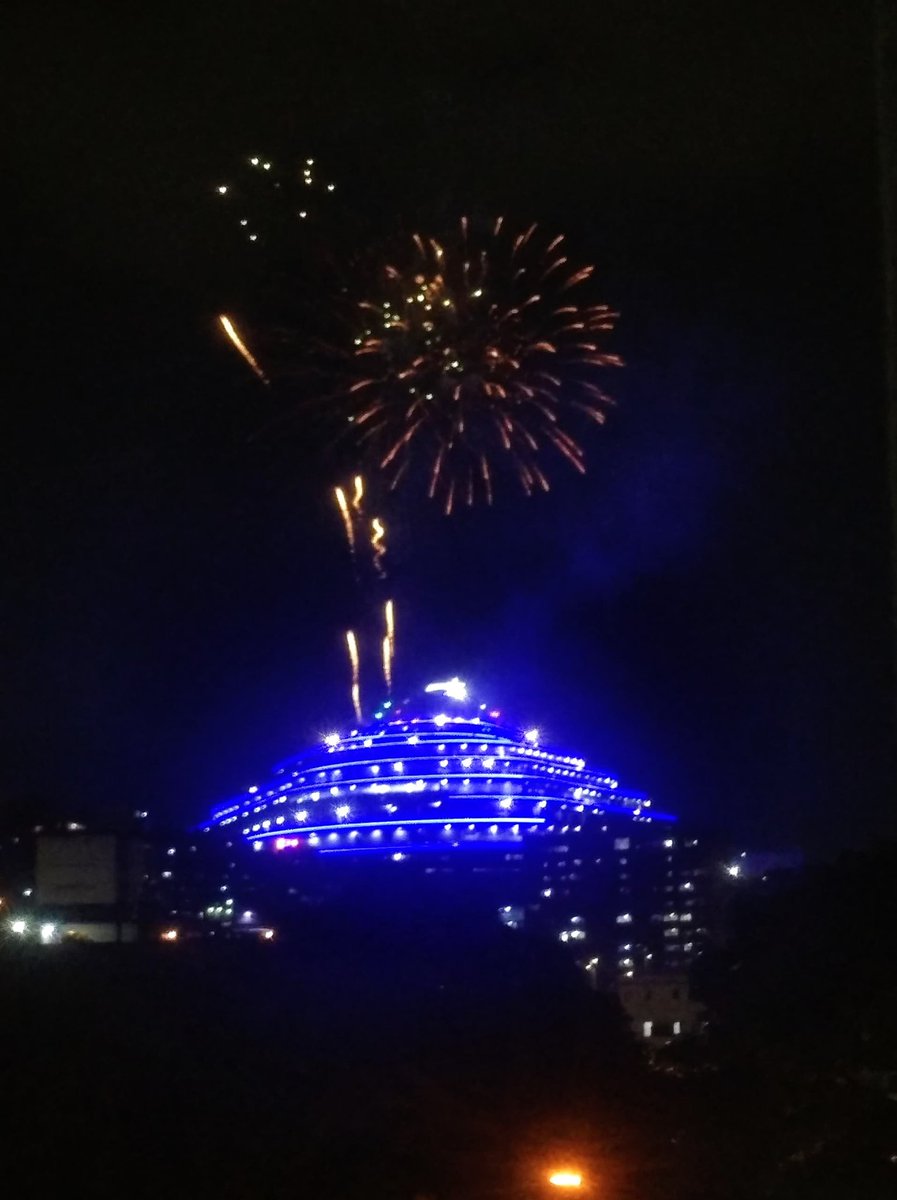
Under chavismo, El Helicoide became a symbol of violence and repression. A symbol of fear. To the point that the regime even used it to create indignation amongst the population, last October, when Maduro declared an early Christmas and they wrapped El Helicoide in holiday lights and had a fireworks spectacle. Just like if it was the lighting of the tree at Rockefeller Center. They knew what the cursed structure meant to people. There was no other reason to do this but to demoralize Venezuelans. A cynical move, a clownish meme to mock pain, like including a community and sports center on top of an active political prison and torture facility—something the Maduro regime also did.
If you can take something to share from this piece, take the following paragraph from Olalquiaga’s essay in Downward Spiral:
“Incomplete and semi-abandoned, El Helicoide came to symbolize exactly the opposite of the modern city and country it was supposed to represent. After a launch that made it an international star, the building’s failure turned it into something abject, further tainted by its symbiotic relationship with the barrios it was supposed to displace. El Helicoide expresses dystopia both inside and out, in the repressive institution it houses and in the poverty of its surrounding shanty towns. Antithetical versions of the same failed modernity, the soured utopian project and its contingent social fallout act as each other’s doppelgängers. The disgust that many city dwellers express towards El Helicoide is deeply related to the entropic force that seems to take over so many monumental modernist projects worldwide. Like them, El Helicoide has become something without a time or a place, suspended between a relinquished present and an unattainable future. It is a living ruin.”
As she told me the day we spoke, “the first prisoner of El Helicoide is El Helicoide itself.”
The violence we’ve suffered shouldn’t define us. But it will always be a part of what we are and we should embrace it.
So, what should we do with this bloodstained fingerprint? Wipe it off and forget it was ever there, or preserve it to try to understand what happened to us, figure out the crime scene and make sure it never happens again? Some say that it should contain a Museo de la Memoria, to honor the victims of these years of violence. Will finding a purpose for it lift the curse?
But maybe the pain is just too much. Never again will it just blend in with the landscape. Perhaps the curse will end when we put El Helicoide out of its misery, let it go once and for all, and remove it from that damned rock.

Caracas Chronicles is 100% reader-supported.
We’ve been able to hang on for 22 years in one of the craziest media landscapes in the world. We’ve seen different media outlets in Venezuela (and abroad) closing shop, something we’re looking to avoid at all costs. Your collaboration goes a long way in helping us weather the storm.
Donate