
Venezuela Isn’t Transitioning. It’s Operating
As pundits speculate about a Venezuelan “transition”, daily life continues to run on informal networks that function beyond political timelines and state intervention
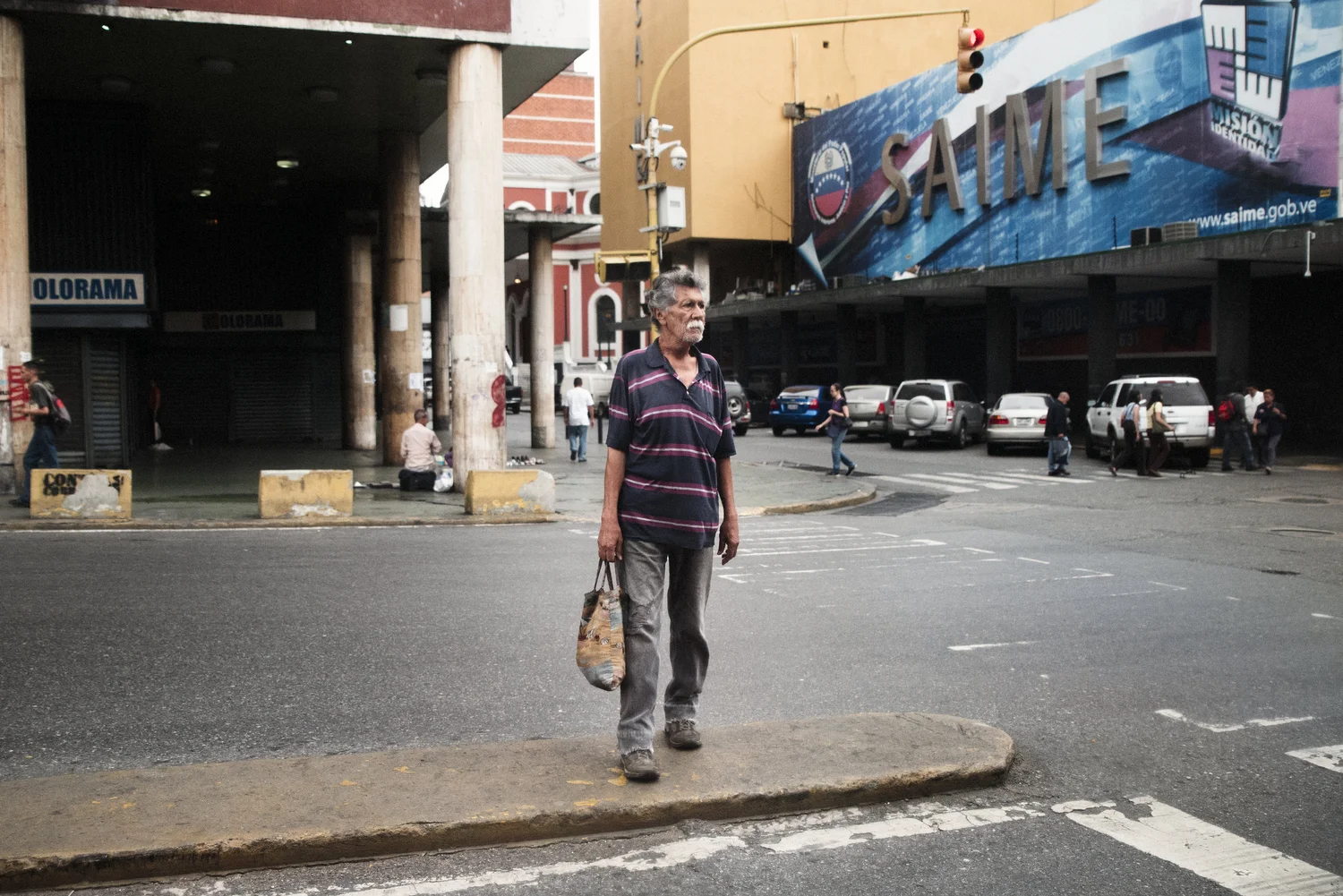
Photograph by Ixone Sádaba (2018), from her Venezuela project. Available here.
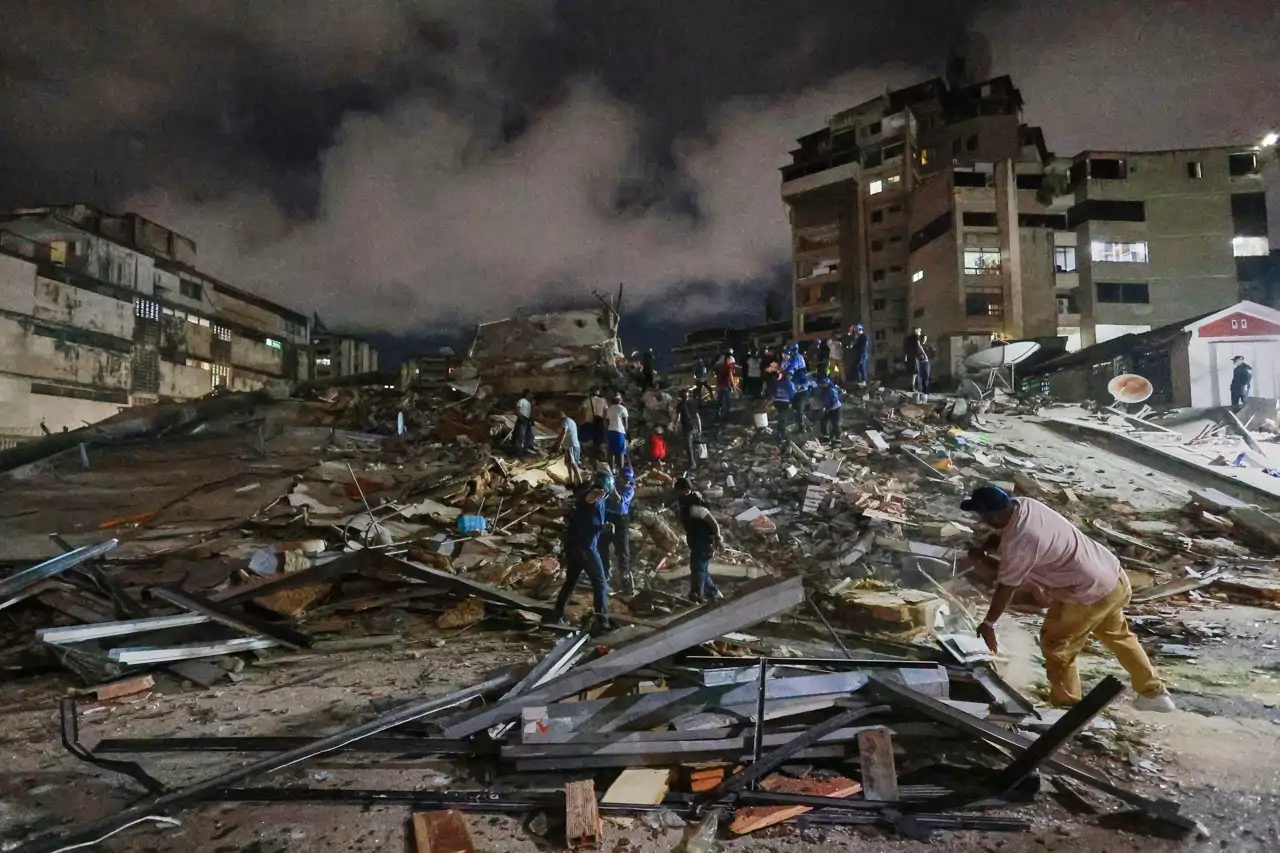
Diplomatic channels are reopening, oil negotiations are back on the table, and familiar hopes resurface. US involvement might help revive the oil sector, restore public services, ease inflation, and return a measure of liquidity to the economy. On paper, Venezuela after the military incursion of January 3 sounds like movement.
On the ground, it does not feel that way.
The reactivation of the US embassy in Caracas and renewed conversations around energy cooperation have been widely interpreted as the early signs of normalization. Commentators speak of petrodollars flowing again, of PDVSA recovering its former capacity, of oil revenues trickling down into hospitals, schools, and wages. The political narrative suggests a transition in motion, which if not fully visible yet, is at least imminent.
But daily life in Venezuela operates on a different rhythm, one largely insulated from diplomatic signals and geopolitical expectations. For most Venezuelans, the reopening of an embassy or the promise of oil-led recovery has not yet translated into better services, lower prices, or more reliable institutions. What structures everyday survival instead is a resilient sociotechnical operating system that emerged years ago, when formal systems stopped delivering.
A country that learned to run without trust
Venezuela today functions not because its institutions regained credibility, but because people learned to coordinate without trusting them. Ministries still exist, banks still operate, and official policies are still announced. Yet the mechanisms that allow life to continue (e.g., getting paid, finding medicine, resolving a problem) have largely migrated elsewhere.
A concrete example of how Venezuelans have migrated to and rely on informal networks and platforms to fill gaps left by formal institutions is found in medical crowdfunding. On platforms like GoFundMe, families in Venezuela are raising funds to cover urgent healthcare costs because local systems and insurance rarely suffice. In one campaign organized by the Familia Silva last December, relatives sought support to pay for their father’s medical treatments in Venezuela, describing how the high cost of private care and lack of accessible public options compelled them to appeal to international solidarity. The fundraiser emphasized the emotional and financial strain of ensuring basic medical attention in a context where families must shoulder expenses that would once have been covered by more robust public systems.
This redistribution of adaptability is what prevents the country from breaking apart. It is also why moments framed as political “turning points” often fail to reorganize everyday life.
That migration did not happen overnight, nor was it ideological. It was practical. As formal systems failed to adapt to prolonged crises, adaptability shifted onto individuals and their networks. People absorbed functions once handled by the state, not out of civic enthusiasm, but out of necessity.
This redistribution of adaptability is what prevents the country from breaking apart. It is also why moments framed as political “turning points” often fail to reorganize everyday life. The systems people rely on are no longer synchronized with the timelines of power.
Remittances as the real welfare state
One of the clearest examples of this dynamic is the remittance economy. For years now, international reporting has documented how remittances have become one of the most stable pillars of household income in Venezuela. They are not marginal supplements; they are structural.
For millions of families, a transfer from abroad determines whether food is bought, school fees are paid, or a medical consultation is possible. These transfers arrive through platforms like Zelle, PayPal, Binance, or via trusted intermediaries who convert dollars into bolívares at the prevailing market rate. The entire process unfolds largely outside formal banking oversight and official monetary policy.
My father, now 81 and living in Colinas de Bello Monte in Caracas, relies on the financial support I send from abroad after a lifetime as an entrepreneur and merchant during a much more buoyant Venezuela in the 1980s. Until recently, I was able to channel bolívares to him through an informal arrangement: I’d make a transfer from the UK, and a local business would convert the funds at one of the many unofficial exchange rates widely used in the country. As currency volatility accelerated after January 3, that pathway became untenable. Now I send money to a UK account my sister holds in Caracas, and she uses the card linked to that account to cover his expenses, either by converting funds locally herself or simply taking him to the supermarket and paying directly. The mechanisms keep changing, but his dependence on this support does not.
In Venezuela, WhatsApp functions less as a social app and more as a distributed operations center.
Functionally, this system replaces what public welfare no longer provides. It does not promise equality or long-term security. It offers something more modest but vital: predictability through personal trust, timing, and reputation. Whether a transfer “works” depends less on regulation than on knowing who sends it, who converts it, and how quickly it clears.
If petrodollars were to flow again through formal channels, their impact would have to compete with this already established infrastructure of survival. Until they do, remittances remain the closest thing Venezuela has to a functioning social safety net.
WhatsApp as public infrastructure
Another pillar of everyday coordination is messaging technology, especially WhatsApp. In Venezuela, WhatsApp functions less as a social app and more as a distributed operations center. Information about electricity outages, water availability, fuel queues, medication shortages, or informal opportunities circulates through neighborhood groups and personal networks rather than official announcements.
When a service fails, people do not consult institutional interfaces. They message someone who “knows how things work.” A chain of contacts activates: a cousin, a neighbor, a former colleague, a friend abroad. Solutions emerge not through formal requests, but through tacit coordination.
What stands out is the versatility of human roles within this system. The same person may act as user, intermediary, verifier, and fixer—sometimes within the same conversation. Authority is informal, based on experience and reliability rather than title. Rules are unwritten but widely understood: when to ask, whom not to pressure, how to reciprocate.
In effect, personal technology substitutes for institutional interfaces. It is less stable, less accountable, and deeply unequal, but it is flexible enough to work under constant strain.
Finance without a center
The same logic applies to money. Venezuela’s de facto dollarization has been extensively covered: prices displayed in dollars, payments made through a patchwork of cash, transfers, and digital platforms, change given in bolívares calculated on the spot. Official exchange rates matter far less than what people know they can obtain that day.
The central bank still exists. Regulations still apply, on paper. But everyday economic coordination no longer depends on them. What matters is whether a payment method is accepted, whether liquidity is available, and whether the counterparty is trusted.
This informal financial system is not efficient, nor is it safe. It exposes people to fraud, volatility, and speculation. Yet it persists because it prioritizes immediacy and usability over compliance. It allows transactions to happen when formal mechanisms stall.
Any attempt to channel future oil revenues back into the economy will have to contend with this reality: people already operate within a financial ecosystem that bypasses centralized control. Rebuilding trust in formal monetary institutions is a far more complex task than restarting oil production.
Adaptability migrated to people
Decades ago, sociotechnical theorists like Fred Emery and Eric Trist argued that systems survive turbulence not through rigid control, but by redistributing adaptability across human actors. Venezuela today offers an unplanned, extreme version of that principle.
Venezuelans organize their lives around short horizons: this week’s transfer, this month’s rent, tomorrow’s availability of services. Political transitions, real or imagined, operate on a different scale.
As formal institutions lost their capacity to respond, adaptability migrated downward. Individuals became multifunctional. Networks replaced hierarchies. Informal norms substituted for formal rules. Personal technologies filled the gaps left by public systems.
This is not resilience in the celebratory sense. It is a survival strategy shaped by prolonged uncertainty. It keeps the system running, but at the cost of transferring risk and responsibility onto individuals. Those with networks manage. Those without them fall through the cracks.
Why diplomacy hasn’t changed daily life so far
Against this backdrop, the reactivation of diplomatic relations and the promise of oil-led recovery remain largely abstract for ordinary Venezuelans. The idea that renewed US engagement could help restore PDVSA, stabilize inflation, and improve public services is not dismissed outright, but it is not yet actionable.
People have learned, through experience, to decouple their expectations from political announcements. They organize their lives around short horizons: this week’s transfer, this month’s rent, tomorrow’s availability of services. Political transitions, real or imagined, operate on a different scale.
This is not apathy. It is calibration. After years of stalled negotiations and symbolic shifts, Venezuelans have learned not to anchor daily decisions to promises that lack implementation.
A system that runs quietly… and unevenly
None of this should be romanticized. Turning people into infrastructure produces exhaustion, inequality, and quiet despair. It rewards those with access and punishes those without. It keeps the country operating, but not flourishing.
Yet it explains why Venezuela continues to function even as formal transitions remain uncertain. The country is not frozen in anticipation. It is moving but just not in ways that align neatly with geopolitical narratives.
For now, Venezuela runs on something quieter than diplomacy and more fragile than oil: the adaptability of its people and the personal technologies that allow them to coordinate when systems fail. Whether future political and economic shifts will reconnect with that lived reality remains an open question.
Until then, Venezuela is not transitioning.
It is operating.
Caracas Chronicles is 100% reader-supported.
We’ve been able to hang on for 22 years in one of the craziest media landscapes in the world. We’ve seen different media outlets in Venezuela (and abroad) closing shop, something we’re looking to avoid at all costs. Your collaboration goes a long way in helping us weather the storm.
Donate