
How International Correspondents Are Covering Venezuela's Disaster
We spoke with British freelance reporter Catherine Ellis to get a first-hand account on how the regime tries to control information on the field
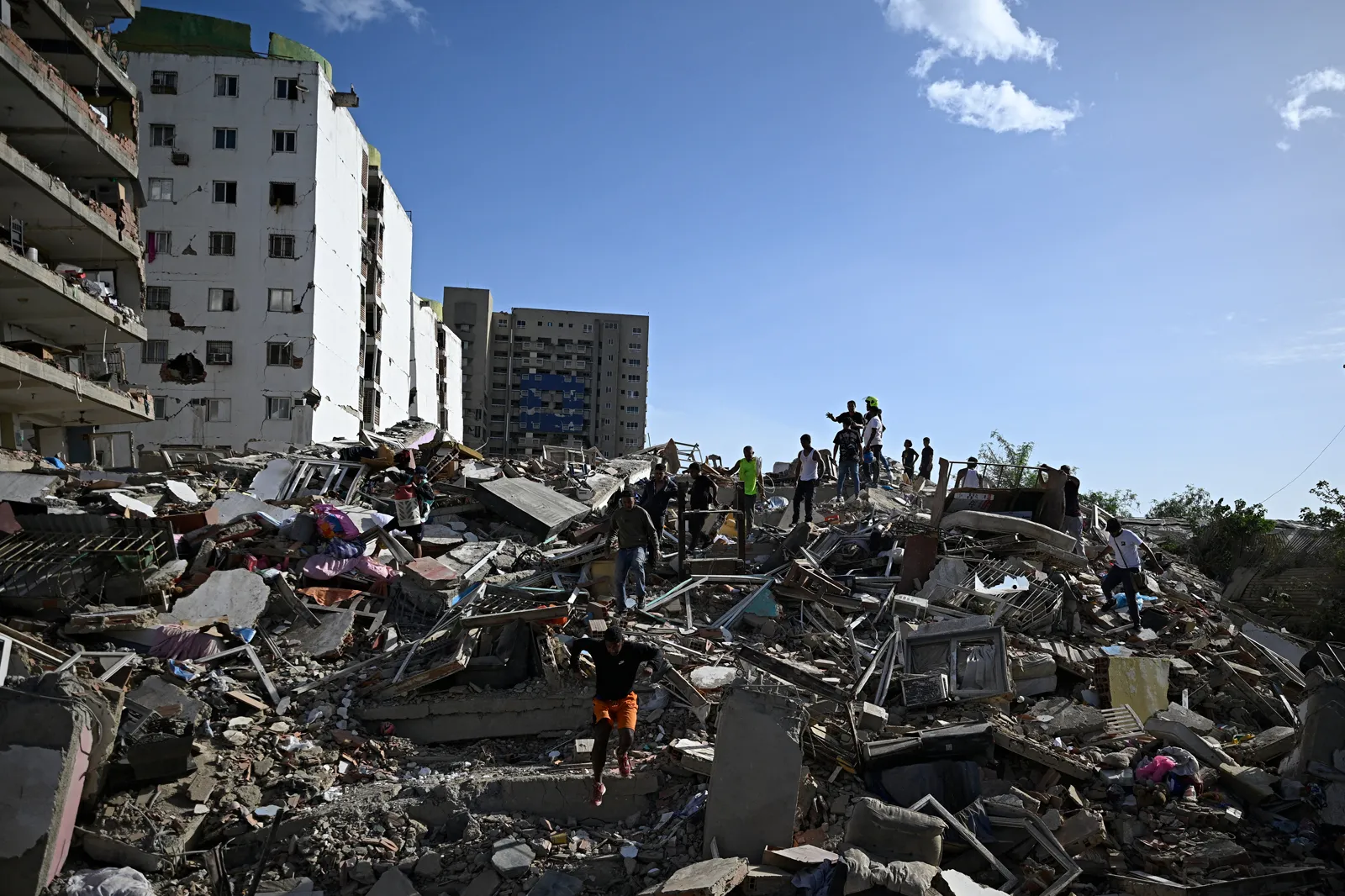
Since last week, the world’s attention has been set again on Venezuela just like six months ago.
Of course, the differences between the events of January 3rd and the terrible disaster of June 24th could not be more stark, even if both evenets have massive implications for the country’s future.
Most coverage coming from international media these days has highlighted two things: first, the terrible devastation seen in worst-hit areas like parts of Caracas and especially in La Guaira State (formerly known as Vargas); and second, that many are complaining about the official response and even calling it “negligent”, like in this report from BBC News correspondent Yogita Limaye.
Interestingly enough, in recent months there has been a reopening to the presence of foreign reporters in the country, a shift from the heavily restricted access during the Maduro years. A larger number of reporters and media crews arrived in the last few days. They have been mostly allowed to do their job (unlike Sky News’ Trump 100 podcast, interrupted by government officials while recording), but they’ve been facing their own set of specific challenges.
Earlier this week, NGO IPYS Venezuela offered a summary of some apparent restrictions from the Communication and Information Ministry to international media workers, like indicating that they could be mobilized to affected areas only through State-authorized buses and establishing a schedule for those trips from the Media Center established at La Carlota Airport in Caracas.
One person quoted in the summary is British freelance journalist Catherine Ellis, who’s covering the disaster for Al-Jazeera and UK weekly magazine The Spectator while also doing some radio interviews for other outlets. She has worked in Venezuela since 2023 and, before that, volunteered for an NGO in Colombia and Spain, helping Venezuelan immigrants. It was Ellis who published on X a picture of the buffet the regime was offering to foreign correspondents while thousands of people were thirsty and hungry.
At the time of writing, several international reporters told Delcy Rodriguez during her recent press conference what they’ve seen firsthand. She minimized those criticisms against the official response and pointed her finger at “media matrixes created in laboratories” (matrices de opinión is a popular term in Venezuela to describe artificial narratives in journalism or social media).
Caracas Chronicles interviewed Ellis earlier this week to discuss what she recently witnessed.
How has it been for you and other international correspondents to cover the disaster on the ground? Have there been any limitations by government officials and particularly from the Communication and Information Ministry?
The experience so far as a journalist in terms of getting in and communicating with the Ministry has been quite strange in some ways. It needs to be said that it has been much more open than it usually is. Quite often, if I come to Venezuela, I can’t really do any reporting or get a journalist visa; they give very few journalist visas, and it’s particularly hard for freelance journalists when you’re not a fixed employee for a certain media outlet. But this time they let journalists in. They’re letting foreign journalists in without visas. On one hand, it’s been much, much better. This time journalists are actually allowed into the country, and access is not restricted, although we don’t know how long that will go on for. Communications have been terrible and completely lacking to the point of being almost non-existent.
How was your experience with the bus trip to La Guaira the day after registering at La Carlota airbase in Caracas?
We took the bus on June 28, the day after we registered in La Carlota. They told us they would take us there, and we left for La Guaira an hour and a half late. No problem, that happens sometimes, but there was no communication about what was happening. The following day was the worst because I arrived early thinking it might leave on time, only to wait for two hours with no explanation at all. Then we knew from other journalists that the trip was cancelled and access had been suspended for 48 hours for journalists. No one on the logistics team provided any explanation. They just said: “we are not in charge of it, we don’t know.” One person told me: “you have to be patient, you have to wait… This is a complex situation, and things don’t move quickly.”
How are you and your colleagues doing your work in the disaster area?
We were completely given free rein… We were taken to a Misión Vivienda place, but we could go wherever we wanted, so I spoke to people from that place, and some were very critical of the government. I went to other buildings around, which were either for retired people or just normal apartment buildings, and I spoke to lots of people. I was very, very free to speak to people. So much that I missed the bus and the Guardia (Nacional) took another journalist and me to the next site to speak to people.
Have there been any issues involving the police, the military, intelligence services or local officials?
Some people have been helpful, and some haven’t in terms of the authorities. In La Guaira, generally, no one stopped me from doing anything. Police and military pulled me away from a building because they were excavating to take bodies out, but to be honest, that was more for health and safety reasons, and I did understand. I went to the hotel in Caracas where the Venezuelan deportees were supposed to arrive after they got back, and the hotel collapsed. It was full of SEBIN agents. We weren’t allowed to pass because of “security reasons.” When I started to take photos, I was told off by SEBIN. That was interesting.
Genuinely, I have to say the police and military have not stopped me speaking to anybody or stopping doing anything. And to be honest, some of them haven’t really been around. I think it’s because, as you wear the pink armband (identifying as foreign press), they know you’re press, that you’ve been approved, but getting to the hotel where the deportees were was impossible.
How has the relationship been with the civilians in the area? How do they react to the presence of the media?
Civilians have been brilliant. Absolutely brilliant. Everybody is very, very open to talking. Venezuelans are incredibly warm and open people. I have no problem chatting to people. If I see people who are visibly, incredibly upset, who have family (members trapped) in buildings, it’s not the right time to talk to them.
Sometimes, I’ve approached them very sensitively, and people have shared their stories, described the people they have lost, told about what they’re lacking or what they need. Some people openly criticize the government, but others who have criticized the government then say they don’t want their names used, and others are not thinking about politics. They’re just in shock.
How has the relationship been between international correspondents and Venezuelan journalists?
Venezuelan journalists are incredibly helpful. I think there has been a lot of solidarity between all journalists, between Venezuelan and international journalists and among the international journalists themselves. I’ve been speaking to people from the US, Canada, Argentina, parts of Europe, and they all want to help each other.
On a critical note, there have been a couple of international journalists who either pushed me out of the way at certain sites because they want to film or come up to me when I’m interviewing people and taking my interviewees. This isn’t a show, people have lost (their) lives. I would encourage the international press to have a heightened level of sensibility and respect for all Venezuelans and all affected by this crisis.
Have you noticed the difference between how you see the situation on the ground, how it is covered outside, and how it is covered inside, how the government is presenting it?
From what I’ve seen, Delcy and the government are trying to project an image of solidarity with the international community, thanking and praising them for being here and helping Venezuelans in their time of need. But not necessarily announcing tangible and concrete steps of what they’re actually putting in place. Someone put it to me like this: “The government has been very visible, key figures have been very visible in terms of presence on social media and even visiting sites, but there has not been enough concrete information about donation centers, about what’s happening next, about actually managing the actual crisis.”
How have people in La Guaira been coping?
A lot of people are still in shock. It’s very hard to process, but everybody seems to be very grateful to everyone who is helping them, either members of their own community or the international rescue teams. Some people have said, “Other governments are helping us more than our own government.”
I think the most important thing to emphasize, which is non-political, is that people are saying “Venezuelans are helping Venezuelans, they’re helping each other.” Someone said to me the other day, “We are a family, this is what we do, we help each other, we won’t give up, and you know, keep going.”
I spoke to a guy who came from Valencia. He had three kids back home and said, “I couldn’t bear to think of my own kids lying somewhere like that and no one going to find them,” so he came on his way, he got lists from people, and he came so he can help with the search and rescue.
There’s definitely a lot of shock. A lot of kids are still scared and adults feel that any movement or anything, not just aftershocks, mean something is going to happen again. People are getting through by supporting each other.
Is the aid arriving properly? Have you seen aid being delivered?
There’s so much aid everywhere. In Caracas, I’ve seen so many trucks coming in. The problem is that I can’t exactly say what’s happening to the aid. Some aid is getting through, but there seem to be a little bit of bottlenecks or bureaucracy; I don’t know the full reasons… It’s getting through to some people but isn’t getting through to other people, and they’re running out of some things. People want proper accommodation also. Definitely, in a lot of places there are now international NGOs setting up food points as well.
–
Just yesterday, while covering relief efforts taking place at Parque del Este, Ellis was approached by a couple of suspicious looking fellows. This was the exchange:
I was in Parque del Este tonight speaking to volunteers and affected families camping there. I was chatting to one family when two men came over to look what was going on then left. I started helping the family move their stuff to the road (I was carrying the cat!) as they were moving somewhere else. The two men called me over, asked me if I was a journalist, to which I said yes and showed them my wristbands. Asked more questions, who I was, where from, what I was doing. I asked who they were, as they still hadn’t introduced themselves by this point. One (the politer one) said they were intelligence police, asked what I was doing, so I said speaking to the family etc. Asked if I knew them, I said no. Then asking qus like my age, which was weird as one had my passport which has my DOB. Took photos of my passport. Asked where I lived, said I didn’t want to give that info. I asked why they wanted to know all this, they said for security and that people were taking children, so I asked if they thought I was taking kids. They said no. I told me they were asking me because I was a journalist and there was not a real free press. One was fairly polite and said they didn’t want to make me uncomfortable. I said they already had. Eventually they gave me it back. It’s ok to check who someone is, check they have a wristband which you now should have in the park – but I did, and I showed them, so why the need for questionning and taking photos of my passport? And why was the first qu, are you a journalist? Does everyone who enters the park get that level of treatment?
It doesn’t take much for chavismo to step back into its old ways.

Caracas Chronicles is 100% reader-supported.
We’ve been able to hang on for 22 years in one of the craziest media landscapes in the world. We’ve seen different media outlets in Venezuela (and abroad) closing shop, something we’re looking to avoid at all costs. Your collaboration goes a long way in helping us weather the storm.
Donate