

Explosions, Helicopters, and Gold: The Death of Niño Guerrero
Where exactly did the Tren de Aragua leader die? When did the kinetic attack occur? How were his remains identified after the blast?
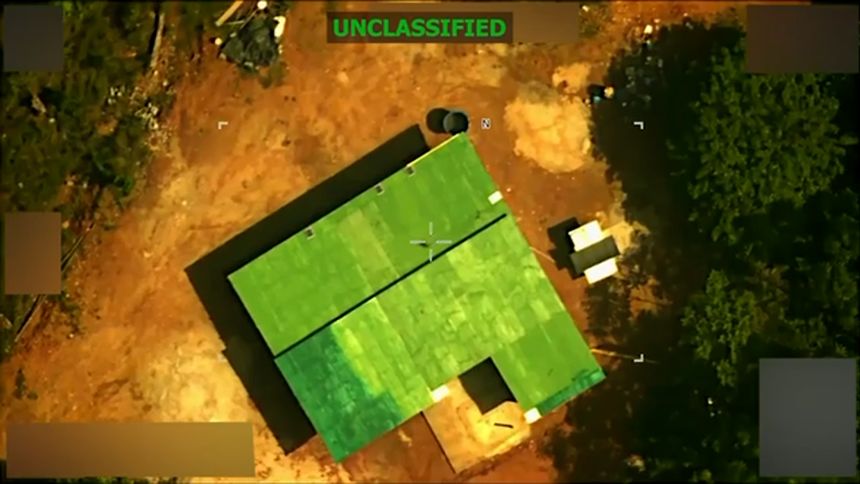
It took nearly five days for the Venezuelan government to admit that a military operation had been deployed in the gold mines of the country’s south. The scoop, however, did not come from acting president Delcy Rodríguez, but from the man who has backed her government since January 3: Donald Trump, the U.S. president who announced that a “kinetic attack” had killed “Niño Guerrero,” one of the leaders of the criminal organization Tren de Aragua.
Despite breaking the news, many loose ends remained. The exact location of the explosion was not disclosed, nor was the date, nor was there any mention of the protocol for identifying Guerrero’s remains. Even less was said about how authorities located the criminal boss — who had been a fugitive since November 2023, when the Tocorón prison that served as his “palace” was dismantled — or what happened to the other leaders operating in the area.
Runrun.es raised all of these questions and went looking for answers about this mining-military operation that was kept “secret” for days.
What happened?
On the night of Friday, June 12, U.S. President Donald Trump announced that the United States Southern Command, in collaboration with Venezuela, had killed Héctor Rusthenford Guerrero Flores, better known as “Niño Guerrero,” the most prominent leader of the Tren de Aragua criminal gang.
Trump posted the information on his Truth Social account, along with a video showing an overhead shot of a structure surrounded by yellow earth exploding. The footage resembles the detonations that have destroyed dozens of suspected narco-boats in the Caribbean and the Pacific.
Although Trump did not specify that the event occurred in Venezuela, his Secretary of Defense, Pete Hegseth, clarified shortly afterward that Guerrero had been killed inside “a Tren de Aragua compound in Venezuela.” Later, the Ministry of Communication and Information (Minci) specified that it had taken place in the southeast of Bolívar state.
The Minci communiqué is the first official information to emerge after residents of the communities of Las Claritas and Kilómetro 88, in Sifontes municipality, reported that a military operation in the area’s mining deposits had begun on Tuesday, June 9.
That day, helicopters flew low over the area while soldiers dressed entirely in black fanned out through the towns’ streets and cleared several mines.
Reporters in Bolívar noted that the arriving troops had come from other states. Once deployed, they called on locals to join them.
That account aligns with a document dated June 6, signed by División General Delfín Alfredo Espinoza Torres, Director of Personnel of the Bolivarian National Guard (GNB), ordering all officers and professional troops specializing in special operations to assemble on June 9 at GNB General Headquarters (Cogeguarnac), in the El Paraíso neighborhood of Caracas. The document was circulated by former lawmaker and former political prisoner Américo De Grazia.
De Grazia also released a communiqué from the Caroní municipal government, in northern Bolívar, suspending public transportation to the south of the state beginning Tuesday, June 9.
Faced with the security forces’ presence, residents chose to lock themselves indoors and shutter their businesses for several days. Hundreds of miners who do not live there were left stranded and began evacuating the area. Others stayed behind, waiting for the government to tell them what to do.
According to AFP, the troops were still there on Thursday, when there were “dozens of military vehicles and armed agents carrying machine guns and automatic weapons,” along with vehicles belonging to the Bolivarian Intelligence Service (Sebin).
When was Guerrero allegedly killed?
There is no exact date for the Tren de Aragua leader’s death. Neither Trump nor the Venezuelan government specified when he was killed. Only Hegseth suggested it had happened early in the week, without naming a specific day.
Hegseth’s disclosure coincides with the start of the military operation in Las Claritas and Kilómetro 88.
The day before troops moved in — Monday, June 8 — individuals described as U.S. investors toured several gold mines in El Callao municipality, as well as processing facilities belonging to the Venezuelan Mining Corporation (CVM) in that jurisdiction. This was confirmed by the local mayor, Coromoto Lugo, to El Pitazo. That visit served as the pretext for uniformed personnel to inspect deposits that are under the government’s exclusive control.
A miner interviewed by AFP at the Las Brisas de Cuyuní concession, near the town of Kilómetro 88, said that three explosions occurred on the day the operation began. Other sources on the ground said three bombs were dropped from helicopters flying over the area.
Where was Guerrero killed?
That remains another mystery without an official answer. Minci states it was in Bolívar — Venezuela’s largest state, covering roughly 240,000 km², slightly smaller than the United Kingdom. One key detail, however: the ministry indicates it occurred in the southeastern part of the state, which coincides with the vast mining zone where the operations took place.
Although no specific location has been confirmed, a photo and video published this Friday by journalist Fritz Sánchez—known for documenting the violence, environmental damage, and conflicts in the Orinoco Mining Arc—may constitute evidence of where the explosion that killed Guerrero took place.
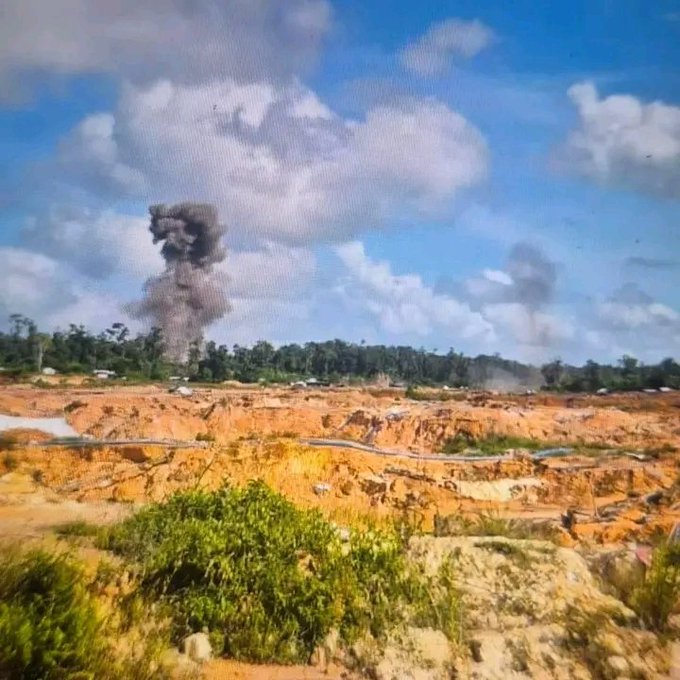
Sánchez identified the image as belonging to the Brisas de Cuyuní concession, the same location where the miners consulted by AFP said the blasts had occurred.
The journalist notes that the spot served as the base of operations of the “Sindicato”—the term used in Venezuela for the criminal groups that control a given mining zone—though even locals did not know who was living there.
Is there proof that Guerrero was in the structure that exploded?
None is known as of this article’s publication. It is not clear to which morgue Guerrero’s remains were taken, or whether his body was verified through DNA testing. His fate, so far, appears to mirror that of the crew members aboard the boats the United States has blown apart in the Caribbean and the Pacific.
What is at the Las Claritas and Kilómetro 88 deposits?
Between the two towns lie two of the largest gold reserves on the continent: Las Brisas de Cuyuní and Las Cristinas. In the 1990s, Canadian companies obtained the exploitation concessions for both.
Las Brisas de Cuyuní is an extensive gold and copper deposit near Kilómetro 88. The mining company Gold Reserve established itself there in the ’90s and launched the Las Brisas gold project. The mine holds estimated reserves of more than 10 million ounces of gold and 1.4 billion pounds of copper.
Las Cristinas, which borders Las Brisas and lies toward the town of Las Claritas, was operated by Crystallex International Corporation. Its reserves are among the largest in the world, estimated at more than 17 million ounces of gold.
During the nationalization process Hugo Chávez undertook between 2008 and 2010, both mines were expropriated. Chávez declared their concessions void, prompting the companies to seek multi-million-dollar compensation from Venezuela through international arbitration.
Far from activating national mining companies at these deposits, however, the Chavista government allowed armed criminal gangs—known as “sindicatos”—to take hold there. These groups exercise control through violence and extortion and keep miners in conditions of modern slavery.
At least since 2012, the zone has been controlled by the Sindicato de Las Claritas, led by Juan Gabriel Rivas Núñez, alias “Juancho.” In 2015, Yohan José Romero—known as “Johan Petrica,” another Tren de Aragua leader—arrived in the area and forged an alliance with “Juancho” to dominate the territory while evading justice.
Petrica’s presence in Las Claritas led to speculation that “El Niño Guerrero” had taken refuge there after the Venezuelan government dismantled the Centro Penitenciario de Aragua—known as Tocorón prison—the original headquarters of Tren de Aragua.
Caracas Chronicles is 100% reader-supported.
We’ve been able to hang on for 22 years in one of the craziest media landscapes in the world. We’ve seen different media outlets in Venezuela (and abroad) closing shop, something we’re looking to avoid at all costs. Your collaboration goes a long way in helping us weather the storm.
Donate