
The American Bolívars
There was a time when a Kentucky family and two US cities honored the Liberator of Venezuela. Let’s explore one intriguing naming coincidence

In the early 19th century, Americans greatly admired Simón Bolívar, the leader who challenged Spanish colonial rule across South America and helped secure independence for several nations. He was often compared to George Washington, the charismatic revolutionary and symbol of liberty in Latin America.
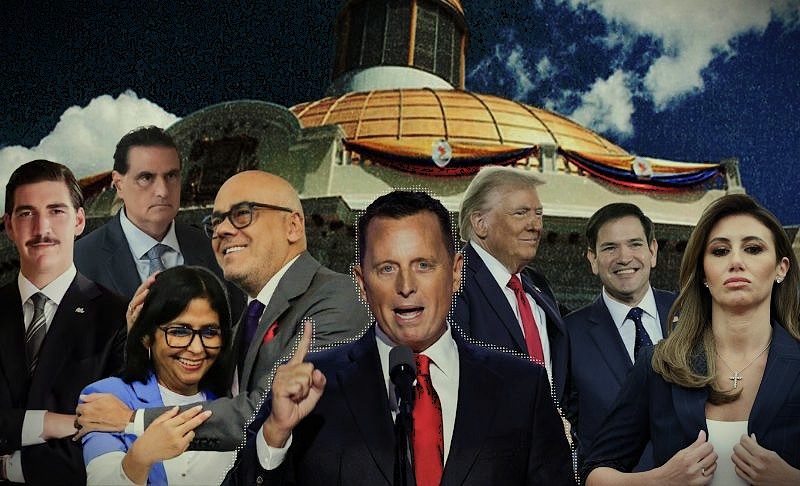
Now, US-Venezuela relations are markedly strained, with naval operations, seized assets, the capture of Nicolas Maduro and Cilia Flores, and strong rhetoric from the Trump administration regarding governance and security concerns. Yet this is an apt moment to reflect on American figures and places named in honor of the very icon Venezuela reveres. The irony is unmistakable.
Meet the first gringo Bolívar: Simon Bolivar Buckner Sr.
Born in 1823 in Kentucky—at the height of Bolívar’s fame—Simon received the middle name “Bolivar” as his parents expressed their enthusiasm for the South American hero. A West Point graduate of the class of 1844, he briefly taught military tactics there before serving with distinction in the Mexican-American War, earning two brevets for gallantry at battles like Churubusco and Molino del Rey. He later resigned from the Army to pursue business interests in Illinois but returned to Kentucky, where he helped organize the state militia.
When the Civil War erupted, Buckner declined offers to command Union forces in his home state, instead aligning with the Confederacy—a side that defended slavery, in contrast to Bolívar, who had abolished slavery for those slaves who enlisted in the liberation army. This creates a notable historical contrast.
Buckner Sr. rose to Confederate lieutenant general, notably surrendering Fort Donelson to Ulysses S. Grant (originating the term “unconditional surrender”) after a fierce defense that highlighted his tactical acumen, though it led to his temporary suspension from command by Jefferson Davis. Exchanged as a prisoner, he went on to fight at Perryville, Chickamauga, and in the Atlanta Campaign, commanding large forces with resilience amid mounting Confederate setbacks.

After the war, he returned to Kentucky, edited newspapers like The Louisville Courier (another similarity with his namesake, who funded Correo del Orinoco), ventured into insurance and real estate, served as Governor of Kentucky from 1887 to 1891—where he focused on fiscal reforms and education—and even ran unsuccessfully as the vice presidential candidate on the Gold Democratic ticket in 1896.
At age 62, he fathered his only son, passing on the Bolívar name, and remarkably acted as a pallbearer at Grant’s funeral—a gesture of reconciliation that bridged old animosities.
The sequel: Simon Bolivar Buckner Jr.
Born in 1886, Buckner Jr. followed the family military tradition, attending West Point and graduating in 1908 near the top of his class. He began his career with infantry assignments in the Philippines and along the Mexican border, then taught military science at various institutions, including a return to West Point as an instructor in tactics.
During World War I, he trained aviation units stateside but did not see overseas combat. Between the wars, he attended advanced military schools, commanded regiments, and rose steadily through staff roles that honed his strategic expertise.
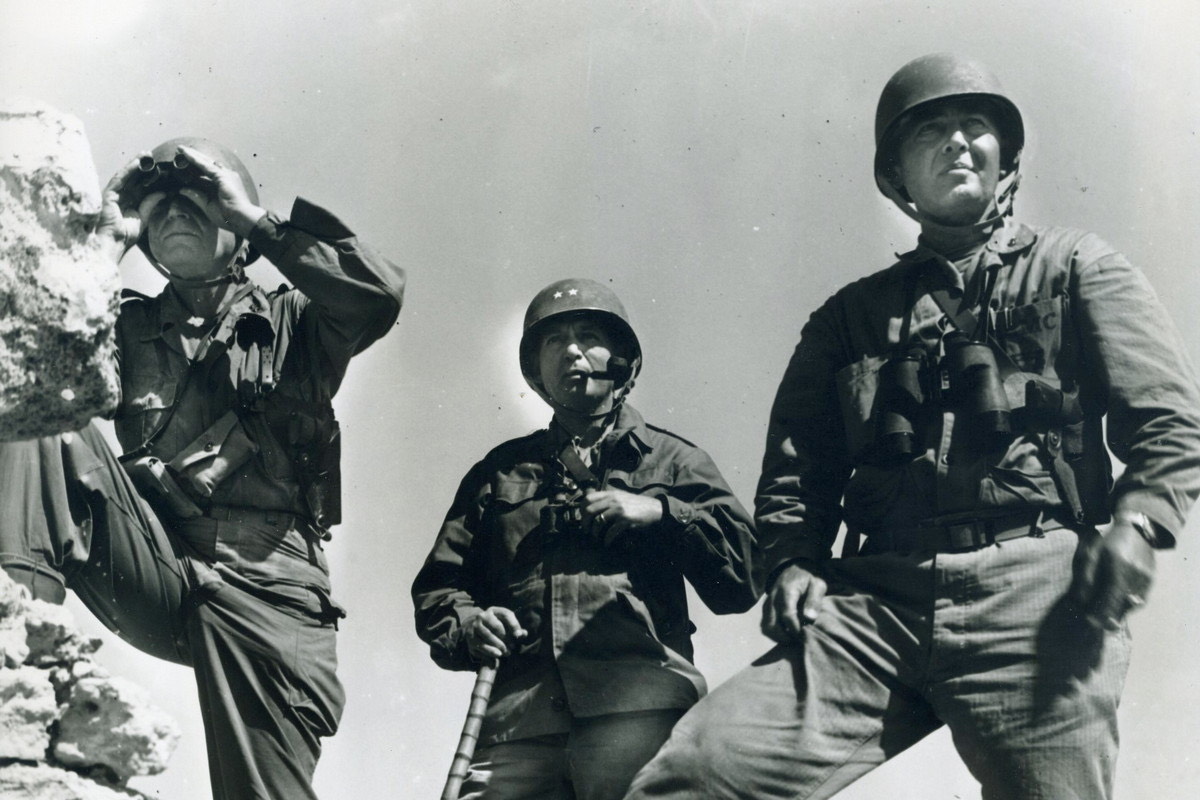
By World War II, promoted rapidly to brigadier general, he defended Alaska as commander of the Alaska Defense Command, fortifying the territory against Japanese threats and overseeing operations that reclaimed Attu and Kiska in the Aleutian Islands. He later commanded the Tenth Army during the Battle of Okinawa, orchestrating one of the war’s largest amphibious assaults amid brutal conditions. Tragically, he became the highest-ranking American officer killed by enemy fire in that conflict, struck by Japanese artillery while observing the front lines of Okinawa weeks before the end of the war in August 1945—an unfortunate, yet heroic and selfless end that came just a month shy of his 59th birthday.
Bolivar, Tennessee, and Bolivar, Missouri
The Buckners were not alone in honoring El Libertador. In the 19th century, admiration for Bolívar inspired numerous place names across the United States.
Bolivar, Tennessee—established in 1825 as the county seat of Hardeman County—was directly named for the South American liberator by state commissioners, reflecting the era’s enthusiasm for his fight against tyranny. In 1983, Venezuela gifted a bust of Bolívar to the city in honor of his bicentennial.
Similarly, Bolivar, Missouri, founded in 1835 in Polk County, drew its name indirectly from Bolivar, Tennessee (where early settlers had roots), but the inspiration traces back to Simón Bolívar’s legacy of liberty. This town features a prominent statue of Bolívar on its courthouse square, dedicated in 1948 and also gifted by Venezuela—a symbol of past hemispheric goodwill.

Reagan goes Bolivarian
Yet another example of American admiration for Bolívar surfaced in 1983, during the bicentennial year of his birth. On July 19, President Ronald Reagan—widely regarded as the father of the “Make America Great Again” ethos that later inspired Donald Trump—issued Proclamation 5073, designating the period from July 24, 1983, through July 23, 1984, as the Bicentennial Year of the Birth of Simón Bolívar. In the proclamation, Reagan hailed Bolívar as “the great Liberator who laid the foundation for the Inter-American System” and called upon the people of the United States to observe the occasion with appropriate ceremonies and activities. This official recognition, broadcast and disseminated through government channels, underscored Reagan’s praise for Bolívar’s vision of unity, liberty, and hemispheric solidarity—echoing the same patriotic fervor that defined Reagan’s own 1980 campaign slogan, “Let’s Make America Great Again,” which Trump adapted and popularized decades later.
The ironic parallels
While Simón Bolívar battled a colonial empire, Spain, for independence and freedom, Buckner Sr. served a cause that preserved slavery, but Buckner Jr. played a key role in overcoming Japanese imperialism during WWII. Both Buckners were accomplished strategists who commanded large forces under difficult circumstances. Personal sacrifice marked their stories: Bolívar died young and impoverished; Buckner Jr. fell in battle. The family’s service spanned conflicts from the Mexican-American War to World War II.
While Reagan publicly honored the Liberator during his bicentennial, the Trump administration pursued aggressive policies against Bolívar’s homeland, alleging today’s Venezuela is a source of regional instability, migration crises, and security threats. Of course, the Venezuela of 1983 was markedly different from today’s—a stable democracy under President Luis Herrera Campins, enjoying oil-fueled prosperity and strong ties with the West, in contrast to the authoritarian rule, economic collapse, and humanitarian crises under Maduro’s socialist and authoritarian regime. This transformation provides some context and justification for Trump’s confrontational stance, as US policy shifted to address what was perceived as a direct threat to regional democracy and American interests, even if it meant acting against the nation Bolívar once liberated. This shift underscores a profound historical pivot: from admiration for Bolívar’s anti-colonial legacy to confrontational measures against the nation he liberated, all under the banner of American interests and renewed national greatness with a neocolonial flavor.
History is rich with such unexpected turns, reminding us that a single figure’s inspiration can bridge—and sometimes highlight—divides across nations.
Here’s to the American Bolívars: may the name endure, even as the ties it connects navigate turbulent times.
Caracas Chronicles is 100% reader-supported.
We’ve been able to hang on for 22 years in one of the craziest media landscapes in the world. We’ve seen different media outlets in Venezuela (and abroad) closing shop, something we’re looking to avoid at all costs. Your collaboration goes a long way in helping us weather the storm.
Donate