
Returning to “Doña Inés Vs Oblivion” in 2026
With this 1992 historical novel, Ana Teresa Torres displayed soaring literary skill and a unique perspective on the many transformations of Venezuela between the colonial era and the end of the 20th century
This novel begins with an irresistible premise: when you die and become a ghost, you are an unstoppable consciousness that traverses places and times, that knows everything, and that therefore can tell everything. You cease to be a body but gain the power to be memory and to be literature.
The title of this great work by Ana Teresa Torres, published in 1992 by the then magnificent state-run publishing house Monteávila Editores, is direct and transparent about what you will find within its pages. Doña Inés contra el olvido (translated to English by Gregory Rabassa in 1999, as Doña Inés Vs Oblivion) begins with a wealthy Venezuelan matron confined to her room in a house in the heart of Caracas in 1715, trying to get someone to listen to her. She says they’ve left her alone; no one but her cares about rebuilding the world order, which is being corrupted because a village of former slaves has sprung up on the family’s lands in Barlovento, led by a man who grew up in that house, a slave’s son whom she freed, and whom she suspects, or rather is certain, is her husband’s son.
Raising her voice to demand the return of what is rightfully hers, and to prevent others from acquiring the status that, for her, belongs to only a few, Doña Inés will recount the history of Venezuela as she inherited it from her ancestors descended from the conquistadors, and as she witnesses it from the pinnacle of society. A position that implies material privileges, but also a profound ignorance of the world, of the lives of others, confined to an existence defined by rigid class norms, her status as a woman, and her seclusion within a few streets of that Caracas of thirty thousand inhabitants. In this way, there are many things this character doesn’t see and doesn’t talk about, and many other things that, on the contrary, he is able to reveal to us.
Because of the schematic and distorted way in which our history has always been taught to us, we tend to think that, apart from the initial confrontations or the earthquake of Nueva Cádiz, nothing happened in Venezuela until the rebellions of the “precursors” like Chirino, Gual, and España, and April 19, 1810. But this novel makes it clear that this colonial Venezuela of the 18th century was anything but peaceful. Misfortunes do not cease, epidemics never end before being replaced by new waves, and the elite see that between earthquakes, customs are becoming more relaxed, as seen from their perspective, which in practice means that the other castes threaten their privileges without the metropolis doing much to prevent it.
The claim of Inés de Villegas y Solórzano, who cites documents about the past and present of her lineage, about the privileges and the lands and people they possess, about their purity of blood and their divinely ordained privileges, is the breath that will keep the narrative voice alive for three centuries. Because decades pass and Doña Inés continues to tell her story. One does the math and sees that she can’t possibly be alive and thinks that’s where the story ends, that her voice will fall silent with Doña Inés’s death long before independence erupts, but it continues. Doña Inés doesn’t die. Or rather, she dies, but that’s beside the point, because she doesn’t fall silent. That voice in that room continues to tell her story, continues to make claims, and continues to narrate one cataclysm after another, one change after another. She cannot prevent her world from changing and, eventually, disappearing. In this sense, this novel has a connection with País portátil, in the regard as well as the technique, while it avoids diving in the culture war in Doña Bárbara or the class war in Las lanzas coloradas.
Perhaps what we call History is really just that: a ghostly voice in the depths of an old house, emanating from a bundle of papers that have survived water, fire, and insects.
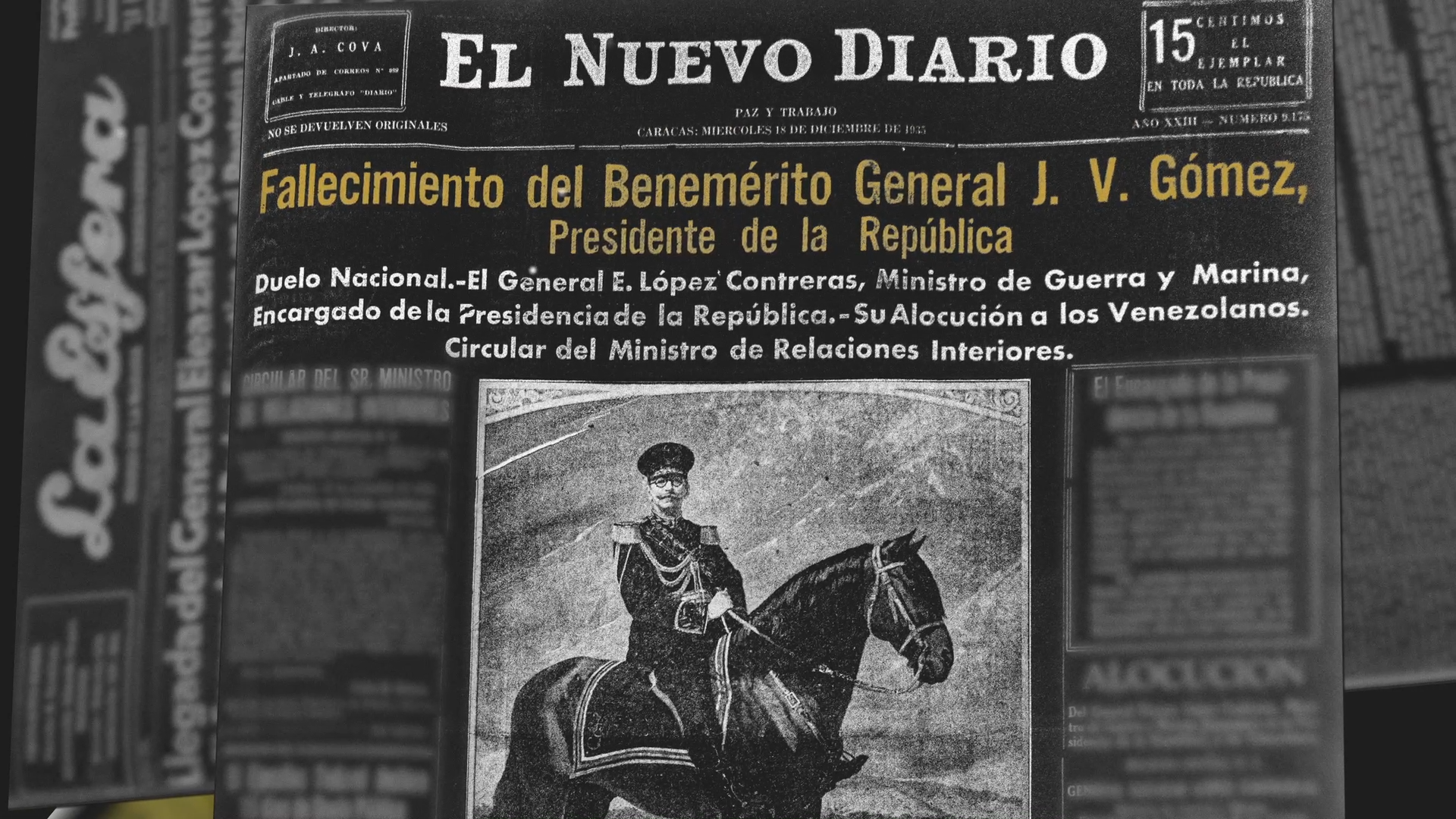
From her bed, the matron speaks to the dead, to whites and to blacks, rummaging through papers and memories. She tries to impose order from there, at least to combat oblivion, but she can’t overcome either the chaos or the collective amnesia, because every reality she attempts to fix with the written word of law in a document dissolves amidst the decisions of people, especially men, and the upheavals of the landscape: earthquakes, fires, revolutions. Independence arrives, followed by the years of Páez, the Federal War, Guzmán, Gómez, the 20th century… Doña Inés’s voice moves with her descendants to another part of the city, because her old house ceases to exist, and it drifts into the 1980s. Along the way, one hears some changes in that voice, notices that words and expressions have been adopted that didn’t exist when she began speaking to us back in 1715, and that so many transformations have made her revise some of her unwavering opinions, even if she won’t admit it.
And the persistence of Doña Inés’s awareness leads you to ask yourself questions. Perhaps what we call History is really just that: a ghostly voice in the depths of an old house, emanating from a bundle of papers that have survived water, fire, and insects.
New voices in old silences
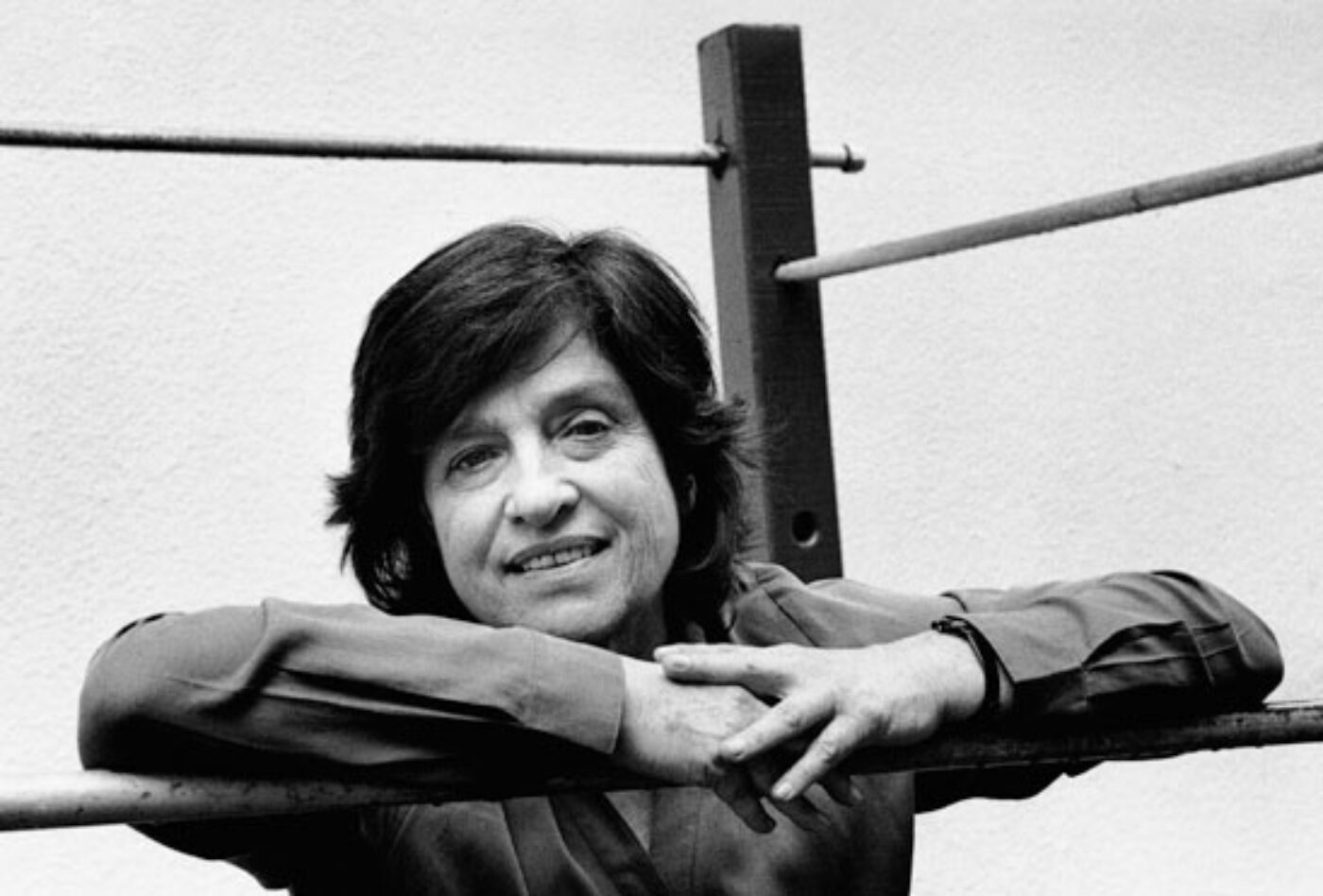
Ana Teresa Torres (photographed by Lisbeth Salas in the image accompanying this article) remembers perfectly how she decided to organize her novel from that perspective. “At first,” she tells Caracas Chronicles from Toronto, where she spends part of the year, “there wasn’t a problem because the character was talking about what was happening in her life or her memories. But then what usually happens with fictional characters happened (I always emphasize this): they start making their own decisions, and it’s very important to allow them to do so because it means you’ve created a character with their own identity and not a puppet or a voice uttered by a ventriloquist. Doña Inés began to speak not only about present and past circumstances but also about the future, testifying about situations and people she couldn’t have known or understood. One technical approach would have been to have these narratives correspond to other characters who emerged according to the needs of the time and the theme; that idea was perfectly possible, but it seemed to me that in that way the novel would become a collection of stories and lose its unity. So I decided that the voice would remain hers, the voice of the character who had introduced me to her world, and the only way to listening to her meant preserving her identity.”
That’s where the time travel element emerged, along with the need to offer the reader what Torres has described in her essays as the “pact of fiction”: that agreement between authors and readers who embark, when it works, on a story they know is invented. “I wasn’t asking (the reader) to believe in ghosts, but rather to accompany Doña Inés in her surprise at what she sees and hears as she hovers through future eras. Indeed, it was a technical decision, and fortunately, readers not only understood it but enjoyed it.”
Another aspect, viewed from the present, is the competition between history and memory. We Venezuelans compensated for our ignorance of history with a memory contaminated by many false recollections, by myths, and then Chavismo came along to manipulate that process. Today, in 2026, we can see serious attempts by professionals, but also by enthusiasts who sometimes do very interesting things, to reconstruct a past without distinguishing between history and memory. For the author of Doña Inés Vs Oblivion, however, there is no tension between history and memory: both are narratives.
For Ana Teresa Torres, “the novel is capable of introducing many voices, which are neither true nor untrue, but rather different perspectives on events that therefore open up more interpretations of the past”
“I don’t mean to say that narratives are lies (although they can be), but rather that they are a way of presenting (and omitting) the facts, which I suppose is not the view of all historians,” Torres explains. “To give an example: the history and memory of the War of Independence from a patriotic perspective are both those of a heroic feat to restore freedom to the peoples subjugated by the Spanish crown, but I suppose that those same events, seen from a loyalist’s perspective, would take on a different meaning.” Torres recalls the comment of the academic Omar Osorio Amoretti: Doña Inés Vs Oblivion presents a vision of history conceived as a continuum of failures “that stems from the decline of the democratic republican program that was experienced in the late 1980s, when I wrote the novel.”
Given all this, does narrative help us resolve the conflict between history and memory, or rather to gather the missing pieces, or to point out where the gaps are in the puzzle? “I don’t think narrative resolves the conflict between history and memory,” concludes Ana Teresa Torres, “because writers, like historians, are prone to inject their own opinions and perspectives into the narratives, whether they are aware of it or not. My opinion leans more toward the missing pieces, insofar as the novel is capable of introducing many voices, which are neither true nor untrue, but rather different perspectives on events that therefore open up more interpretations of the past.”
Let’s see which other visions would bring to return, from 2026, to a very different novel published in 1979 that also exploits the voice of mantuanos: Los amos del valle, by Francisco Herrera Luque.
Caracas Chronicles is 100% reader-supported.
We’ve been able to hang on for 22 years in one of the craziest media landscapes in the world. We’ve seen different media outlets in Venezuela (and abroad) closing shop, something we’re looking to avoid at all costs. Your collaboration goes a long way in helping us weather the storm.
Donate