
A Mother's 16-Month Search for a Son the State Had Already Buried
While his mother searched alone, complicity across Venezuela's security forces and judicial system concealed the fate of political prisoner Víctor Quero for 16 months
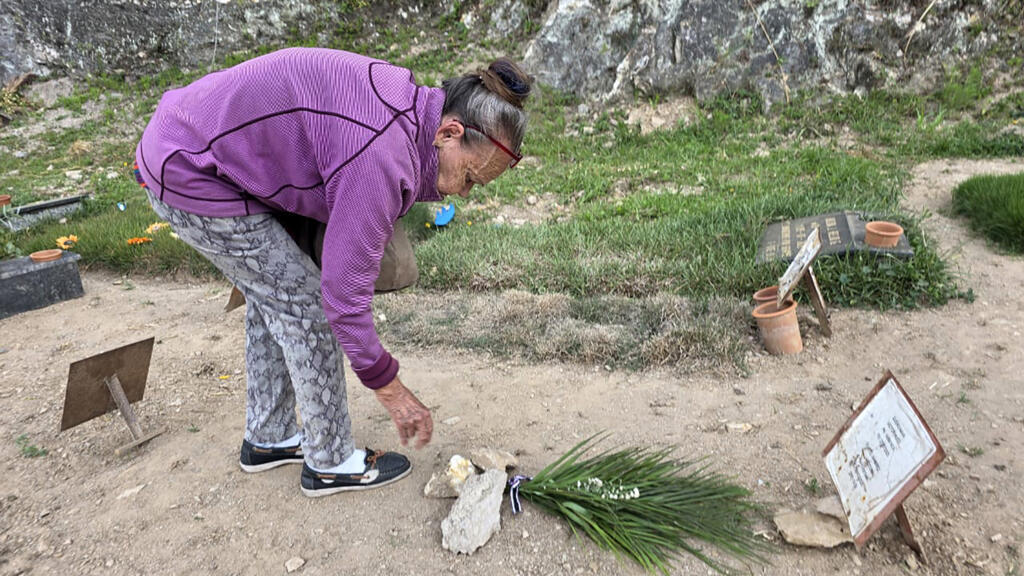
After 16 months of forced disappearance, and only under the relentless pressure of his mother, Carmen Teresa Navas, the Ministry of Penitentiary Services announced that Víctor Hugo Quero Navas, 51, had died on July 25, 2025, from acute secondary respiratory failure. Lawyers and human rights organizations point to a “chain of complicity” between the criminal justice system and the security forces—a pattern that once again confirms years of allegations about crimes against humanity in the country.
“This is the consequence of arbitrarily detaining people, making them disappear, denying them their rights, and imposing a public defender so that no one can find out what is happening to these people—their physical integrity, and in this case, their lives. From the outside it might look like chaos and poor coordination, but it is complicity — a coordinated effort to violate the human rights of individuals and the freedoms of Venezuelans,” says Ana Leonor Acosta, director of the Coalition for Human Rights and Democracy.
In Víctor Hugo Quero Navas’s case, the verifiable facts are these: Dgcim agents arrested him on January 1, 2025; he faced charges tied to political activities; and his mother never stopped searching for him or filing formal inquiries with detention centers, courts, the Attorney General’s Office, and the Public Defender’s Office. Yet everything surrounding the judicial process and his detention at El Rodeo I Judicial Detention Center remains, at best, opaque.
“We see responsibility here on the part of the security forces that carried out the arrest, the prosecutor from the Attorney General’s Office, the Public Defender’s Office, the public defender assigned to the case, the judge, the Ministry of Penitentiary Services, and the CICPC itself… This is the instrumentalization of the entire justice system to commit—by action or omission—human rights violations, because someone could have stopped this,” says Martha Tineo, general coordinator of the NGO Justice, Encounter and Forgiveness.
For investigating potentially unlawful deaths or suspected forced disappearances such as this one, the United Nations developed the Minnesota Protocol, which establishes the right of victims’ families to “equitable and effective access to justice; adequate, effective, and prompt reparation; legal recognition of their situation; and access to information about the violations and relevant accountability mechanisms.”
“When an investigation uncovers evidence that a death was unlawfully caused, the State must ensure that identified perpetrators face prosecution and, where appropriate, punishment through a judicial process. Impunity—whether resulting from unjustifiably short statutes of limitations or a general amnesty (de jure impunity), or from prosecutorial inaction or political interference (de facto impunity)—is incompatible with that obligation. Any failure to investigate constitutes a violation of the right to life,” the Protocol states.
An independent investigation must therefore clarify—among other things—whether Víctor Quero Navas’s detention was arbitrary or carried out under a court order. If arbitrary, those who carried out the arrest could face criminal penalties.
The following individuals also warrant investigation:
- National Prosecutor No. 67, to whom the case was assigned and whose office holds the case file MP-151328-2023.
- Judge Carlos Liendo, presiding over the Second Control Court with jurisdiction over terrorism cases, who oversaw the preliminary phase.
- The assigned public defender, since Quero Navas had no opportunity to retain private counsel.
- Forensic medical officers who conducted the initial examination of Quero Navas following his arrest.
- CICPC officers assigned to the case.
- Medical staff at the Dr. Carlos Arvelo Military Hospital who treated Quero Navas after his transfer from El Rodeo I.
- Forensic medical officers who issued the death certificate in July 2025.
- The custodians and director of El Rodeo I, Carlos Enrique Rincones Serven.
- Minister of Penitentiary Services, Julio García Zerpa.
- Public Defender Dionita Coronado, who was made aware of the case.
- Former Public Defender Alfredo Ruiz.
- Former Attorney General Tarek William Saab.
This case also lays bare a failed prison system. In July of last year—the month authorities place Quero Navas’s death—at least two reports emerged about outbreaks of dengue fever and tuberculosis, as well as “inhumane” conditions at El Rodeo I. Authorities neither addressed nor investigated either report.
The Committee for the Freedom of Political Prisoners notes that between July 2024 and April 2026, it submitted 13 formal complaints to the Attorney General’s Office regarding the situation of detainees at El Rodeo I—including the denial of medical care and severe food shortages, both of which constitute cruel and inhumane treatment under Venezuelan law.
Andreina Baduel, an activist with the Committee, also highlights the psychological toll on detainees. She recalls that on April 9, through shouted messages, several political prisoners at El Rodeo I declared that they “don’t want any more deaths like what happened to Víctor Quero Navas.”
Víctor Quero Navas: disappeared
According to the summary of facts issued by the Second Control Court in denying amnesty to Víctor Quero Navas—a judicial action that took place after his death—the merchant was detained for his “alleged collaboration with the CIA, the DEA, Spanish national intelligence, and Iván Simonovis,” explains attorney Moisés Gutiérrez, who filed the petition.
“For all of these charges — association, terrorism, treason, and financing—the court ruled that they did not fall within the scope of the amnesty,” said Gutiérrez.
The Second Court with jurisdiction over terrorism cases, presided over by Judge Carlos Liendo, committed the case to trial on charges of treason, conspiracy, and terrorism—though the exact date of the preliminary hearing remains unclear.
National Prosecutor No. 67 handled the case, with the file recorded under the reference MP-151328-2023. On two separate occasions in April, attorneys from the Coalition for Human Rights and Democracy visited the Palace of Justice to inquire about the case’s status at offices handling terrorism and violence. Both times, they were told the file did not exist in the system. Attorney Stefanía Migliorini attempted to register as private defense counsel three weeks ago. The court rejected her request on the grounds that it no longer held jurisdiction over the case file after ordering it to trial. On two separate occasions, the court also refused to accept a habeas corpus petition—a measure that would have required the judge to verify the detainee’s condition.
Both attorneys stress that, in any event, the date of the preliminary hearing has never been clearly established. “The situation is deeply contradictory. The defense attorney, the prosecutor, the courts—all of them either had information or were denied it regarding whether Víctor was alive or dead at the time. Where was Víctor Hugo when they held his hearing?” says Migliorini.
Gutiérrez points to another contradiction: although the Second Control Court responded to the amnesty petition, that same court — on May 5, when the decision was formally delivered — was told by the Public Defender’s Office that Víctor Quero’s case now fell under the Third Trial Court.
“This has been an extremely convoluted journey just to get basic answers. But there was sustained media pressure, driven by his mother’s public statements, along with pressure from the Women’s Coexistence Program, where the Public Defender and Minister Ana María Sanjuán are involved… all of that contributed to their finally deciding to tell the truth, almost ten months after the fact,” says Gutiérrez.
The search for answers
Carmen Teresa Navas visited El Rodeo I Judicial Detention Center at least 12 times — and made just as many trips to the courts, the Attorney General’s Office, and the Public Defender’s Office. Attorney Martha Tineo notes that for the first nine months of 2025, she made all of these visits alone, and “none of them were documented — she was never given any written record.”
Finally, on October 24, she received a “notice of appearance” stating that, according to information provided by the Attorney General’s Office, Víctor Quero Navas was being held at that facility. “That this happened at all was only possible because Carmen had already gone to the Attorney General’s Office, to El Rodeo, to the Public Defender’s Office — there was already an ongoing inquiry after she had been demanding information,” says the attorney.
Tineo also argues that, beyond the clear evidence that Navas had been searching for her son for months — contradicting the Ministry of Penitentiary Services’ account—other agencies, including the Attorney General’s Office and the Public Defender’s Office, simply relayed information about his whereabouts without actually verifying that he was there, despite having the legal authority and obligation to do so.
She is equally critical of the Public Defender’s failure to review the agency’s own records before meeting with Carmen Teresa on May 3. “That is an insult.”
Attorney Moisés Gutiérrez says this case “reveals one of the most terrifying faces of the Venezuelan state,” given everything the family had to endure before a single official institution provided any response.
“His mother had to go on the record with the media time and again. We had to file for amnesty. We had to submit formal complaints. We had to search for him across every detention facility — so that they would finally, under social pressure, acknowledge that they had committed a crime. And not only that they had committed it, but that they had covered it up,” he says.
The attorneys agree that the “opening” that followed the U.S. military operations of January 3—in which Nicolás Maduro and his wife were captured — has allowed the families of political prisoners to speak out more freely, and has created a small window for media outlets and civil society to shine a light on these cases.
However, they caution, this does not necessarily translate into any meaningful improvement in civil liberties or an end to human rights violations driven by political persecution.
“They fully intended to take that woman to her grave without ever knowing how her son died… We cannot allow them to sell the narrative that they intend to clarify the facts, to come forward with the truth, to find those responsible. They can issue an arrest warrant for Tarek William Saab, who was attorney general at the time and almost certainly knew this man was dead — but that does not mean they have any intention of delivering justice,” Gutiérrez concludes.
Caracas Chronicles is 100% reader-supported.
We’ve been able to hang on for 22 years in one of the craziest media landscapes in the world. We’ve seen different media outlets in Venezuela (and abroad) closing shop, something we’re looking to avoid at all costs. Your collaboration goes a long way in helping us weather the storm.
Donate