
The Social Crisis Awaiting Venezuela’s Returning Investors
Mines and oilfields are reopening. The communities around them are not what foreign companies remember
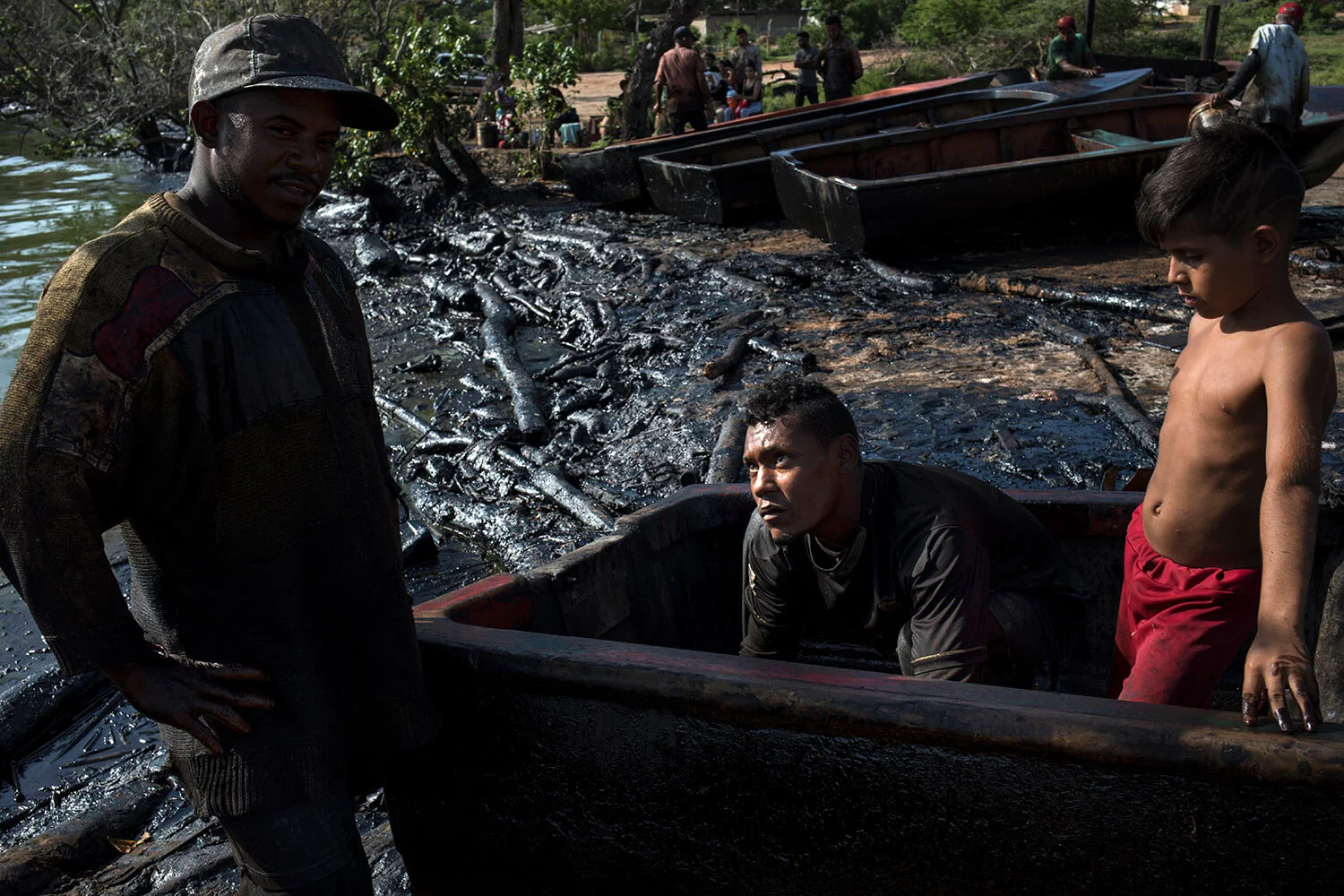
Photo by Rodrigo Abd for The Associated Press, May 2019
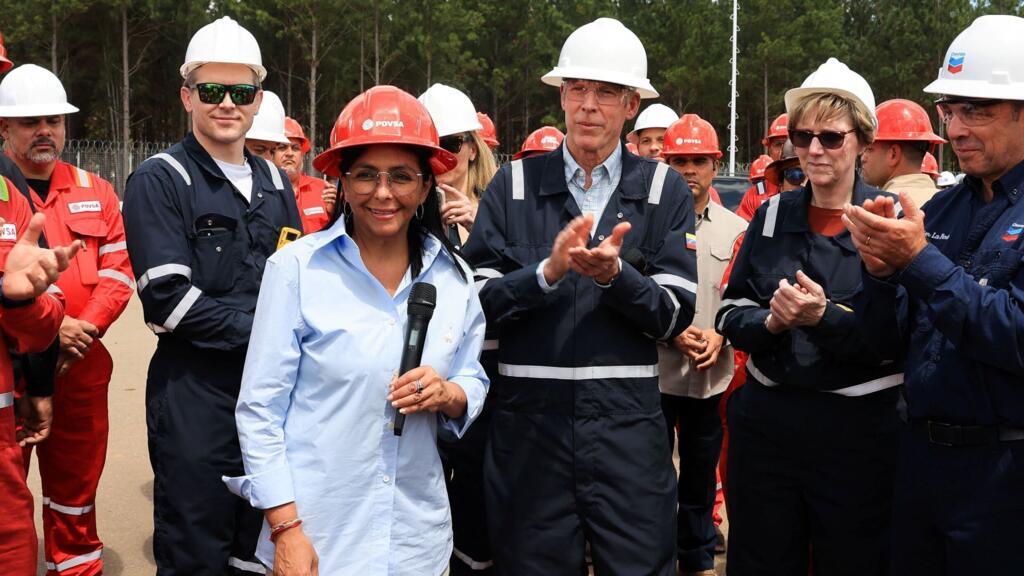
The window international operators had waited years opened overnight in Venezuela. The interim government has signed new hydrocarbon and mining laws. US officials have been in and out of Caracas. The government of Delcy Rodríguez has landed several new deals in a matter of months. Everything is happening so fast that elements that seemed obvious when Nicolás Maduro was in charge are suddenly overlooked or underdiscussed.
For the last thirteen years I have worked in indigenous communities in the Venezuelan Amazon, in border towns along the Colombian border, and in barrios in and around Caracas. The Venezuelan towns and territories are not the ones the companies coming back will remember.
Almost eight million people left Venezuela during the crisis, one of the largest displacement events in history. The oil-dependent towns of Zulia, Anzoátegui, and Monagas were not spared, nor were mining communities in Bolívar and Amazonas. In some places, a large share of the working-age population is simply gone. What remains is older, poorer, and more dependent on informal survival than the country they left.
Institutions have followed. Hospitals in oilfield regions operate, where they operate at all, at drastically reduced capacity. Schools have hemorrhaged teachers. Local government in many areas has ceased to perform basic functions. Chronic blackouts compound everything. Formal PDVSA employment, the organizing principle of community life in these regions, collapsed along with the company. In many places there are no longer legitimate interlocutors left to negotiate with as the local civic infrastructure that companies elsewhere take for granted has been hollowed alongside everything else.
Once the rigs come back, however, these towns will not stay hollow. They will hastily be filled with returnees, prospectors, informal traders, and internal migrants chasing rumored hiring. The Mining Arc has already shown what this looks like: since 2016, gold has pulled in shifting populations of miners, intermediaries, and military protection chains, with towns like Tumeremo and El Callao expanding and contracting to the rhythm of the frontier economy.
A criminalized operating environment
In most resource markets, companies enter with a clear distinction between the formal environment and the informal risks around it. That distinction broke down in Venezuela a long time ago.
Research by Insight Crime and the International Crisis Group has documented how, over a decade, the line between State oversight and participation in illicit extraction dissolved. Individuals linked to the military and the ruling party benefited from illegal mining, using it as political currency and to cement alliances with Colombia’s ELN and FARC dissident factions. Gold mining was estimated to generate more than $2.2 billion last year, much of it through channels that evaded oversight. In the oil sector, criminal groups have been documented siphoning roughly 30% of fuel in some regions.
“There is deep political skepticism in the communities. Many do not believe that this time will actually bring lasting reforms,” a senior humanitarian told me.
The Rodríguez-led interim government intends to change this, and the foreign policy pressure behind the new laws is real. But the continuity problem deserves precision. The recent turnover at the top of the security apparatus—Defense, military intelligence, the presidential guard—was a selective reshuffle within the chavista system, not an outsider takeover or institutional rupture. The personnel and chains of command sitting inside this supposedly new architecture are not new. Informal structures built over a decade do not dissolve with a reshuffle among the same political elite.
Informal actors are not parallel to the formal system, but intertwined with it, which presents a complex practical consequence to the investors. Companies entering these zones will negotiate, in practice, with all of them at once: the local political boss, the garrison commander asking for vacuna, the colectivo that controls the access road, the gestor who can speed a permit, the sindicato, the guerrilla commander. The single regulator is a fiction.
What communities remember
These are not communities without prior experience of extraction. Many have decades of it, enough to have formed hard views about what operators promise, what they deliver, and what gets left behind. Those views were then tested against a decade of watching investment withdraw, oil spills go unaddressed, and industry jobs disappear.
The environmental record is severe and specific. Aging pipelines and wells around Lake Maracaibo, once the engine of the Venezuelan oil industry, have left slicks visible from the air, fishing communities along its shores watching their catch collapse, and a persistent green bloom of algae fed by untreated sewage and hydrocarbon residue. In mining regions, studies have found that up to 90% of Indigenous women in the Orinoco Mining Arc carry dangerously high mercury levels. These are not abstract concerns. They are the lived experience of the population any operator will meet.
The damage is also in the memory of being told it would be different. Communities have seen “openings” before. A senior humanitarian, who has spent years working on community engagement throughout the country, put it to me while I was writing this piece: “There is deep political skepticism in the communities. Many do not believe that this time will actually bring lasting reforms, and that hardens their initial positions. Even well-intentioned and hopeful promises can be met with radical distrust.”
Sanctions, fiscal terms, and reservoirs can be modeled from afar. The social landscape of a specific Zulia oilfield town or a Bolívar Indigenous territory cannot.
For an operator arriving with standard community-engagement language, the problem is not that the offer isn’t understood. Other versions of it have been heard before, and the probability it fails to hold is being priced in.
Skepticism in Venezuela also comes pre-supplied with vocabulary. Almost three decades of State rhetoric have framed foreign extractive capital as imperial extraction (saqueo, entrega). People do not have to believe the framing to use it. Many will reach for it because it is the only available vocabulary for criticizing a returning company. The corporate language that lands well in a boardroom across an ocean arrives into a discursive space that has been filled for a generation.
None of which prepares an operator for the deepest mismatch. Where the State has withdrawn from basic services, foreign companies will not be received as purely economic actors. They will be received as potential substitutes for the State and expected to provide what the hospital, the school, the utility, and the municipality no longer do. A company arriving to play a bounded role (taxes, permits, a defined social investment envelope) may find the limits it has drawn around itself are not recognized on the other side of the gate. Conflict may rise not because the company has done something wrong, but because the role it is willing to play is smaller than the role it is being asked to fill. And past experience tells people that the only leverage they have, when promises don’t hold, is disruption.
The carpentry problem
In their 1984 book El caso Venezuela: una ilusión de armonía, Moisés Naím and Ramón Piñango argued that Venezuela had lived for decades in an unsustainable harmony, oil revenue papering over political frustrations. Today there is no harmony and there is no illusion. The arbiters are weaker than they have ever been. The redistributive cushion is gone.
In a 2024 retrospective, Naím and Piñango named a specific mode of failure: the neglect of what they called, in a deliberate understatement, la carpintería, the carpentry. The unglamorous work of implementation, where plans either succeed or quietly fall apart. Small, dismissed flaws in execution had repeatedly proved fatal. When everything was a priority, nothing was.
This is where the current opening risks repeating the failure, transposed from public policy to private investment. A former senior executive at a major international oil company recently told me that the industry’s preference for offshore projects in Venezuela is shaped to a meaningful extent by a desire to avoid the social dynamics on land, not only by reservoir quality. Sanctions, fiscal terms, and reservoirs can be modeled from afar. The social landscape of a specific Zulia oilfield town or a Bolívar Indigenous territory cannot, and the speed of the opening is pulling capital past the groundwork that determines whether a project actually runs.
The contracts will be signed in Caracas and approved in Houston or London. They will fail or hold somewhere else: at the gate of a refinery in Anzoátegui and on the road into a mining town, in front of a hospital that hasn’t run a power generator in a year. The plans are moving faster than the country they describe. That is the carpentry. That is where the projects will come apart: not on the page, but among neighbors more changed, more skeptical, and more demanding than the plan assumed.
Caracas Chronicles is 100% reader-supported.
We’ve been able to hang on for 22 years in one of the craziest media landscapes in the world. We’ve seen different media outlets in Venezuela (and abroad) closing shop, something we’re looking to avoid at all costs. Your collaboration goes a long way in helping us weather the storm.
Donate