
How José Antonio Kast's Victory Impacts Venezuelans in Chile
Venezuelan lawyer and migration advisor Gabriel Cardozo Acosta unpacks the nuances surrounding legal changes and cases of xenophobia
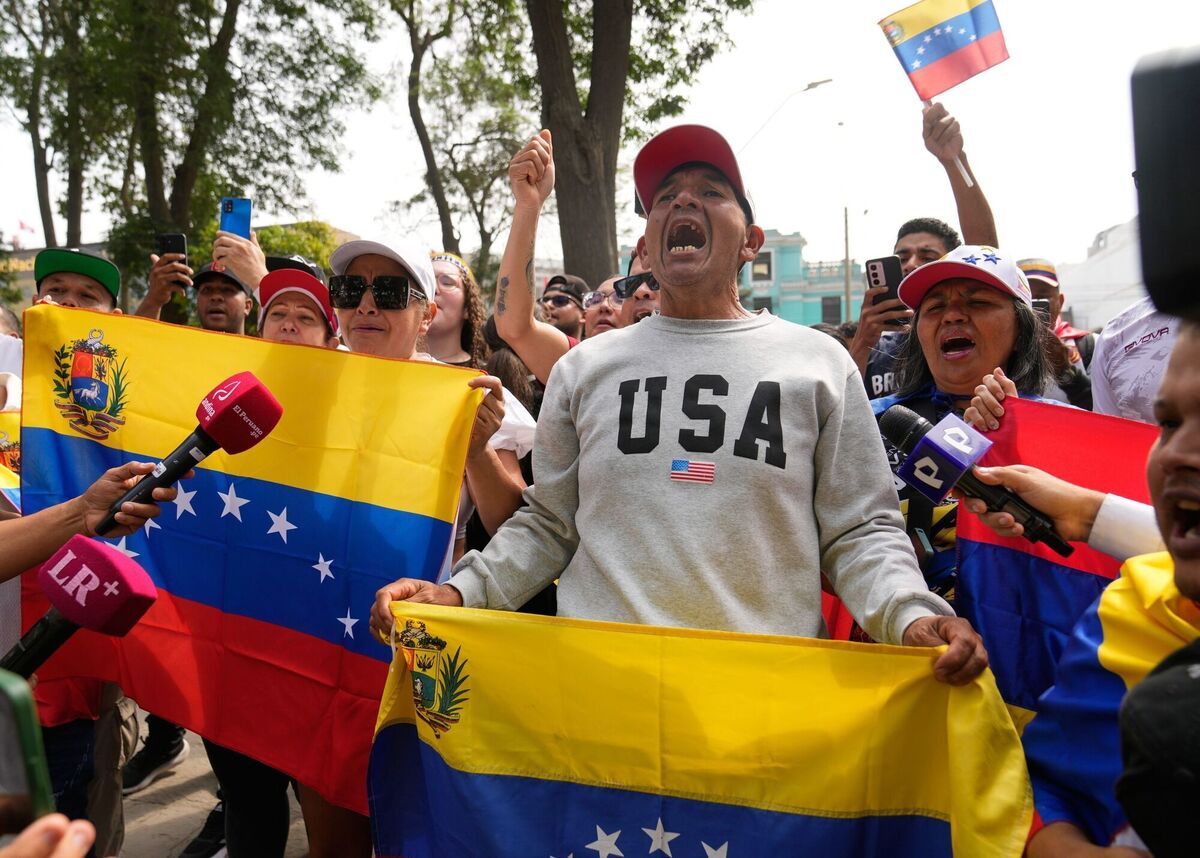
The leader of the Chilean Republicans, José Antonio Kast, won the second round of the presidential elections in Chile with a lead of almost 20 points over leftist candidate Jeanette Jara. Kast moves in the same international orbit of Donald Trump, Jair Bolsonaro, and Javier Milei (and María Corina Machado). It is worth asking whether his government, which begins in March 2026, will entail a tightening of entry and residency conditions for the hundreds of thousands of Venezuelans in that country, where the presence of the Tren de Aragua gang is palpable and there have been serious incidents of xenophobia, both at the borders and in major cities such as the capital, Santiago.
But since what you see from afar is one thing, and what’s actually happening on the ground is another (as is the case, for example, in Venezuela), we spoke with someone who knows the problem firsthand: on-the-ground lawyer and migration consultant Gabriel Cardozo.
From the outside, we get the impression that there’s a lot of xenophobia in that country, comparable only to what we’ve seen in Peru and Ecuador. This xenophobia seems to have grown with Tren de Aragua’s presence and has manifested itself in several very sad cases. What’s your perception of how Chileans view Venezuelans, and what impact Venezuelan migration has had on Chile?
As a country receiving Venezuelan migrants, Chile has been very welcoming to those who respect the law, and I don’t think we should say it’s a xenophobic country. The rejection is not really directed against the migrant themselves, but against behaviors that do not conform to the order of this society, its values, beliefs, and culture. For example, playing loud music in inappropriate places, or disturbing the peace of the neighbors. This habit of a minority within the wave of Venezuelans who have arrived in the last year, entering through unauthorized border crossings, has generated significant friction. But not because they are migrants, but because they are disruptive, as some believe they can establish their disorder as the rule of coexistence.
The Venezuelan migration from 2015 to 2019 was received in Chile with solidarity, support, understanding, and an immeasurable level of charity from the Chilean people. That migration wave was orderly, whether professional or not, but with the intention of contributing to and adapting to Chilean culture, while maintaining their own cultural identity and based on respect. I don’t doubt that isolated outbreaks of xenophobia may occur, but that would be a problem of those who express that phobia, not of the Chilean population as a whole.
I can affirm that Chileans recognize that that first well-prepared, educated, and healthy wave of Venezuelan migrants has strengthened the social, economic, political, and human development of the country.
Secondly, the increase in members of the Tren de Aragua gang in Chile and the migration of people who come to commit crimes, associated not with a particular way of entering Chile but with the fact that they were sent by leftist governments, especially Maduro’s, has marked a position of absolute rejection, not out of xenophobia but out of opposition to disorder and crime. After the social uprising in Chile in 2019, the population, the security forces, and the political class struggled to understand that the disturbances were related to Tren de Aragua. On the contrary, they continued to think it was an occasional issue, and it took more time, a surge in crime, and even the assassination of Lieutenant Ronald Ojeda, for them to acknowledge that the infiltration of individuals linked to the Tren de Aragua gang was a reality.
Despite this, Chile continues to create opportunities for migrants. For example, it has the most fluid registration process for migrants to exercise their right to vote without major requirements. Mechanisms for labor market integration, education, and healthcare have advanced, and there is legal recognition of migrants’ access to these rights. These systems have the inherent shortcomings of Latin American institutions. Foreigners experience the same benefits and limitations in accessing rights as nationals.
In conclusion, I can affirm that Chileans recognize that that first well-prepared, educated, and healthy wave of Venezuelan migrants has strengthened the social, economic, political, and human development of the country. I say this because they admire the work ethic, service and customer care, joy and optimism, solidarity, and honesty of most Venezuelans. They also distinguish as a characteristic that this joy is maintained despite adversity.
Based on this perception among the population, are there differences in how political sectors view Venezuelan migration? From the outside, we get the feeling that both the left and the right promise to impose more order, punish illegal immigration, and make Chile less welcoming to Venezuelans, or at least to new Venezuelan migrants.
Without a doubt, in Chile, migration is highly politicized, and this is especially true during election campaigns. Both the left and the right always seek to exploit the migratory phenomenon. This does not mean they want to make Chile a less welcoming country.
Venezuelan migration is currently the largest in number, and we also represent a significant percentage of the electoral roll. Chile is one of the few countries where foreign residents, who make up 5.6% of the electoral roll, vote in presidential elections. More than 30% of that percentage are Venezuelan, therefore we undoubtedly define the foreign vote in Chile.
The politicization of migration means that the issue is addressed every four years and only to the extent of covering the need to attract foreign voters.
Of course, the majority of Venezuelan migrants favor the center-right and right-wing vote. This shapes the behavior of political groups in Chile. For example, knowing that the immigrant vote would hurt them, the left in the last vote pushed through legislation to make it harder for overseas voters to vote in the next elections. Residency requirement will now be ten years instead of five. The right fiercely opposed this, but the presidential decision prevailed. In the elections four years ago, the left encouraged immigrant voting because Venezuelan migrants did not yet meet the voting requirements. The right-wing groups behaved in the opposite way, but with the same logic: in the past elections, they hindered immigrant voting, and in the recent elections, they fought to maintain the conditions for their participation.
In conclusion, there is no genuine concern about the migration situation itself; rather, the politicization of the phenomenon means that the issue is addressed every four years and only to the extent of covering the need to attract foreign voters. Jara and Kast spoke about irregular migration, its connection to crime and disorder, and the possibility of regularization.
Kast says he wants more effective law enforcement. Laws that, as I understand it, were tightened under the Piñera and Boric administrations. What do we know about what might change legally regarding Venezuelans there?
The current immigration law, Law 21.325, in effect since 2022, does not allow changing one’s immigration status within Chile except in the case of family reunification. To come and live in Chile, one must enter with a previously approved residency visa. Since Venezuelans were unable to apply for visas from abroad, largely due to their inability to obtain Venezuelan identity documents, or simply because they didn’t comply with the rules, entry through unauthorized border crossings increased. During his campaign, Kast proposed to simply enforce the law: requiring this visa for anyone who wants to enter, and imposing sanctions on those who entered through unauthorized crossings. The goal is to prevent the disorder generated by irregular entry and the crime associated with this phenomenon.
However, what many of us do hope for is a reduction in impunity and a strengthening of police powers to control the border and curb crime and insecurity.
However, the campaign promise to expel everyone, without considering each case individually, is merely a ploy to garner support from Chilean voters. Kast’s promise is impossible to fulfill for several reasons. Without diplomatic relations with the Venezuelan dictatorship, deportation cannot be negotiated. The current conflict with the US sidelines relations with Chile and other countries receiving Venezuelan migrants. Kast also cannot take measures that violate human rights, such as expelling migrants without due process; the legal, social, economic, and political consequences would be evident and substantial, and would complicate his relations with the opposition. The Chilean Comptroller General’s Office, which wields greater legal and political power than its counterparts in the region, would have significant grounds for objection.
We cannot conclude that any specific changes regarding Venezuelan migration are imminent. On the contrary, the law regulates migration without regard to nationality. However, what many of us do hope for is a reduction in impunity and a strengthening of police powers to control the border and curb crime and insecurity.
Is the majority of the Venezuelan community in Chile without regular immigration status?
No, the truth is that the majority of Venezuelan migration is regular and historically characterized by entry through authorized border crossings. It’s important to distinguish between irregular migrants due to their method of entry and those who are irregular due to difficulties obtaining their documents in Chile. Those who have entered through unauthorized border crossings are a minority. Those who entered through authorized border crossings but are in an irregular status because their documents expired due to errors in the procedures carried out or in the immigration service itself are not in a negative situation; their cases can be resolved. Migrants who entered through unauthorized border crossings cannot legalize their status in Chile.
Regular migration benefits from controls on irregular migration, as this reduces the perception that migration itself is negative.
Caracas Chronicles is 100% reader-supported.
We’ve been able to hang on for 22 years in one of the craziest media landscapes in the world. We’ve seen different media outlets in Venezuela (and abroad) closing shop, something we’re looking to avoid at all costs. Your collaboration goes a long way in helping us weather the storm.
Donate